KI-Beratung Beta

Gutscheinbedingungen

*Gültig bis 06.10.2026 auf alle Bücher. Ausgeschlossen sind Zeitschriften, Prozentbücher und Abos | Einlösbar in allen Buchhandlungen von Orell Füssli (ausser Transa Books), Barth Bücher, Buchladen Rapunzel, Papeterie Köhler, Schuler Orell Füssli, Stauffacher und ZAP unter Vorweisung des Gutscheins, auf www.orellfüssli.ch durch Eingabe des Gutscheincodes. Beim Service „eBooks verschenken“ und bei eBook-Käufen via eReader nicht einlösbar | Mindesteinkaufswert: Fr. 30.- | Nicht mit anderen Rabatten kumulierbar.

  • Produktbild: The Printing Ink Manual
  • Produktbild: The Printing Ink Manual

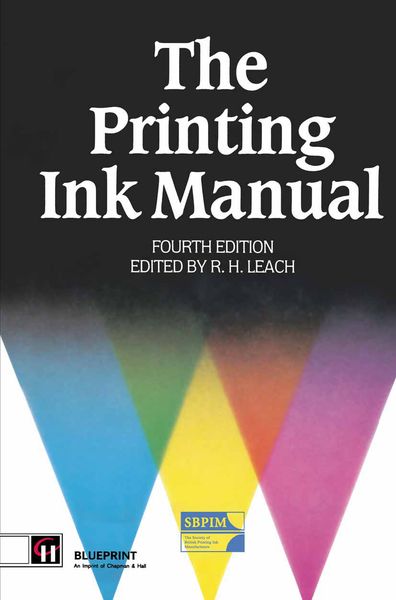
The Printing Ink Manual 4th edition

Fr. 137.00

inkl. gesetzl. MwSt., Versandkostenfrei


Beschreibung

Produktdetails

Einband

Taschenbuch

Erscheinungsdatum

01.03.2012

Abbildungen

XIV, 872 p.

Verlag

Springer Us

Seitenzahl

872

Maße (L/B/H)

23.5/15.5/4.8 cm

Gewicht

1323 g

Auflage

Softcover reprint of the original 1st ed. 1988

Sprache

Englisch

ISBN

978-1-4684-6908-0

Beschreibung

Produktdetails

Einband

Taschenbuch

Erscheinungsdatum

01.03.2012

Abbildungen

XIV, 872 p.

Verlag

Springer Us

Seitenzahl

872

Maße (L/B/H)

23.5/15.5/4.8 cm

Gewicht

1323 g

Auflage

Softcover reprint of the original 1st ed. 1988

Sprache

Englisch

ISBN

978-1-4684-6908-0

Herstelleradresse

Springer-Verlag KG
Sachsenplatz 4-6
1201 Wien
AT

Email: ProductSafety@springernature.com

Noch keine Bewertungen vorhanden

Verfassen Sie die erste Bewertung zu diesem Artikel

Helfen Sie anderen Kundinnen und Kunden durch Ihre Meinung.

Kundinnen und Kunden meinen

Bewertungen (0)

  • Produktbild: The Printing Ink Manual
  • Produktbild: The Printing Ink Manual
  • 1 The Nature of Printing Inks.- 1.1 Visual characteristics of inks.- 1.2 The nature of printing inks as determined by the printing process.- 1.3 The drying characteristics.- 1.4 The adhesive nature of printing inks.- 1.5 The resistance properties of printing inks.- 2 The Printing Processes.- 2.1 The letterpress process.- 2.2 The offset lithographic process.- 2.3 The gravure process.- 2.4 The flexographic process.- 2.5 The screen printing process.- 2.6 Non-impact printing processes.- 2.7 Other printing processes.- 2.8 Print recognition.- 2.9 Substrate selection.- 2.10 The need for communication.- 3 Colour and Colour Matching.- 3.1 The physical nature of colour.- 3.2 The perception of colour.- 3.3 Additive and subtractive colour mixing.- 3.4 Origins of colour in printed material.- 3.5 Graphic reproduction.- 3.6 The measurement of colour.- 3.7 The recording of colour data and the specification of colour.- 3.8 Colour matching.- 3.9 Instrumental colour match prediction.- References.- 4 RawMaterials.- Section I Pigments.- Section II Dyestuffs.- Section III Oils.- Section IV Resins.- Section V Solvents.- Section VI Plasticisers.- Section VII Waxes.- Section VIII Driers.- Section IX Miscellaneous additives.- Section X Raw materials for radiation curing systems.- Section XI Health and safety at work.- References.- 5 Letterpress Inks.- 5.1 Nature of the process.- 5.2 General characteristics of letterpress inks.- 5.3 Physical properties.- 5.4 Raw materials.- 5.5 Letterpress ink formulation.- 5.6 Ink-related problems and their possible solutions.- 5.7 New developments.- 6 Lithographic Inks.- 6.1 General characteristics of litho inks.- 6.2 Drying mechanisms.- 6.3 Physical properties.- 6.4 Formulating principles.- 6.5 Typical inks and varnishes.- 6.6 Ink-related problems and their possible solutions.- 6.7 Recent and future trends.- 7 Gravure Inks.- 7.1 General characteristics.- 7.2 Physical properties of inks and their measurement.- 7.3 Formulating principles.- 7.4 Inks and varnishes for specific end-use applications.- 7.5 Printing ink faults.- 7.6 Future developments.- 8 Flexographic Inks.- 8.1 General characteristics of the inks.- 8.2 Physical properties of flexographic inks and their measurement.- 8.3 Formulating principles.- 8.4 Inks and varnishes for special purposes.- 8.5 Ink-related printing problems and possible solutions.- 8.6 Recent and future trends.- 9 Screen Inks.- 9.1 Important characteristics of screen inks.- 9.2 Requirements of raw materials.- 9.3 Inks for paper and board.- 9.4 Inks for impervious surfaces.- 9.5 Inks for plastic containers.- 9.6 Textile inks.- 9.7 Transfer inks.- 9.8 Overprint varnishes.- 9.9 Daylight fluorescent inks.- 9.10 Process inks.- 9.11 Metallics.- 9.12 Ink-related printing problems.- 9.13 Recent and future trends.- 10 Radiation Curable Systems.- 10.1 Electromagnetic radiation and electron beams.- 10.2 Microwave and radio frequency drying.- 10.3 Infra-red curing systems.- 10.4 Ultraviolet and electron beam curable inksand varnishes.- 10.5 Radiation curing equipment.- 10.6 State of the art and future trends.- Further reading.- 11 Inks for Special Purposes.- 11.1 Non-impact printing.- 11.2 Speciality screen inks.- 11.3 Inks for the electronics industry.- 11.4 Inks for laminated plastics.- 11.5 Inks for wallcoverings.- 11.6 Textile transfer inks.- 11.7 Sterilisation inks.- 11.8 Metal decorating.- 11.9 Letterset printing.- 12 Manufacture of Inks and Varnishes.- 12.1 General requirements.- 12.2 The manufacturing processes.- 12.3 Mixing equipment.- 12.4 Milling equipment.- 12.5 Handling, storage and manufacture of UV inks.- 12.6 Manufacture of newspaper inks.- 12.7 Handling and storage of inks.- 12.8 Modern production trends.- 12.9 The future.- 13 Rheology of Printing Inks.- 13.1 Flow in ideal systems.- 13.2 Deviations from Newtonian behaviour.- 13.3 Apparatus for the measurement of the viscosity of Newtonian liquids.- 13.4 Practical measurements for non-Newtonian systems.- 13.5 Tack.- 13.6 Tack measurement.- 13.7 Ink distribution and related matters.- 13.8 Rheological measurements and machine design.- References.- 14 Testing, Control and Analysis.- 14.1 Standard tests.- 14.2 Sampling technique.- 14.3 Pigment testing.- 14.4 Chips and pre-dispersions.- 14.5 Dye testing.- 14.6 Resins.- 14.7 Varnishes and oils.- 14.8 Solvents.- 14.9 Radiation curing products.- 14.10 Miscellaneous materials.- 14.11 Ink quality control.- 14.12 Short-term ink testing.- 14.13 Long-term ink testing.- 14.14 Press performance tests.- 14.15 Dry print performance tests.- 14.16 Analysis of printing inks.- References.- Further reading.- 15 Health, Safety and the Environment.- 15.1 Handling of dangerous substances in the manufacture of printing inks.- 15.2 Mechanical and operational aspects.- 15.3 Specific printing ink applications.- 15.4 Some international constraints.- Glossary of abbreviations.- References.