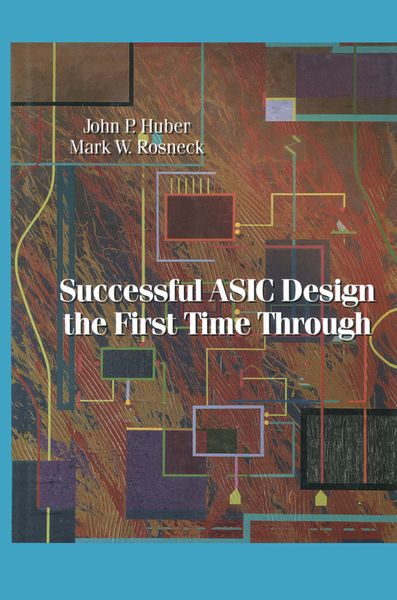
Produktbild: Successful ASIC Design the First Time Through

Successful ASIC Design the First Time Through

Fr. 72.90

inkl. gesetzl. MwSt., Versandkostenfrei


Beschreibung

Produktdetails

Einband

Taschenbuch

Erscheinungsdatum

16.11.2012

Verlag

Springer Us

Seitenzahl

200

Maße (L/B/H)

22.9/15.2/1.3 cm

Gewicht

326 g

Auflage

Softcover reprint of the original 1st ed. 1991

Sprache

Englisch

ISBN

978-1-4684-7887-7

Beschreibung

Produktdetails

Einband

Taschenbuch

Erscheinungsdatum

16.11.2012

Verlag

Springer Us

Seitenzahl

200

Maße (L/B/H)

22.9/15.2/1.3 cm

Gewicht

326 g

Auflage

Softcover reprint of the original 1st ed. 1991

Sprache

Englisch

ISBN

978-1-4684-7887-7

Herstelleradresse

Springer-Verlag KG
Sachsenplatz 4-6
1201 Wien
AT

Email: GPSR Kontakt

Noch keine Bewertungen vorhanden

Verfassen Sie die erste Bewertung zu diesem Artikel

Helfen Sie anderen Kundinnen und Kunden durch Ihre Meinung.

Kundinnen und Kunden meinen

Bewertungen (0)

  • Produktbild: Successful ASIC Design the First Time Through
  • 1. Introduction to ASICs and ASIC Design.- Doesn’t Everybody Design with ASICs?.- How Many ASIC Vendors Are Needed to Build an ASIC?.- Types of ASICs.- The Benefits of Using ASICs.- When Should a Designer Consider Using an ASIC?.- ASIC Types: Advantages and Disadvantages.- When to Use a PGA, FPGA, or Standard ASIC.- ASIC Technologies and Trade-offs.- Market Statistics and Predictions about ASICs.- Summary and Conclusions.- 2. The ASIC Design Process.- ASIC Design Process Flow.- Concept and Specifications: Where it All Begins.- The Foundry/Customer Interface.- Design Implementation.- Choosing an ASIC Vendor.- ASIC Design Kits.- ASIC Vendor Guidelines, Assistance, and Support.- Design In-house, Rent, or Use the ASIC Vendor Design Center?.- Postdesign Activities: Backannotation for Simulation.- Summary and Conclusions.- 3. Design Creation for ASICs.- System on a Chip.- Start the Design at the Architectural Level, From the Top.- Behavioral-level Design.- Functional Design.- Structural Design.- Detailed Design.- Physical/Geometry.- “Standard” Electronic Design Automation and Schematic Capture.- Specific Design Considerations.- Silicon Compilers and ASIC Design.- ERC and DRC Considerations.- ASIC and EDA Vendor Design Rule Checks.- Knowing When the Design Is Ready for Verification.- Summary and Conclusions.- 4. Design Methodologies for ASICs.- Bottom-up Design.- Top-down Design.- Conceptual-to-Functional Design.- Design Synthesis.- Logic Synthesis.- Silicon Compilers.- Should the Designer Lay It Out?.- Summary and Conclusions.- 5. Logic Simulation.- What Is Simulation?.- The Imperative for ASIC Simulation.- The Components of Logic Simulation.- Initialization and Unknowns.- Simulation States.- Approximations and Limitations.- Selecting the Computer Power.- Tricks of the Trade.- Acceleration Techniques.- Developing a Successful Simulation Strategy.- Top Ten Most Common Mistakes.- Consider Test Now.- Board-Level Simulation.- Summary.- 6. Timing.- The Importance of Timing.- Basic Timing Considerations.- Timing and Logic Simulation.- Hazards.- Specialized Timing Analyzers.- Board- and System-Level Timing.- Summary.- 7. Fault Simulation.- What Is Fault Simulation?.- Uses of Fault Simulation.- Fault Simulation in the Design Process.- Fault Simulation Basics.- Inputs to the Fault Simulator.- Outputs from the Fault Simulator.- What Is a Good Fault Coverage?.- Acceleration Techniques.- Commonly Asked Questions.- Some Straight Talk about Fault Simulation.- Contractual or Government Requirements.- Limitations of Fault Simulation.- Summary.- 8. Test.- A Story—Part 1.- A Story—Part 2.- A Story—Epilogue.- The Moral of Our Story.- Test and ASIC Design.- DC Test Methodology.- Design for Testability.- Emerging Test Technologies.- Power Analysis.- Board Test.- Summary.- 9. Summary and Conclusions.- What You Have (or Should Have) Learned—A Review.- When to Use the ASIC Vendor’s Design Tools and When to Buy Your Own.- How to Choose an EDA Vendor.- Long-Term Viability of ASIC Methodology for Board-System Design.- Future of EDA Tools and Methods.- Board and System Simulation.- The Future of Mixed Analog-Digital ASICs.