
The Power of Human Imagination New Methods in Psychotherapy
Aus der Reihe
Emotions, Personality, and Psychotherapy
-
- Taschenbuch ausgewählt
- eBook
-
Sprache:Englisch
Fr. 72.90
inkl. gesetzl. MwSt.,
Beschreibung
Produktdetails
Einband
Taschenbuch
Erscheinungsdatum
15.11.2011
Abbildungen
426 p.
Herausgeber
Jerome L. Singer + weitereVerlag
Springer UsSeitenzahl
426
Maße (L/B/H)
22.9/15.2/2.4 cm
Gewicht
616 g
Sprache
Englisch
ISBN
978-1-4613-3943-4
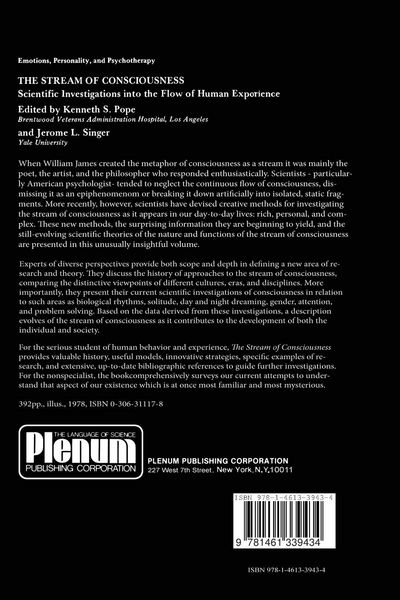
For at least half of the twentieth century, psychology and the other mental health professions all but ignored the significant adaptive pos sibilities of the human gift of imagery. Our capacity seemingly to duplicate sights, sounds, and other sensory experiences through some form of central brain process continues to remain a mysterious, alma st miraculous skill. Because imagery is so much a private experience, experimental psychologists found it hard to measure and turned their attentian to observable behaviors that could easily be studied in ani maIs as well as in humans. Psychoanalysts and others working with the emotionally disturbed continued to take imagery informatian se riously in the form of dream reports, transferenee fantasies, and as indications of hallucinations or delusions. On the whole, however, they emphasized the maladaptive aspects of the phenomena, the dis tortions and defensiveness or the "regressive" qualities of daydreams and sequences of images. The present volume grows out of a long series of investigations by the senior author that have suggested that daydreaming and the stream of consciousness are not simply manifestations in adult life of persist ing phenomena of childhood. Rather, the data suggest that imagery sequences represent a major system of encoding and transforming information, a basic human capacity that is inevitably part of the brain's storage process and one that has enormous potential for adap tive utility. A companian volume, The Stream of Consciousness, edited by Kenneth S. Pope and Jerome L.
Noch keine Bewertungen vorhanden
Verfassen Sie die erste Bewertung zu diesem Artikel
Helfen Sie anderen Kundinnen und Kunden durch Ihre Meinung.