• Produktbild: Story Crafting
  • Produktbild: Story Crafting

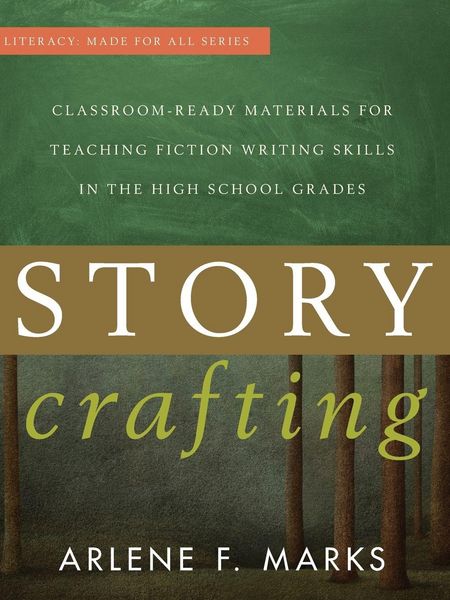
Story Crafting Classroom-Ready Materials for Teaching Fiction Writing Skills in the High School Grades

Aus der Reihe Literacy: Made for All

Fr. 108.00

inkl. gesetzl. MwSt., Versandkostenfrei


Beschreibung

Produktdetails

Einband

Taschenbuch

Erscheinungsdatum

04.03.2014

Verlag

Bloomsbury

Seitenzahl

242

Maße (L/B/H)

28/21/1.3 cm

Gewicht

603 g

Sprache

Englisch

ISBN

978-1-4758-0733-2

Beschreibung

Produktdetails

Einband

Taschenbuch

Erscheinungsdatum

04.03.2014

Verlag

Bloomsbury

Seitenzahl

242

Maße (L/B/H)

28/21/1.3 cm

Gewicht

603 g

Sprache

Englisch

ISBN

978-1-4758-0733-2

Herstelleradresse

Libri GmbH
Europaallee 1
36244 Bad Hersfeld
DE

Email: GPSR Kontakt

Noch keine Bewertungen vorhanden

Verfassen Sie die erste Bewertung zu diesem Artikel

Helfen Sie anderen Kundinnen und Kunden durch Ihre Meinung.

Kundinnen und Kunden meinen

Bewertungen (0)

Weitere Artikel finden Sie in

Die Leseprobe wird geladen.
  • Produktbild: Story Crafting
  • Produktbild: Story Crafting
  • Introduction
    Implementing Literacy: Made to Order
    Aims and Objectives of Literacy: Made to Order

    How to implement Story Crafting

    PART I: GETTING STARTED

    Introduction/Aims and Objectives

    Skill 1: Establishing an Ideas File
    Students learn how to develop and use an Ideas File as a source of writing inspiration.

    Skill 2: What Happened Before and What Happens Next
    Students explore the causes and effects of a variety of story-triggering incidents or situations and practice turning them into story ideas.

    Skill 3: Establishing the Theme of Your Story
    Students practice growing underlying themes that can help their fictional tales deliver important and powerful messages to readers.

    Skill 4: Creating the Illusion of Reality
    Students learn how to make characters, settings and plot events behave or transpire in realistic ways.

    Skill 5: Understanding Dramatic Conflict
    Student authors practice putting multiple conflicts into a story to make it interesting and exciting for the reader.

    Skill 6: Understanding Story/Scene Structure
    Young authors learn how to construct a fictional scene and practice putting scenes in the best order to create an interesting story.

    Skill 7: Writing Descriptively: Wake Up Your Senses
    Young authors reawaken their senses and establish a vocabulary of sensory words and phrases to enhance their descriptive writing.

    Skill 8: Writing Descriptively: Use Figurative Language
    Student authors practice using similes and metaphors to make their descriptive writing more evocative.

    Skill 9: Writing Descriptively: Use Descriptive language
    Students learn to recognize and use words with specific connotations in order to make their writing more effective.

    Skill 10: Putting Everything Together (Writing Assignment)
    Students take a story through the entire process from outlining to Final Draft.

    PART II: WRITING THE SHORT STORY

    Introduction/Aims and Objectives

    Skill 1: Building a Strong Main Character
    Students practice the techniques that authors use to bring fictional personalities to life on the page.

    Skill 2: Constructing a Solid Dramatic Conflict
    Dramatic conflict is the backbone of any story. Student authors practice building and developing the strongest possible level of dramatic conflict in their stories.

    Skill 3: Creating an Interesting Setting
    Students practice developing and using realistic, well-written settings to strengthen and deepen every element of their stories.

    Skill 4: Structuring a Story Effectively in Scenes
    Students learn how to make their stories flow interestingly from beginning to end.

    Skill 5: Setting Up the Story
    Student authors practice writing opening scenes that will lay a strong foundation for the rest of their story.

    Skill 6: Hooking the Reader
    Students practice creating story openings that will 'hook' the reader's attention from the very beginning of a tale.

    Skill 7: Major Writing Assignment
    Students are now ready to put together all the writing skills they have learned in a story-writing assignment which will be revised, edited and polished and handed in for evaluation.

    PART III: WRITING LONGER FICTION

    Introduction/Story Lengths

    Skill 1: Adding Minor Characters to the Cast
    Young authors learn and practice how to put minor characters to work in their stories, ensuring that every character pulls his/her weight.

    Skill 2: Giving Characters More Depth
    Students practice building more realistic characters that readers will identify with and care about.

    Skill 3: Adding a Subplot
    Student authors learn how to deepen and enrich their stories by adding well-integrated subplots.

    Skill 4: Working with Settings
    Young authors practice putting their story settings to work in various ways, making their stories more engaging for the reader.

    Skill 5: Step-building Dramatic Tension
    In longer fiction, dramatic tension keeps readers turning pages. Students learn and practice how to build tension using a tested story structure.

    Skill 6: Major Writing Assignment
    Students are now ready to put together all the longer fiction writing skills they have learned in a story-writing assignment which will be revised, edited and polished and handed in for evaluation.

    PART IV: THE WRITING PROCESS: A SUPPLEMENTARY LIBRARY OF FICTION WRITING TOOLS

    Introduction: How to Use the Fiction Writing Toolkit

    Tools 1-23