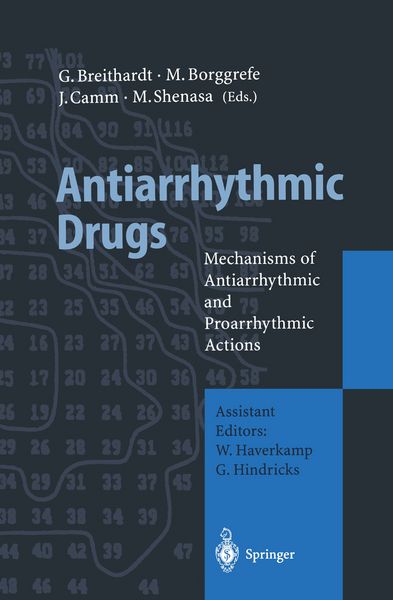
Antiarrhythmic Drugs Mechanisms of Antiarrhythmic and Proarrhythmic Actions
-
- Taschenbuch ausgewählt
- eBook
-
Sprache:Englisch
Fr. 137.00
inkl. gesetzl. MwSt.,
Beschreibung
Produktdetails
Einband
Taschenbuch
Erscheinungsdatum
19.08.2012
Herausgeber
Günter Breithardt + weitereVerlag
Springer BerlinSeitenzahl
410
Maße (L/B/H)
23.5/15.5/2.3 cm
Gewicht
640 g
Auflage
Softcover reprint of the original 1st ed. 1995
Sprache
Englisch
ISBN
978-3-642-85626-6
The past 10 years have seen a remarkable change in the approach to cardiac arrhythmias, from a position of confidence and a feeling of well-being about pharmacological treatment to a situation in which there is now marked uncertainty and general apprehension about the role of antiarrhythmic drugs. Until relatively recently the prevailing concept in antiarrhythmic therapy was that arrhythmias could be controlled by drugs which slowed conduction or suppressed automaticity, goals well served by the sodium channel-blocking drugs and glycosides. Drug re search was based largely on the development of agents mimicking those already available, but with greater efficacy, fewer side effects or a more favourable phar macokinetic profile. The CAST trial stands out as a landmark in the evolution of arrhytmia manage ment; rarely has a single trial had such a profound impact not only on clinical prac tice, but also on the whole approach of those involved in the research, development and regulation of antiarrhythmic drugs. The results of the CAST trial, designed to redress the shortcomings of earlier trials which had failed to demonstrate the anticipated improvement in mortality post-myocardial infarction with the use of class I agents, are well known. The CAST and CAST II showed an increase in mor tality associated with the active agent (encainide, flecainide or morizicine) com pared to placebo treatment. They firmly established the potential danger in the use of class I drugs.
Noch keine Bewertungen vorhanden
Verfassen Sie die erste Bewertung zu diesem Artikel
Helfen Sie anderen Kundinnen und Kunden durch Ihre Meinung.