Gutscheinbedingungen

*Gültig bis 18.08.2026 auf (fast) alles. Ausgeschlossen sind Smartboxen, Zeitschriften, Tickets, Lebensmittel, Gaming-Elektroartikel, Tinte/Toner, Gutscheine, Geschenkkarten, Blumen und Abos | Einlösbar in allen Buchhandlungen von Orell Füssli, Barth Bücher, Buchladen Rapunzel, Schuler Orell Füssli, Stauffacher und ZAP unter Vorweisung des Gutscheins, auf www.orellfüssli.ch durch Eingabe des Gutscheincodes. Beim Service „eBooks verschenken“ und bei eBook-Käufen via eReader nicht einlösbar | Mindesteinkaufswert: Fr. 100.- | Nicht mit anderen Rabatten kumulierbar.

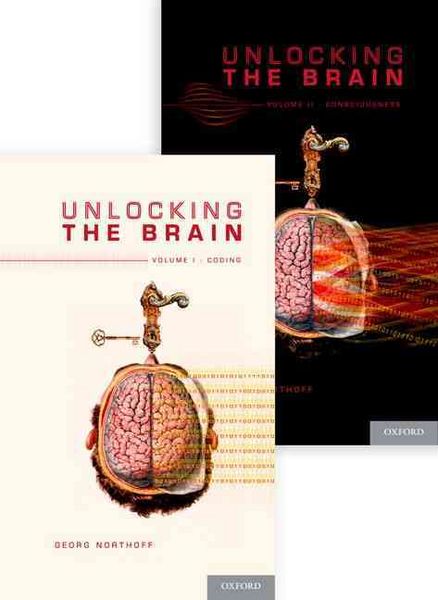
Produktbild: Unlocking The Brain

Unlocking The Brain

Fr. 212.00

inkl. gesetzl. MwSt., Versandkostenfrei


Beschreibung

Produktdetails

Einband

Gebundene Ausgabe

Erscheinungsdatum

09.12.2013

Verlag

Oxford University Press

Seitenzahl

1152

Maße (L/B/H)

26.5/19.7/6.6 cm

Gewicht

2338 g

Sprache

Englisch

ISBN

978-0-19-998146-5

Beschreibung

Rezension

This intriguing book is the author's magnum opus on the fundamental properties of the brain and how the brain, from its fundamental properties, produces consciousness. This book is extremely scholarly with voluminous citations of the scientific literature. The indexes of the two volumes are very helpful. Doody's Notes

Produktdetails

Einband

Gebundene Ausgabe

Erscheinungsdatum

09.12.2013

Verlag

Oxford University Press

Seitenzahl

1152

Maße (L/B/H)

26.5/19.7/6.6 cm

Gewicht

2338 g

Sprache

Englisch

ISBN

978-0-19-998146-5

Noch keine Bewertungen vorhanden

Verfassen Sie die erste Bewertung zu diesem Artikel

Helfen Sie anderen Kundinnen und Kunden durch Ihre Meinung.

Kundinnen und Kunden meinen

Bewertungen (0)

  • Produktbild: Unlocking The Brain
  • VOLUME 1: CODING; List of Figures; Preface; Introduction to Volume I; Part I: Coding Extrinsic Stimuli: From the Environment to the Brain; Chapter 1: Sparse Coding and Natural Statistics; Chapter 2: Sparse Coding and Neural Inhibition; Chapter 3: Sparse Coding on a Regional Level; Part II: Coding Intrinsic Activity: From the Brain to the Brain; Chapter 4: Spatial Structure of Intrinsic Activity; Chapter 5: Temporal Structure of Intrinsic Activity; Chapter 6: Sparse Coding of Intrinsic Activity; Part III: Coding Intrinsic Predictions: From the Brain to Anticipation; Chapter 7: Predictive Coding and Difference-Based Coding; Chapter 8: Predictive Coding and Social and Vegetative Statistics; Chapter 9: Predictive Coding and the Brain's Intrinsic Activity; Part IV: Coding Extrinsic Activity: From the Brain to the Environment; Chapter 10: Stimulus-Stimulus Interaction and Neural Coding; Chapter 11: Rest-Stimulus Interaction and Difference-Based Coding; Chapter 12: Rest-Stimulus Interaction and GABA; Epilogue: A Quick Guide to the Brain; Appendix: Theoretical Reflections; Appendix I: Neuro-Empirical Remark: Resting State Activity versus Stimulus-Induced Activity and the Continuity Hypothesis; Appendix II: Neuro-Theoretical Remark: Localizationism versus Holism; Appendix III: Neuro-Conceptual Remar: Concept of Difference; Appendix IV: Neuro-Epistemological Remark: Brain versus Observer; References; Index; VOLUME 2: CONSCIOUSNESS; List of Figures; Preface; Introduction to Volume II; Part V Spatiotemporal Continuity and Consciousness; Chapter 13: Midline regions and 'Stream of Consciousness'; Chapter 14: Slow cortical potentials and 'width of presence'; Chapter 15: Temporal nestedness and 'duration bloc'; Chapter 16: Functional Connectivity and 'Inner space consciousness'; Chapter 17: Glutamate, GABA, and 'Inner time and space consciousness'; Part VI Spatiotemporal Unity and Consciousness; Chapter 18: Resting state and Pre-Phenomenal Unity; Chapter 19: Gamma and Phenomenal Unity; Chapter 20: Natural statistics and 'environment-brain unity'; Chapter 21: Unity and Subjectivity; Chapter 22: Unity and subjectivity in schizophrenia; Part VII Spatiotemporal Organisation and Consciousness; Chapter 23: Resting state and Self-specificity; Chapter 24: Self-Specificity and Self-perspectival organisation; Chapter 25: Resting state and pre-intentional organisation; Chapter 26: Neuro-Phenomenal Evidence - Dreams and Mind wandering; Chapter 27: Neuro-Psychiatric Evidence - Schizophrenia and Depression; Part VIII Spatiotemporal Quality and Consciousness; Chapter 28: Resting state and Qualia; Chapter 29: Rest-Stimulus interaction and Qualia; Chapter 30: Neuronal transfer and Qualia; Chapter 31: Affect and Qualia; Chapter 32: Body and Qualia; Epilogue: Keyholes in the brain's door to consciousness; Appendix: Related Issues; Appendix to Introduction/Appendix 1: Brain and Consciousness; Appendix to Part I/Appendix 2: Brain and Time; Appendix to Part II/Appendix 3: Brain and Unity; Appendix to Part III/Appendix 4: Brain and Self; References; Index