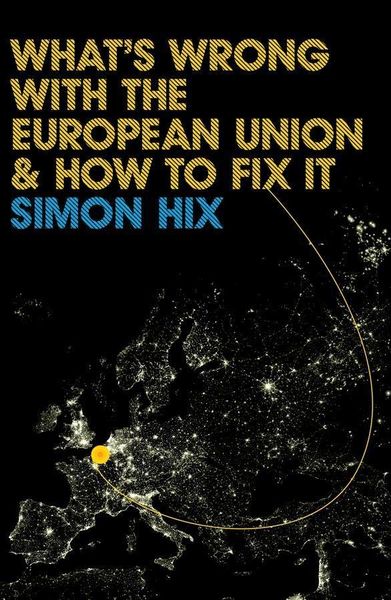
What's Wrong with the Europe Union and How to Fix It
Aus der Reihe
PWWS - Polity Whats Wrong series
-
- Hardcover
- Taschenbuch
- eBook ausgewählt
-
Form:Einzelkauf Download
-
Sprache:Englisch
-
eBook Format:ePUB
- PDF Fr. 65.00
- ePUB Fr. 19.00 ausgewählt
Fr. 19.00
inkl. gesetzl. MwSt.Beschreibung
Produktdetails
Format
ePUB
Kopierschutz
Ja
Family Sharing
Nein
Text-to-Speech
Ja
Erscheinungsdatum
23.04.2013
Verlag
WileySeitenzahl
232 (Printausgabe)
Dateigröße
1137 KB
Auflage
1. Auflage
Sprache
Englisch
EAN
9780745658377
The European Union seems incapable of undertaking economic reforms
and defining its place in the world. Public apathy towards the EU
is also increasing, as citizens feel isolated from the institutions
in Brussels and see no way to influence European level decisions.
Taking a diagnosis and cure approach to the EU's
difficulties, Simon Hix tackles these problems with distinct
clarity and open-mindedness. What the EU needs, Hix contends, is
more open political competition. This would promote policy
innovation, foster coalitions across the institutions, provide
incentives for the media to cover developments in Brussels, and
enable citizens to identify who governs in the EU and to take sides
in policy debates. The EU is ready for this new challenge. The
institutional reforms since the 1980s have transformed the EU into
a more competitive polity, and political battles and coalitions are
developing inside and between the European Parliament, the Council,
and the Commission.
This emerging politics should be more central to the Brussels
policy process, with clearer coalitions and identifiable winners
and losers, at least in the short term. The risks are low because
the EU has multiple checks-and-balances. Yet, the potential
benefits are high, as more open politics could enable the EU to
overcome policy gridlock, rebuild public support, and reduce the
democratic deficit. This indispensable book will be of great
interest to students of the European politics, scholars, policy
makers and anyone concerned with the future of the European
Union.
and defining its place in the world. Public apathy towards the EU
is also increasing, as citizens feel isolated from the institutions
in Brussels and see no way to influence European level decisions.
Taking a diagnosis and cure approach to the EU's
difficulties, Simon Hix tackles these problems with distinct
clarity and open-mindedness. What the EU needs, Hix contends, is
more open political competition. This would promote policy
innovation, foster coalitions across the institutions, provide
incentives for the media to cover developments in Brussels, and
enable citizens to identify who governs in the EU and to take sides
in policy debates. The EU is ready for this new challenge. The
institutional reforms since the 1980s have transformed the EU into
a more competitive polity, and political battles and coalitions are
developing inside and between the European Parliament, the Council,
and the Commission.
This emerging politics should be more central to the Brussels
policy process, with clearer coalitions and identifiable winners
and losers, at least in the short term. The risks are low because
the EU has multiple checks-and-balances. Yet, the potential
benefits are high, as more open politics could enable the EU to
overcome policy gridlock, rebuild public support, and reduce the
democratic deficit. This indispensable book will be of great
interest to students of the European politics, scholars, policy
makers and anyone concerned with the future of the European
Union.
Kundinnen und Kunden meinen
Verfassen Sie die erste Bewertung zu diesem Artikel
Helfen Sie anderen Kund*innen durch Ihre Meinung