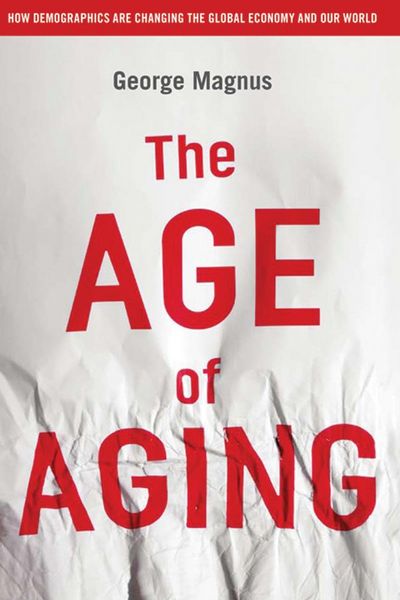
The Age of Aging How Demographics are Changing the Global Economy and Our World
Fr. 18.00
inkl. gesetzl. MwSt.Beschreibung
Produktdetails
Format
ePUB
Kopierschutz
Ja
Family Sharing
Nein
Text-to-Speech
Ja
Erscheinungsdatum
27.11.2012
Verlag
WileySeitenzahl
348 (Printausgabe)
Dateigröße
1460 KB
Auflage
1. Auflage
Sprache
Englisch
EAN
9781118580714
The year 2008 marks the beginning of the baby boomer retirement
avalanche just as the different demographics in advanced and most
developing countries are becoming more pronounced. People are
worrying again that developments in global population trends, food
supply, natural resource availability and climate change raise the
question as to whether Malthus was right after all.
The Age of Aging explores a unique phenomenon for mankind and,
therefore, one that takes us into uncharted territory. Low birth
rates and rising life expectancy are leading to rapid aging and a
stagnation or fall in the number of people of working age in
Western societies. Japan is in pole position but will be joined
soon by other Western countries, and some emerging markets
including China. The book examines the economic effects of aging,
the main proposals for addressing the implications, and how aging
societies will affect family and social structures, and the type of
environment in which the baby-boomers' children will grow up.
The contrast between the expected old age bulge in Western nations
and the youth bulge in developing countries has important
implications for globalization, and for immigration in Western
countries - two topics already characterized by rising discontent
or opposition. But we have to find ways of making both
globalization and immigration work for all, for fear that failure
may lead us down much darker paths. Aging also brings new
challenges for the world to address in two sensitive areas, the
politicization of religion and the management of international
security. Governments and global institutions will have to take
greater responsibilities to ensure that public policy responses are
appropriate and measured.
The challenges arising within aging societies, and the demographic
contrasts between Western and developing countries make for a
fractious world - one that is line with the much-debated 'decline
of the West'. The book doesn't flinch from recognizing the ways in
which this could become more visible, but also asserts that we can
address demographic change effectively if governments and
strengthened international institutions are permitted a larger role
in managing change.
avalanche just as the different demographics in advanced and most
developing countries are becoming more pronounced. People are
worrying again that developments in global population trends, food
supply, natural resource availability and climate change raise the
question as to whether Malthus was right after all.
The Age of Aging explores a unique phenomenon for mankind and,
therefore, one that takes us into uncharted territory. Low birth
rates and rising life expectancy are leading to rapid aging and a
stagnation or fall in the number of people of working age in
Western societies. Japan is in pole position but will be joined
soon by other Western countries, and some emerging markets
including China. The book examines the economic effects of aging,
the main proposals for addressing the implications, and how aging
societies will affect family and social structures, and the type of
environment in which the baby-boomers' children will grow up.
The contrast between the expected old age bulge in Western nations
and the youth bulge in developing countries has important
implications for globalization, and for immigration in Western
countries - two topics already characterized by rising discontent
or opposition. But we have to find ways of making both
globalization and immigration work for all, for fear that failure
may lead us down much darker paths. Aging also brings new
challenges for the world to address in two sensitive areas, the
politicization of religion and the management of international
security. Governments and global institutions will have to take
greater responsibilities to ensure that public policy responses are
appropriate and measured.
The challenges arising within aging societies, and the demographic
contrasts between Western and developing countries make for a
fractious world - one that is line with the much-debated 'decline
of the West'. The book doesn't flinch from recognizing the ways in
which this could become more visible, but also asserts that we can
address demographic change effectively if governments and
strengthened international institutions are permitted a larger role
in managing change.
Noch keine Bewertungen vorhanden
Verfassen Sie die erste Bewertung zu diesem Artikel
Helfen Sie anderen Kundinnen und Kunden durch Ihre Meinung.