• Produktbild: Cell and Molecular Biology of the Cytoskeleton
  • Produktbild: Cell and Molecular Biology of the Cytoskeleton

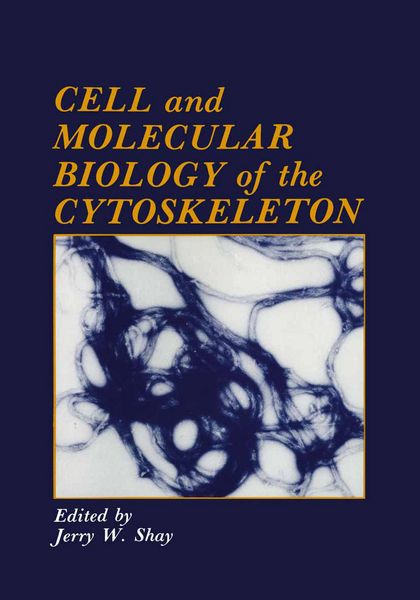
Cell and Molecular Biology of the Cytoskeleton

Fr. 137.00

inkl. gesetzl. MwSt., Versandkostenfrei


Beschreibung

Produktdetails

Einband

Taschenbuch

Erscheinungsdatum

30.09.2011

Herausgeber

J.W. Shay

Verlag

Springer Us

Seitenzahl

356

Maße (L/B/H)

25.4/17.8/2 cm

Gewicht

684 g

Auflage

1986

Sprache

Englisch

ISBN

978-1-4612-9269-2

Beschreibung

Produktdetails

Einband

Taschenbuch

Erscheinungsdatum

30.09.2011

Herausgeber

J.W. Shay

Verlag

Springer Us

Seitenzahl

356

Maße (L/B/H)

25.4/17.8/2 cm

Gewicht

684 g

Auflage

1986

Sprache

Englisch

ISBN

978-1-4612-9269-2

Herstelleradresse

Springer-Verlag GmbH
Tiergartenstr. 17
69121 Heidelberg
DE

Email: GPSR Kontakt

Noch keine Bewertungen vorhanden

Verfassen Sie die erste Bewertung zu diesem Artikel

Helfen Sie anderen Kundinnen und Kunden durch Ihre Meinung.

Kundinnen und Kunden meinen

Bewertungen (0)

  • Produktbild: Cell and Molecular Biology of the Cytoskeleton
  • Produktbild: Cell and Molecular Biology of the Cytoskeleton
  • 1 Probing the Cytoskeleton by Microinjection.- 1. Introduction.- 2. The Microtubule System.- 2.1. Analyzing the Equilibrium between Tubulin and Microtubules.- 2.2. Studying Microtubular Dynamics.- 2.3. Analyzing Microtubule-Bound Organelle Transport.- 2.4. Introducing Antitubulins.- 3. The Microfilament System.- 3.1. Studying Actin Dynamics.- 3.2. Studying the Dynamics of Actin-Associated Proteins.- 3.3. Reorganizing Microfilament Patterns by Introducing Structural Proteins.- 3.4. Introducing Phalloidin.- 3.5. Using Antibodies against Microfilament Proteins.- 4. The Intermediate Filament System.- 4.1. Introducing Antibodies.- 4.2. Introducing mRNA.- 5. The Coated Vesicle System.- 6. Conclusion.- References.- 2 Structural Aspects of Intermediate Filaments.- 1. Introduction.- 2. Domain Organization of IF Proteins.- 3. Neurofilaments.- 4. Organization of the Sequences along the Rod Domain.- 5. Comparison of the Six Nonepithelial Proteins along the Rod Domain.- 6. Structural Characterization of the Rod.- 7. From the Rodlike Protofilament to the 10-nm Filament.- 8. Structure and Function of the Terminal Domains in IF Proteins.- 8.1. The Involvement of Headpieces in Filament Formation.- 8.2. Structural Characterization of the Tailpieces.- 8.3. Are the Carboxyterminal Tailpieces Appendages Communicating between Stiff Filaments and the Cytoplasm?.- 9. Addendum.- References.- 3 The Structure and Evolution of Intermediate Filament Genes.- 1. Introduction.- 1.1. Correlation of Keratin Gene Expression with Differentiation State.- 1.2. Correlation of Keratin Subunit Structure with Differential Expression.- 2. Structure of Intermediate Filament Genes.- 3. A Model for the Evolution of Intermediate Filament Genes.- 3.1. Evolution of the Rod Domains of Intermediate Filament Genes.- 3.2. Evolution of the End Domains.- 4. Conclusion.- References.- 4 Differential Expression of the Genes Encoding the Keratins of Cultured Human Epidermal Cells.- 1.Introduction.- 2.The Structure of the 8-nm Keratin Filaments of Epidermis.- 3. The Genes Encoding the Human Epidermal Keratins.- 4. Structure of the Two Types of Keratin Genes and Their Relation to Other Intermediate-Filament Genes.- 5. Regulation of the Type I and Type II Keratin Genes.- References.- 5 Organization and Expression of the Vimentin and Desmin Genes.- 1. The Discovery of Intermediate Filaments.- 2. The Diversity of IF Subunits.- 3. The Genes Encoding IF.- 4. Expression of the Cloned Desmin Gene.- 4.1. In Lens Cells.- 4.2. Expression of the Hamster Desmin Gene in Human Epithelial (HeLa) Cells.- 5. Chromosome Localization of the Human Vimentin and Desmin Gene.- References.- 6 Actin: A Regulator of Cell Growth and Differentiation.- 1. Introduction.- 2. Cell Morphology and Growth and Differentiation.- 2.1. Cell Configuration.- 2.2. Cytoskeletal Organization.- 3. Regulation of Actin Gene Expression.- 4. Is Actin a Protooncogene?.- 5. Mechanisms by Which Actin May Regulate Cell Growth and Differentiation.- References.- 7 The Actin Genes in Caenorhabditis elegans.- 1. Introduction.- 2. Genomic Organization.- 3. Sequence Analysis.- 4. Transcription.- 5. Translational Products.- 6. Identification of Actin Mutants.- 7. Actin Gene Organization in Revertants of Actin Mutants.- 8. Transcription in Revertants.- 9. Future Prospects.- References.- 8 Implications of Microtubule Polarity for Microtubule Function.- 1. Introduction.- 2. Background and Methods for Determining MT Polarity.- 3. MT Polarity and Spindle Function.- 4. MT Polarity and Intracellular Motility.- References.- 9 Molecular Mechanisms Controlling Tubulin Synthesis.- 1. Introduction.- 2. Apparent Autoregulatory Control of Tubulin Synthesis in Animal Cells.- 2.1. Tubulin Synthesis in Animal Cells Is Sensitive to the Apparent Pool of Unpolymerized Subunits.- 2.2. Possible Molecular Levels for Regulating Tubulin Synthetic Rates.- 2.3. Transient Induction of Tubulin Synthesis by Interferon.- 3. Programmed Synthesis of Tubulin during Flagellar Growth in Unicellular Organisms.- 3.1. Regulated Synthesis of Tubulin Achieved through a Combination of Transcriptional Control and mRNA Stability in Chlamydomonas.- 3.2. Identification of Candidate DNA Sequences That Mediate Tubulin Regulation in Chlamydomonas.- 3.3. The Paradigm of Tubulin Regulation in Naegleria.- 3.4. Altered Tubulin Regulation in the Life Form Switch of the Parasitic Protozoa Leishmania.- 4. Programmed Synthesis of Tubulin during the Cell Cycle.- 4.1. The Synchronous Cell Cycle of Physarum.- 4.2. Cell Cycle Regulation in Other Eukaryotes.- 5. Summary.- References.- 10 Regulation of Tubulin Expression in Brain.- 1. Introduction.- 2. Tubulin Proteins.- 2.1. Different Isoforms of ?- and ?-Tubulins.- 2.2. Differential Localization of Brain ?- and ?-Tubulin Isoforms.- 2.3. Evidence for Posttranslational Modification.- 2.4. Developmental Regulation of Tubulin Isoforms.- 3. Tubulin Genes in Higher Eukaryotes.- 3.1. ?-Tubulin Genes.- 3.2. ?-Tubulin Genes.- 4. Expression of ?-Tubulin mRNAs.- 4.1. In Vitro Translation Products of ?-Tubulin mRNAs.- 4.2. Hybridization Analysis of Different ?-Tubulin mRNAs.- 5.Expression of ?-Tubulin mRNAs.- 5.1. In Vitro Translation Products of ?-Tubulin mRNAs.- 5.2. Hybridization Analysis of ?-Tubulin mRNAs.- 5.3. In Situ Hybridization of Chick ?2-Tubulin cDNA in Rat Cerebellum.- 6. Conclusions.- References.- 11 Tubulins from Plants, Fungi, and Protists: A Review.- 1. Introduction: Scope and Objectives.- 2. Isolation and Identification of Tubulin.- 2.1. Assays for Tubulin.- 2.2. Ion-Exchange Chromatography.- 2.3. Drug Affinity Methods.- 2.4. Microtubule Polymerization and Depolymerization.- 2.5. Copolymerization with Heterologous Tubulins.- 2.6. Tubulin-Rich Organelles.- 2.7. Technical Problems.- 3. Tubulin Dimer Structure.- 3.1. Amino Acid Sequences.- 3.2. Electrophoretic Resolution of ? and ? Subunits.- 3.3. Peptide Mapping Patterns.- 3.4. Immunology.- 3.5. Subunit Microheterogeneity.- 3.6. Posttranslational Modifications.- 3.7. Multiple Tubulin Genes.- 3.8. Membrane-Associated Tubulin.- 4. Antimicrotubule Drugs.- 4.1. Colchicine Effects in Vivo.- 4.2. Colchicine Effects in Vitro.- 4.3. Antimicrotubule Herbicides.- 4.4. Benzimidazole Derivatives.- 4.5. Taxol.- 4.6. Other Agents.- 5. Summary and Future Directions.- References.