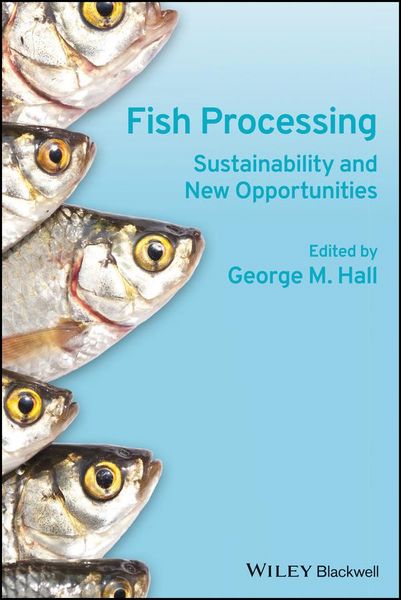
Fish Processing Sustainability and New Opportunities
-
Form:Einzelkauf Download
-
Sprache:Englisch
-
eBook Format:PDF
- PDF Fr. 169.00 ausgewählt
- ePUB Fr. 169.00
Fr. 169.00
inkl. gesetzl. MwSt.Beschreibung
Produktdetails
Format
Kopierschutz
Ja
Family Sharing
Nein
Text-to-Speech
Nein
Erscheinungsdatum
02.09.2010
Herausgeber
George M. HallVerlag
For DummiesSeitenzahl
312 (Printausgabe)
Dateigröße
5789 KB
Auflage
1. Auflage
Sprache
Englisch
EAN
9781444328592
This book seeks to address the challenges facing the international
seafood industry via a two pronged approach: by offering the latest
information on established technologies and introducing new ideas
and technologies. An introductory chapter sets the tone for the
book by presenting the background against which fish processing
will exist in the near future. Chapter two looks at the
environmental and sustainability issues relating to conventional
fish processing, including processing efficiency and better use of
the outputs currently considered wastes. The impact of
mechanisation and computerisation on environmental sustainability
is also addressed. Subsequent chapters examine the latest
developments in established fish processing technologies such as
canning, curing, freezing and chilling, with an emphasis on the
environmental aspects of packaging and the process itself. In
addition, quality and processing parameters for specific species,
including new species, are described.
The second part of the book gives authors the opportunity to
introduce the potential technologies and applications of the future
to a wider audience. These include fermented products and their
acceptance by a wider audience; the utilisation of fish processing
by-products as aquaculture feeds; and the use of by-products for
bioactive compounds in biomedical, nutraceutical, cosmetic and
other applications.
seafood industry via a two pronged approach: by offering the latest
information on established technologies and introducing new ideas
and technologies. An introductory chapter sets the tone for the
book by presenting the background against which fish processing
will exist in the near future. Chapter two looks at the
environmental and sustainability issues relating to conventional
fish processing, including processing efficiency and better use of
the outputs currently considered wastes. The impact of
mechanisation and computerisation on environmental sustainability
is also addressed. Subsequent chapters examine the latest
developments in established fish processing technologies such as
canning, curing, freezing and chilling, with an emphasis on the
environmental aspects of packaging and the process itself. In
addition, quality and processing parameters for specific species,
including new species, are described.
The second part of the book gives authors the opportunity to
introduce the potential technologies and applications of the future
to a wider audience. These include fermented products and their
acceptance by a wider audience; the utilisation of fish processing
by-products as aquaculture feeds; and the use of by-products for
bioactive compounds in biomedical, nutraceutical, cosmetic and
other applications.
Kundinnen und Kunden meinen
Verfassen Sie die erste Bewertung zu diesem Artikel
Helfen Sie anderen Kund*innen durch Ihre Meinung