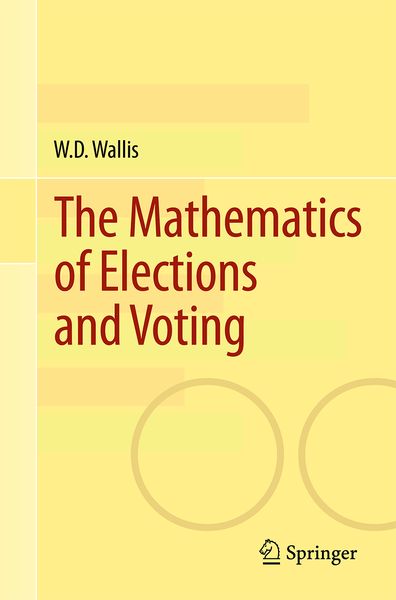
The Mathematics of Elections and Voting
-
- Taschenbuch ausgewählt
- eBook
-
Sprache:Englisch
Fr. 94.90
inkl. gesetzl. MwSt.,
Beschreibung
Produktdetails
Einband
Taschenbuch
Erscheinungsdatum
24.10.2014
Abbildungen
X, 96 p.
Verlag
SpringerSeitenzahl
96
Maße (L/B/H)
23.5/15.5/0.6 cm
Gewicht
197 g
Auflage
2014
Sprache
Englisch
ISBN
978-3-319-09809-8
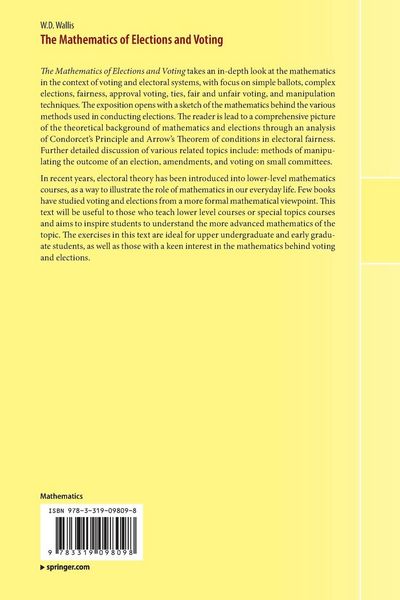
This title takes an in-depth look at the mathematics in the context of voting and electoral systems, with focus on simple ballots, complex elections, fairness, approval voting, ties, fair and unfair voting, and manipulation techniques. The exposition opens with a sketch of the mathematics behind the various methods used in conducting elections. The reader is lead to a comprehensive picture of the theoretical background of mathematics and elections through an analysis of Condorcet’s Principle and Arrow’s Theorem
of
conditions in electoral fairness. Further detailed discussion of various related topics include: methods of manipulating the outcome of an election, amendments, and voting on small committees.
In recent years, electoral theory has been introduced into lower-level mathematics courses, as a way to illustrate the role of mathematics in our everyday life. Few books have studied voting and elections from amore formal mathematical viewpoint. This text will be useful to those who teach lower level courses or special topics courses and aims to inspire students to understand the more advanced mathematics of the topic. The exercises in this text are ideal for upper undergraduate and early graduate students, as well as those with a keen interest in the mathematics behind voting and elections.
Noch keine Bewertungen vorhanden
Verfassen Sie die erste Bewertung zu diesem Artikel
Helfen Sie anderen Kundinnen und Kunden durch Ihre Meinung.