KI-Beratung Beta

  • Produktbild: Rethinking Youth Wellbeing
  • Produktbild: Rethinking Youth Wellbeing

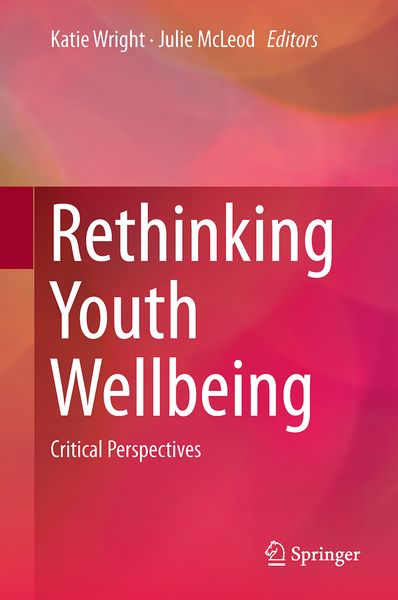
Rethinking Youth Wellbeing Critical Perspectives

Fr. 137.00

inkl. gesetzl. MwSt., Versandkostenfrei


Beschreibung

This volume offers a critical rethinking of the construct of youth wellbeing, stepping back from taken-for-granted and psychologically inflected understandings. Wellbeing has become a catchphrase in educational, health and social care policies internationally, informing a range of school programs and...

Beschreibung

This volume offers a critical rethinking of the construct of youth wellbeing, stepping back from taken-for-granted and psychologically inflected understandings. Wellbeing has become a catchphrase in educational, health and social care policies internationally, informing a range of school programs and social interventions and increasingly shaping everyday understandings of young people. Drawing on research by established and emerging scholars in Australia, Singapore and the UK, the book critically examines the myriad effects of dominant discourses of wellbeing on the one hand, and the social and cultural dimensions of wellbeing on the other. From diverse methodological and theoretical perspectives, it explores how notions of wellbeing have been mobilized across time and space, in and out of school contexts, and the different inflections and effects of wellbeing discourses are having in education, transnationally and comparatively. The book offers researchers as well as practitioners new perspectives on current approaches to student wellbeing in schools and novel ways of thinking about the wellbeing of young people beyond educational settings.

Portrait


Katie Wright is an Australian Research Council Fellow (DECRA) and lecturer at the University of Melbourne. Her major research interests concern the role and effects of psychological knowledges and therapeutic discourses in social change, cultural life, and educational contexts. Current research projects include a study of public inquiries into childhood maltreatment, a cultural history of adolescence and schooling, and an investigation of past and present understandings of youth mental health and wellbeing. Recent publications include The Rise of the Therapeutic Society: Psychological Knowledge & the Contradictions of Cultural Change (2011).

Julie McLeod is Professor, Melbourne Graduate School of Education, and an Australian Research Council Future Fellow (2012-2016). She is Deputy Director of the Melbourne Social Equity Institute and an editor of the journal Gender and Education. Her research areas include gender and education, social inequalities, youth identity, and curriculum history. She is currently working on a history of adolescence and citizenship education (1930s-1970s), a history of school design and pedagogical innovation and a new project is on youth identity and educational inequality since 1950. Recent books include Researching Social Change; Qualitative Approaches (2009), and Making Modern Lives: Subjectivity, Schooling and Social Change (2006).

Produktdetails

Einband

Gebundene Ausgabe

Erscheinungsdatum

14.11.2014

Abbildungen

XI, 222 p. 2 illus. in color.

Herausgeber Katie Wright + weitere

Produktdetails

Einband

Gebundene Ausgabe

Erscheinungsdatum

14.11.2014

Abbildungen

XI, 222 p. 2 illus. in color.

Herausgeber
Verlag Springer Singapore
Seitenzahl

222

Maße (L/B/H)

24.1/16/1.9 cm

Gewicht

472 g

Auflage

2015

Sprache

Englisch

ISBN

978-981-287-187-9

Herstelleradresse

Springer-Verlag KG
Sachsenplatz 4-6
1201 Wien
AT

Email: ProductSafety@springernature.com

Noch keine Bewertungen vorhanden

Verfassen Sie die erste Bewertung zu diesem Artikel

Helfen Sie anderen Kundinnen und Kunden durch Ihre Meinung.

Kundinnen und Kunden meinen

Bewertungen (0)

Die Leseprobe wird geladen.
  • Produktbild: Rethinking Youth Wellbeing
  • Produktbild: Rethinking Youth Wellbeing

  • 1. Inventing youth wellbeing by
    Julie McLeod & Katie Wright
    .-
    2. To be well is to be not unwell: The new battleground inside our children’s heads by

    Linda Graham
    .-

    3. Vulnerability and wellbeing in educational settings: The implications of a therapeutic approach to social justice by

    Kathryn Ecclestone
    .-

    4. The limits of wellbeing by

    Johanna Wyn, Hernan Cuervo & Evelina Landstedt
    .-

    5. Constructions of young women’s health and wellbeing in neoliberal times: A case study of the HPV vaccination program in Australia by

    Kellie Burns & Cristyn Davies
    .-

    6. Young people, sexual pleasure and sexual health services: What happens when “good sex” is bad for your health? By

    Ester McGeeney
    .-

    7. “I’d just cut myself to kill the pain”: Seeing sense in young women’s self-injury by

    Kathryn Daley
    .-

    8. Rethinking role-play for health and wellbeing: Creating a pedagogy of possibility by

    Helen Cahill
    .-

    9. Wellbeing and schools: Exploring the normative dimensions by

    Amy Chapman
    .-

    10. Social-emotional learning: Promotion of youth wellbeing in Singapore schools by

    Chong Wan Har and Lee Boon Ooi
    .-

    11. Happiness, wellbeing and self-esteem: Public feelings and educational projects by

    Julie McLeod
    .-

    12. From targeted interventions to universal approaches: Historicizing wellbeing by

    Katie Wright
    .