Beschreibung
Produktdetails
Einband
Taschenbuch
Erscheinungsdatum
23.08.2014
Verlag
Springer BerlinSeitenzahl
195
Maße (L/B/H)
23.5/15.5/1.2 cm
Gewicht
324 g
Auflage
Softcover reprint of the original 1st ed. 1998
Sprache
Englisch
ISBN
978-3-642-80304-8
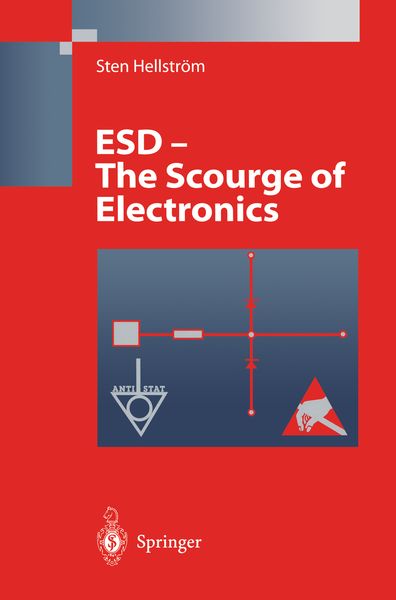
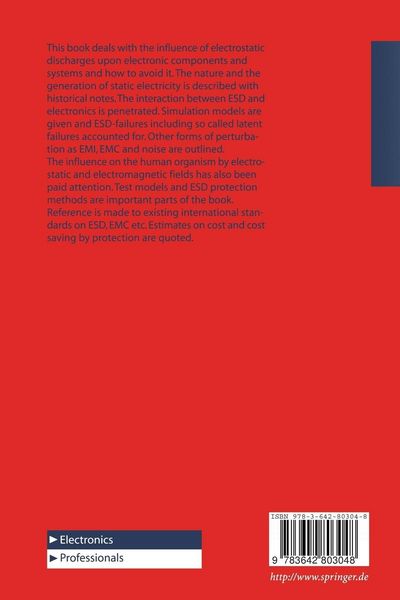
This book on electrostatic discharge phenomena is essentially a translation and update ofa Swedish edition from 1992. The book is intended for people working with electronic circuits and equipments, in application and development. All personnel should be aware of the ESD-hazards, especially those responsible for quality. ESD-prevention is a part of TQM (Total Quality Management). The book is also usable for courses on the subject. Background It was soon realised that the MOS-circuits (MOS=Metal Oxide Semiconductor), which appeared in the beginning of the 1960-ties were sensitive to electrostatic discharges. But a severe accident accelerated the search for materials that do not generate electric charges. In April 1964 three people were working inside a satellite at Cape Kennedy Space Center. They suddenly screamed "we are burning". They died. The satellite incapsulation was covered with untreated plastics to protect against dust. When the plastics was pulled off both this and the metal incapsulating got charged. A discharge from the metal ignited inflammable parts of the satellite. Eleven more people were injured and the cost of the accident amounted to about 55 billions USD.
Noch keine Bewertungen vorhanden
Verfassen Sie die erste Bewertung zu diesem Artikel
Helfen Sie anderen Kundinnen und Kunden durch Ihre Meinung.