KI-Beratung Beta

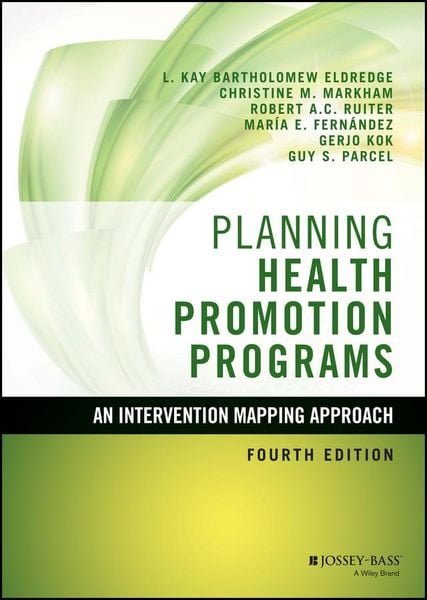
Produktbild: Markham, C: Planning Health Promotion Programs

Markham, C: Planning Health Promotion Programs An Intervention Mapping Approach

Fr. 144.00

inkl. gesetzl. MwSt., Versandkostenfrei


Beschreibung

The Intervention Mapping bible, updated with new theory, trends, and cases

Planning Health Promotion Programs is the "bible" of the field, guiding students and practitioners through the planning process from a highly practical perspective. Using an original framework called Intervention Mapping, this...

Beschreibung

The Intervention Mapping bible, updated with new theory, trends, and cases

Planning Health Promotion Programs is the "bible" of the field, guiding students and practitioners through the planning process from a highly practical perspective. Using an original framework called Intervention Mapping, this book presents a series of steps, tasks, and processes that help you develop effective health promotion and education programs using a variety of approaches. As no single model can accurately predict all health behavior or environmental changes, this book shows you how to choose useful theories and integrate constructs from multiple theories to describe health problems and develop appropriate promotion and education solutions. This new fourth edition has been streamlined for efficiency, with information on the latest theories and trends in public health, including competency-based training and inter-professional education. New examples and case studies show you these concepts in action, and the companion website provides lecture slides, additional case studies, and a test bank to bring this book directly into the classroom.

Health education and health promotion is a central function of many public health roles, and new models, theories, and planning approaches are always emerging. This book guides you through the planning process using the latest developments in the field, and a practical approach that serves across discipline boundaries.

  • Merge multiple theories into a single health education solution
  • Learn the methods and processes of intervention planning
  • Gain a practical understanding of multiple planning approaches
  • Get up to date on the latest theories, trends, and developments in the field

Both academic and practice settings need a realistic planning handbook based on system, not prescription. Planning Health Promotion Programs is the essential guide to the process, equipping you with the knowledge and skills to develop solutions without a one-size-fits-all approach.

Produktdetails

Einband

Gebundene Ausgabe

Erscheinungsdatum

15.03.2016

Verlag John Wiley & Sons Inc
Seitenzahl

704

Produktdetails

Einband

Gebundene Ausgabe

Erscheinungsdatum

15.03.2016

Verlag John Wiley & Sons Inc
Seitenzahl

704

Maße (L/B/H)

24.1/18.4/4.3 cm

Gewicht

1485 g

Farbe

Vanille / Dunkelgrün

Auflage

4. Auflage

Sprache

Englisch

ISBN

978-1-119-03549-7

Herstelleradresse

Wiley-VCH GmbH
Boschstrasse 12
69469 Weinheim
DE
product_safety@wiley.com

Noch keine Bewertungen vorhanden

Verfassen Sie die erste Bewertung zu diesem Artikel

Helfen Sie anderen Kundinnen und Kunden durch Ihre Meinung.

Kundinnen und Kunden meinen

Bewertungen (0)

Die Leseprobe wird geladen.
  • Produktbild: Markham, C: Planning Health Promotion Programs
  • Figures and Tables vii

    Acknowledgments xiii

    About the Authors xvii

    Part One: Foundations 1

    Chapter 1 Overview of Intervention Mapping 3

    Competency 3

    Perspectives 7

    Intervention Mapping Steps 12

    Core Processes for Using Theory and Evidence 20

    The Role of Culture in Intervention Planning 28

    Navigating the Book 30

    Important Repeating Concepts in the Book 31

    Summary 32

    Discussion Questions and Learning Activities 38

    References 39

    Chapter 2 Behavior-Oriented Theories Used in Health Promotion 57

    Competency 57

    Perspectives 58

    Overview of Theories 65

    Learning Theories 66

    Theories of Information Processing 70

    Theories of Health Behavior 74

    Theories of Reasoned Action 78

    Theories of Goal-Directed Behavior 84

    Theories of Automatic Behavior, Impulsive Behavior, and Habits 89

    Stage Theories 95

    Attribution Theory and Relapse Prevention 99

    Theories of Persuasive Communication 101

    Theories of Self-Regulation 105

    Social Cognitive Theory 109

    Theories of Stigma and Discrimination 113

    Diffusion of Innovations Theory 116

    Summary 120

    Discussion Questions and Learning Activities 120

    References 121

    Chapter 3 Environment-Oriented Theories 145

    Competency 145

    Perspectives 146

    General Environmental-Oriented Theories 149

    Interpersonal-Level Theories 155

    Organizational-Level Theories 160

    Community-Level Theories 167

    Societal and Governmental Theories 184

    Summary 192

    Discussion Questions and Learning Activities 192

    References 193

    Part Two: InterventionMapping Steps 209

    Chapter 4 Intervention Mapping Step 1: LogicModel of the Problem 211

    Competency 211

    Perspectives 212

    Tasks for Step 1 214

    Summary 261

    Discussion Questions and Learning Activities 262

    References 263

    Chapter 5 Intervention Mapping Step 2: Program Outcomes and Objectives-LogicModel of Change 283

    Competency 283

    Perspectives 284

    Tasks for Step 2 286

    Summary 330

    Discussion Questions and Learning Activities 331

    References 332

    Chapter 6 Intervention Mapping Step 3: Program Design 345

    Competency 345

    Deciding How to Start 345

    Perspectives 350

    Tasks for Step 3 355

    Summary 416

    Discussion Questions and Learning Activities 417

    References 418

    Chapter 7 Intervention Mapping Step 4: Program Production 435

    Competency 435

    Perspectives 436

    Tasks for Step 4 437

    Summary 475

    Discussion Questions and Learning Activities 475

    References 476

    Chapter 8 Intervention Mapping Step 5: Program Implementation Plan 483

    Competency 483

    Perspectives 484

    Tasks for Step 5 494

    Summary 528

    Discussion Questions and Learning Activities 529

    References 530

    Chapter 9 Intervention Mapping Step 6: Evaluation Plan with Patricia Dolan Mullen 541

    Competency 541

    Perspectives 541

    Tasks for Step 6 546

    Summary 584

    Discussion Questions and Learning Activities 585

    References 585

    Chapter 10 Using Intervention Mapping to Adapt Evidence-Based Interventions with Linda Highfield, Marieke A. Hartman, Patricia Dolan

    Mullen, and Joanne N. Leerlooijer 597

    Competency 597

    Perspectives 598

    Intervention Mapping for Adaptation 603

    Summary 642

    Discussion Questions and Learning Activities 643

    References 643

    Index 651