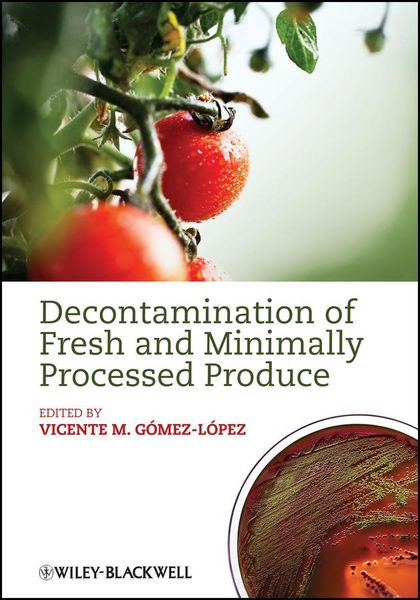
Decontamination of Fresh and Minimally Processed Produce
-
Form:Einzelkauf Download
-
Sprache:Englisch
-
eBook Format:ePUB
- PDF Fr. 163.00
- ePUB Fr. 163.00 ausgewählt
Fr. 163.00
inkl. gesetzl. MwSt.Beschreibung
Produktdetails
Format
ePUB
Kopierschutz
Ja
Family Sharing
Nein
Text-to-Speech
Ja
Erscheinungsdatum
13.02.2012
Herausgeber
Vicente M. Gómez-López + weitereVerlag
John Wiley & Sons IncSeitenzahl
576 (Printausgabe)
Dateigröße
11494 KB
Auflage
1. Auflage
Sprache
Englisch
EAN
9781118229316
Attempts to provide safer and higher quality fresh and minimally
processed produce have given rise to a wide variety of
decontamination methods, each of which have been extensively
researched in recent years. Decontamination of Fresh and
Minimally Processed Produce is the first book to provide
a systematic view of the different types of decontaminants for
fresh and minimally processed produce. By describing the different
effects - microbiological, sensory, nutritional and
toxicological - of decontamination treatments, a team of
internationally respected authors reveals not only the impact of
decontaminants on food safety, but also on microbial spoilage,
vegetable physiology, sensory quality, nutritional and
phytochemical content and shelf-life. Regulatory and toxicological
issues are also addressed.
The book first examines how produce becomes contaminated, the
surface characteristics of produce related to bacterial attachment,
biofilm formation and resistance, and sublethal damage and its
implications for decontamination. After reviewing how produce is
washed and minimally processed, the various decontamination methods
are then explored in depth, in terms of definition, generation
devices, microbial inactivation mechanisms, and effects on food
safety. Decontaminants covered include: chlorine, electrolyzed
oxidizing water, chlorine dioxide, ozone, hydrogen peroxide,
peroxyacetic acid, essential oils and edible films and coatings.
Other decontamination methods addressed are biological strategies
(bacteriophages, protective cultures, bacteriocins and quorum
sensing) and physical methods (mild heat, continuous UV light,
ionizing radiation) and various combinations of these methods
through hurdle technology. The book concludes with descriptions of
post-decontamination methods related to storage, such as modified
atmosphere packaging, the cold chain, and modeling tools for
predicting microbial growth and inactivation.
The many methods and effects of decontamination are detailed,
enabling industry professionals to understand the available
state-of-the-art methods and select the most suitable approach for
their purposes. The book serves as a compendium of information for
food researchers and students of pre- and postharvest technology,
food microbiology and food technology in general. The structure of
the book allows easy comparisons among methods, and searching
information by microorganism, produce, and quality traits.
processed produce have given rise to a wide variety of
decontamination methods, each of which have been extensively
researched in recent years. Decontamination of Fresh and
Minimally Processed Produce is the first book to provide
a systematic view of the different types of decontaminants for
fresh and minimally processed produce. By describing the different
effects - microbiological, sensory, nutritional and
toxicological - of decontamination treatments, a team of
internationally respected authors reveals not only the impact of
decontaminants on food safety, but also on microbial spoilage,
vegetable physiology, sensory quality, nutritional and
phytochemical content and shelf-life. Regulatory and toxicological
issues are also addressed.
The book first examines how produce becomes contaminated, the
surface characteristics of produce related to bacterial attachment,
biofilm formation and resistance, and sublethal damage and its
implications for decontamination. After reviewing how produce is
washed and minimally processed, the various decontamination methods
are then explored in depth, in terms of definition, generation
devices, microbial inactivation mechanisms, and effects on food
safety. Decontaminants covered include: chlorine, electrolyzed
oxidizing water, chlorine dioxide, ozone, hydrogen peroxide,
peroxyacetic acid, essential oils and edible films and coatings.
Other decontamination methods addressed are biological strategies
(bacteriophages, protective cultures, bacteriocins and quorum
sensing) and physical methods (mild heat, continuous UV light,
ionizing radiation) and various combinations of these methods
through hurdle technology. The book concludes with descriptions of
post-decontamination methods related to storage, such as modified
atmosphere packaging, the cold chain, and modeling tools for
predicting microbial growth and inactivation.
The many methods and effects of decontamination are detailed,
enabling industry professionals to understand the available
state-of-the-art methods and select the most suitable approach for
their purposes. The book serves as a compendium of information for
food researchers and students of pre- and postharvest technology,
food microbiology and food technology in general. The structure of
the book allows easy comparisons among methods, and searching
information by microorganism, produce, and quality traits.
Noch keine Bewertungen vorhanden
Verfassen Sie die erste Bewertung zu diesem Artikel
Helfen Sie anderen Kundinnen und Kunden durch Ihre Meinung.