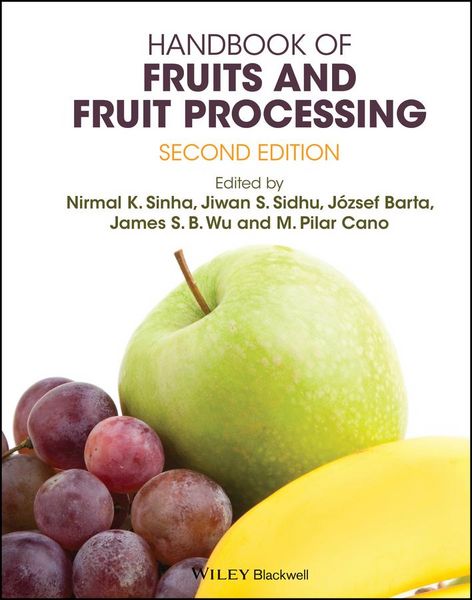
Handbook of Fruits and Fruit Processing
-
Form:Einzelkauf Download
-
Sprache:Englisch
-
eBook Format:ePUB
- PDF Fr. 178.00
- ePUB Fr. 178.00 ausgewählt
Fr. 178.00
inkl. gesetzl. MwSt.Beschreibung
Produktdetails
Format
ePUB
Kopierschutz
Ja
Family Sharing
Nein
Text-to-Speech
Ja
Erscheinungsdatum
20.06.2012
Herausgeber
Nirmal K. Sinha + weitereVerlag
John Wiley & Sons IncSeitenzahl
694 (Printausgabe)
Dateigröße
7098 KB
Auflage
2. Auflage
Sprache
Englisch
EAN
9781118352632
HANDBOOK OF FRUITS AND FRUIT PROCESSING
SECOND EDITION
Fruits are botanically diverse, perishable, seasonal, and predominantly regional in production. They come in many varieties, shapes, sizes, colors, flavors, and textures and are an important part of a healthy diet and the global economy. Besides vitamins, minerals, fibers, and other nutrients, fruits contain phenolic compounds that have pharmacological potential. Consumed as a part of a regular diet, these naturally occurring plant constituents are believed to provide a wide range of physiological benefits through their antioxidant, anti-allergic, anti-carcinogenic, and anti-inflammatory properties.
Handbook of Fruits and Fruit Processing distils the latest developments and research efforts in this field that are aimed at improving production methods, post-harvest storage and processing, safety, quality, and developing new processes and products. This revised and updated second edition expands and improves upon the coverage of the original book. Some highlights include chapters on the physiology and classification of fruits, horticultural biochemistry, microbiology and food safety (including HACCP, safety and the regulation of fruits in the global market), sensory and flavor characteristics, nutrition, naturally present bioactive phenolics, postharvest physiology, storage, transportation, and packaging, processing, and preservation technologies. Information on the major fruits includes tropical and super fruits, frozen fruits, canned fruit, jelly, jam and preserves, fruit juices, dried fruits, and wines. The 35 chapters are organized into five parts:
* Part I: Fruit physiology, biochemistry, microbiology, nutrition, and health
* Part II: Postharvest handling and preservation of fruits
* Part III: Product manufacturing and packaging
* Part IV: Processing plant, waste management, safety, and regulations
* Part V: Production, quality, and processing aspects of major fruits and fruit products
Every chapter has been contributed by professionals from around the globe representing academia, government institutions, and industry. The book is designed to be a valuable source and reference for scientists, product developers, students, and all professionals with an interest in this field.
SECOND EDITION
Fruits are botanically diverse, perishable, seasonal, and predominantly regional in production. They come in many varieties, shapes, sizes, colors, flavors, and textures and are an important part of a healthy diet and the global economy. Besides vitamins, minerals, fibers, and other nutrients, fruits contain phenolic compounds that have pharmacological potential. Consumed as a part of a regular diet, these naturally occurring plant constituents are believed to provide a wide range of physiological benefits through their antioxidant, anti-allergic, anti-carcinogenic, and anti-inflammatory properties.
Handbook of Fruits and Fruit Processing distils the latest developments and research efforts in this field that are aimed at improving production methods, post-harvest storage and processing, safety, quality, and developing new processes and products. This revised and updated second edition expands and improves upon the coverage of the original book. Some highlights include chapters on the physiology and classification of fruits, horticultural biochemistry, microbiology and food safety (including HACCP, safety and the regulation of fruits in the global market), sensory and flavor characteristics, nutrition, naturally present bioactive phenolics, postharvest physiology, storage, transportation, and packaging, processing, and preservation technologies. Information on the major fruits includes tropical and super fruits, frozen fruits, canned fruit, jelly, jam and preserves, fruit juices, dried fruits, and wines. The 35 chapters are organized into five parts:
* Part I: Fruit physiology, biochemistry, microbiology, nutrition, and health
* Part II: Postharvest handling and preservation of fruits
* Part III: Product manufacturing and packaging
* Part IV: Processing plant, waste management, safety, and regulations
* Part V: Production, quality, and processing aspects of major fruits and fruit products
Every chapter has been contributed by professionals from around the globe representing academia, government institutions, and industry. The book is designed to be a valuable source and reference for scientists, product developers, students, and all professionals with an interest in this field.
Kundinnen und Kunden meinen
Verfassen Sie die erste Bewertung zu diesem Artikel
Helfen Sie anderen Kund*innen durch Ihre Meinung