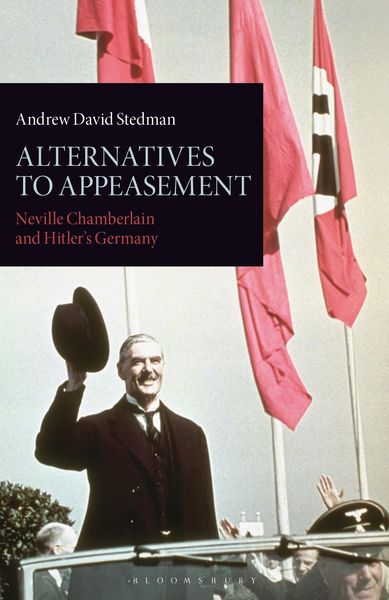
Alternatives to Appeasement Neville Chamberlain and Hitler's Germany
Aus der Reihe
Bloomsbury 3PL
-
- Hardcover
- Taschenbuch
- eBook ausgewählt
-
Form:Einzelkauf Download
-
Sprache:Englisch
-
eBook Format:PDF
- PDF Fr. 40.90 ausgewählt
- ePUB Fr. 40.90
Fr. 40.90
inkl. gesetzl. MwSt.Beschreibung
Produktdetails
Format
Kopierschutz
Ja
Family Sharing
Nein
Text-to-Speech
Nein
Erscheinungsdatum
16.12.2014
Verlag
Bloomsbury eBooks UKSeitenzahl
320 (Printausgabe)
Auflage
1. Auflage
Sprache
Englisch
EAN
9780857719065
Neville Chamberlain's policy of appeasing Hitler's Germany has been widely condemned. However, historians (and politicians) have been divided about the viability of alternative courses of action. Andrew David Stedman here charts the origins, development and viability of the various alternatives to Chamberlain's policy of appeasement. Using a wide range of sources, many previously unpublished, he provides a fascinating study of British foreign policy before World War II, surveying the main advocates of the other strategies available and outlining the complexities of each rival option. Providing a valuable new contribution to appeasement historiography, this is the first work to offer a comprehensive synthesis of all the alternatives available to Chamberlain, as well as to illuminate the policy debate within Government itself. Stedman provides a unique analysis of how realistic Chamberlain deemed each policy to be, as well as a bold assessment of strengths and weaknesses.
Stedman asserts that it was understandable that Chamberlain rejected the other policies he had available to him and that, contrary to popular belief, Chamberlain did in fact consider and explore each alternative as part of his wider strategy and his foreign policy often contained elements of the rival options. Ultimately, this book shows that none of the alternatives would have maintained a lasting peace in the troubled conditions of the 1930s. Although some might have affected the favourability, timing and circumstances of conflict, war could not have been avoided given the rapid rise of Hitler and Nazi Germany. Also contributing to debates on the use of appeasement in the modern world, this book will be essential reading for historians of World War II and the twentieth century, as well as scholars of International Relations.
Stedman asserts that it was understandable that Chamberlain rejected the other policies he had available to him and that, contrary to popular belief, Chamberlain did in fact consider and explore each alternative as part of his wider strategy and his foreign policy often contained elements of the rival options. Ultimately, this book shows that none of the alternatives would have maintained a lasting peace in the troubled conditions of the 1930s. Although some might have affected the favourability, timing and circumstances of conflict, war could not have been avoided given the rapid rise of Hitler and Nazi Germany. Also contributing to debates on the use of appeasement in the modern world, this book will be essential reading for historians of World War II and the twentieth century, as well as scholars of International Relations.
Kundinnen und Kunden meinen
Verfassen Sie die erste Bewertung zu diesem Artikel
Helfen Sie anderen Kund*innen durch Ihre Meinung