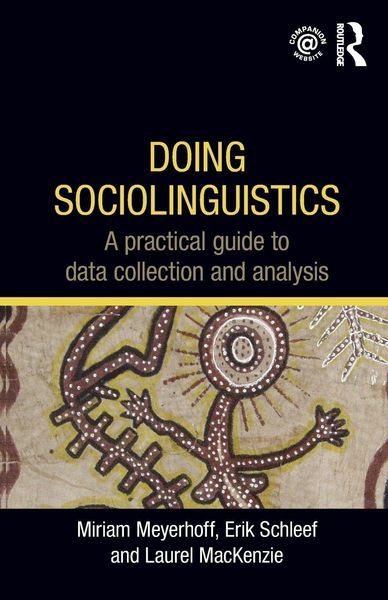
Doing Sociolinguistics A practical guide to data collection and analysis
-
- Hardcover
- Taschenbuch ausgewählt
- eBook
-
Sprache:Englisch
Fr. 68.90
inkl. gesetzl. MwSt.,
Beschreibung
Produktdetails
Einband
Taschenbuch
Erscheinungsdatum
02.07.2015
Abbildungen
2 SW-Fotos, 29 SW-Zeichn., 10 Tabellen
Verlag
Taylor & FrancisSeitenzahl
214
Maße (L/B/H)
21.6/14/1.2 cm
Gewicht
276 g
Auflage
1st ed.
Sprache
Englisch
ISBN
978-0-415-69820-7
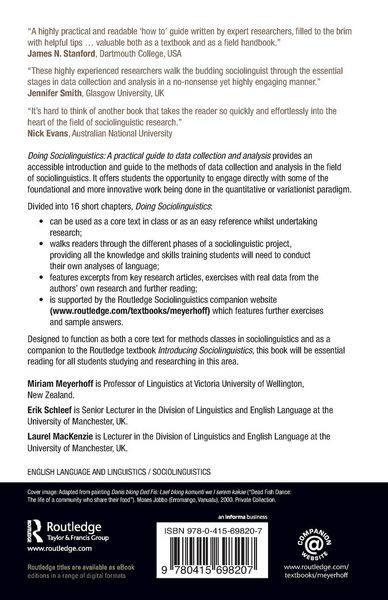
Doing Sociolinguistics: A practical guide to data collection and analysis provides an accessible introduction and guide to the methods of data collection and analysis in the field of sociolinguistics. It offers students the opportunity to engage directly with some of the foundational and more innovative work being done in the quantitative or variationist paradigm.
Divided into sixteen short chapters, Doing Sociolinguistics:
- can be used as a core text in class or as an easy reference whilst undertaking research
- walks readers through the different phases of a sociolinguistic project, providing all the knowledge and skills students will need to conduct their own analyses of language
- features excerpts from key research articles; exercises with real data from the authors' own research; sample answers to the exercises; and further reading
Designed to function as both a core text for methods classes in sociolinguistics and as a companion to the Routledge textbook Introducing Sociolinguistics, this book will be essential reading for all students studying and researching in this area.
Noch keine Bewertungen vorhanden
Verfassen Sie die erste Bewertung zu diesem Artikel
Helfen Sie anderen Kundinnen und Kunden durch Ihre Meinung.