Gutscheinbedingungen

*Gültig bis 20.09.2026 auf (fast) alles. Ausgeschlossen sind Smartboxen, Zeitschriften, Tickets, Lebensmittel, Gaming-Elektroartikel, Tinte/Toner, Gutscheine, Geschenkkarten, Blumen und Abos | Einlösbar in allen Buchhandlungen von Orell Füssli, Barth Bücher, Buchladen Rapunzel, Schuler Orell Füssli, Stauffacher und ZAP unter Vorweisung des Gutscheins, auf www.orellfüssli.ch durch Eingabe des Gutscheincodes. Beim Service „eBooks verschenken“ und bei eBook-Käufen via eReader nicht einlösbar | Mindesteinkaufswert: Fr. 100.- | Nicht mit anderen Rabatten kumulierbar.

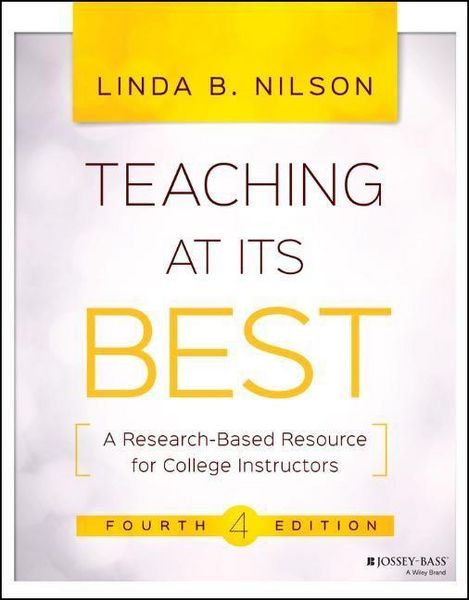
Produktbild: Teaching at Its Best

Teaching at Its Best A Research-Based Resource for College Instructors

Fr. 62.90

inkl. gesetzl. MwSt., Versandkostenfrei


Beschreibung

Produktdetails

Einband

Taschenbuch

Verlag

John Wiley & Sons

Seitenzahl

416

Maße (L/B/H)

1.9/21.8/27.6 cm

Gewicht

942 g

Auflage

4. Auflage

Sprache

Englisch

ISBN

978-1-119-09632-0

Beschreibung

Produktdetails

Einband

Taschenbuch

Verlag

John Wiley & Sons

Seitenzahl

416

Maße (L/B/H)

1.9/21.8/27.6 cm

Gewicht

942 g

Auflage

4. Auflage

Sprache

Englisch

ISBN

978-1-119-09632-0

Noch keine Bewertungen vorhanden

Verfassen Sie die erste Bewertung zu diesem Artikel

Helfen Sie anderen Kundinnen und Kunden durch Ihre Meinung.

Kundinnen und Kunden meinen

Bewertungen (0)

Die Leseprobe wird geladen.
  • Produktbild: Teaching at Its Best
  • The Author

    Preface

    Part I: Preparation for Teaching

    1 Understanding Students and How They Learn

    Your Undergraduate Student Body Profile

    How People Learn

    How Structure Increases Learning

    The Cognitive Development of Undergraduates

    Encouraging Cognitive Growth

    Teaching Today's Young Students

    The Challenge

    2. Outcomes-Centered Course Design

    Why Outcomes-Centered Course Design?

    Writing Outcomes

    Types of Outcomes

    Types of Cognitive Outcomes

    Sequencing Outcomes into a Learning Process

    Helpful Frameworks for Designing a Course

    Showing Students Their Learning Process

    Outcomes-Centered Course Development

    The Big Picture

    3. Building Critical Thinking into a Course Design

    The Many Faces of Critical Thinking

    Common Ground

    Critical Thinking Outcomes for Your Students

    Giving Students Practice in Critical Thinking

    The Goal: Critical Thinking in Everyday Life

    4. Deciding What Technology to Use

    Choosing Technologies Intelligently

    How Faculty and Students View Technology

    Lecture-Related Software

    The Learning Management System

    The Flipped Classroom

    Social Media

    Mobile Learning in Class

    Laptops in Class

    Web Resources

    Miscellaneous Technologies

    The Future of Educational Technology

    5. The Complete Syllabus

    How Long? How Extensive?

    The Case to Trim the Syllabus

    Essential Syllabus Items

    The Graphic Syllabus

    The Online "Living Syllabus"

    Getting Your Students to Read Your Syllabus

    Adding a Creative Element

    6. Copyright Guidelines for Instructors

    Where Copyright Does and Does Not Apply

    Common Copyright Misconceptions

    Free Use: Fair Use, Facts, and Public Domain

    Printed Text

    Images

    In-Class Performances

    Recording Broadcast Programming

    Online/Electronic Materials and Distance Learning

    Obtaining Permission or a License

    How Copyright Violations Are Actually Handled

    For Further and Future Reference

    Part II: Human Factors

    7. Creating a Welcoming Classroom Environment for All Your Students

    Planning a Welcoming Classroom

    A Welcoming First Day of Class

    Learning Students' Names

    The Inclusive, Equitable Classroom

    Maintaining a Welcoming Environment

    8. Enhancing Student Motivation

    Intrinsic and Extrinsic Motivation

    Students' Perceptions of Motivators in Their Courses

    Students' Values about College and Their Impact on Motivation

    Credible Theories of Motivation

    55 Strategies for Motivating Students

    No Magic Bullets

    9. Preventing and Responding to Classroom Incivility

    What Is Incivility?

    Why Do Students Behave This Way?

    Preventing Incivility: Your Classroom Persona

    Responding Wisely to Incivility

    Seeking Assistance

    10. Preserving Academic Integrity

    How Prevalent Is Cheating?

    Who Cheats and Why?

    Detecting Cheating

    42 Ways to Prevent Cheating

    Honor Codes

    Changing Student Values

    Part III: Tried-and-True Teaching Methods

    11. Matching Teaching Methods with Learning Outcomes

    Types of Tools

    Has Our Knowledge Changed Our Teaching?

    A Tool for Organizing Your Course

    12. Lecturing for Learning

    When and How Much to Lecture

    Preparing an Effective Lecture

    Delivering an Effective Lecture

    Incorporating Student-Active Breaks: The Interactive Lecture

    Inducing and Teaching Students to Take Good Notes

    Making the Lecture Effective

    13. Leading Effective Discussions

    When to Choose Discussion

    Setting the Stage for Discussion at the Start of Your Course

    Policies to Encourage Participation

    Skillful Discussion Management

    Questioning Techniques

    Organizing Discussion Questions

    Turning the Tables

    14. Coordinating Experiential Learning

    Student Presentation Formats

    Role Playing

    Simulations and Games

    Service-Learning and Civic Engagement: The Real Thing

    Maximizing the Value of Experiential Learning

    15. Managing Productive Groups

    A Group by Any Other Name. . .

    The Case for Group Learning

    Cautions about Group Learning

    Managing and Troubleshooting In-Class Ad Hoc Groups

    Team-Based Learning

    Preparing Students for Life

    Part IV: Inquiry-Based Methods for Solving Real-World Problems

    16. Inquiry-Guided Learning

    Definitions of Inquiry-Guided Learning

    The Effectiveness of Inquiry-Guided Learning

    The Need for Student Guidance

    Objects of Inquiry

    Modes of Inquiry

    Variations of Inquiry-Based Learning

    Upcoming Inquiry-Guided Methods

    17. The Case Method

    The Effectiveness of the Case Method

    The Subject Matter and Websites for Cases

    What Makes a Good Case and How to Write Your Own

    Types of Cases

    Debriefing Cases

    A Postscript for Pioneers

    18. Problem-Based Learning

    How PBL Works

    Good PBL Problems and Where to Find Them

    What Students Think

    Creating Your Own PBL Problems

    19. Problem-Solving in the STEM Fields

    Where STEM Education Falls Short

    Improving Student Learning in STEM Courses: General Advice

    Improving Student Learning in STEM Courses: Specific Strategies

    "Getting Real" in the Lab

    Online Resources for STEM Education

    Why STEM Education Is So Important

    Part V: Tools and Techniques to Facilitate Learning

    20. Helping Students Learn How They Learn

    Learning As an "Inside Job"

    The Learner's Questions

    The Evidence for Self-Regulated Learning

    Activities and Assignments for Every Occasion

    Self-Regulated and Self-Directed Learning

    Sources for Teaching Your Students How to Learn

    21. Ensuring Students Prepare for Class

    Why Students Don't Prepare

    How We Can Equip and Induce Students to Come Prepared

    Specific Tools for Holding Students Accountable

    Managing Your Workload

    22. Teaching in Multiple Modes

    Kolb's Learning Styles Model and Experiential Learning Theory (ELT)

    Felder and Silverman's Learning Styles Model

    Multimodal Learning

    Combining Modes

    23. Making the Most of the Visual Mode

    How Visuals Enhance Learning

    Types of Visuals for Learning

    The Future of Visuals in Learning

    24. Improving Student Performance with Feedback

    When Feedback Fails

    Student Peer Feedback

    Self-Assessment

    Student Portfolios

    Instructor Feedback: Helping Students Improve with It

    Classroom Assessment Techniques

    During-the-Term Student Feedback

    Part VI: Assessment and Grading

    25. Preparing Students for Exams

    Test Preparation Measures

    Measures to Ensure Students Understand Our Language

    Anxiety-Reduction Measures

    What the Effort Is Worth

    The Power of Feedback

    26. Constructing Student Assessments for Grading

    General Testing Guidelines

    Objective Test Items

    Constructed-Response Tests Items and Assignments

    Student Assessments as Teaching Assessments

    27. Grading Student Assessments

    Grading Systems

    Grading Constructed Responses

    Grading Lab Reports

    How to Grade and Teach Mechanics at the Same

    Specifications ("Specs") Grading

    Returning Students' Work

    The Real Purpose of Grades

    28. Assessing and Documenting Teaching Effectiveness

    What Is Teaching Effectiveness?

    What Student Ratings Do and Do Not Measure

    How to Improve Your Student Ratings

    Documenting Your Effectiveness

    A Comprehensive Approach to Faculty Evaluation

    Complex beyond Measure

    Appendix: Instructional Support and Resources at Your Institution

    For Faculty, Staff, and Students

    Just for Students

    References

    Index