KI-Beratung Beta

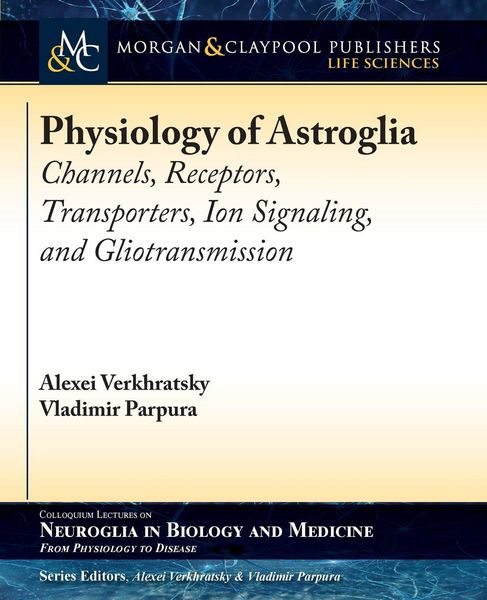
Produktbild: Physiology of Astroglia

Physiology of Astroglia Channels, Receptors, Transporters, Ion Signaling and Gliotransmission

Fr. 119.00

inkl. gesetzl. MwSt., Versandkostenfrei


Beschreibung

Astrocytes can be defined as the glia inhabiting the nervous system with the main function in the maintenance of nervous tissue homeostasis. Classified into several types according to their morphological appearance, many of astrocytes form a reticular structure known as astroglial syncytium, owing to...

Beschreibung

Astrocytes can be defined as the glia inhabiting the nervous system with the main function in the maintenance of nervous tissue homeostasis. Classified into several types according to their morphological appearance, many of astrocytes form a reticular structure known as astroglial syncytium, owing to their coupling via intercellular channels organized into gap junctions. Not only do astrocytes establish such homocellular contacts, but they also engage in intimate heterocellular interactions with neurons, most notably at synaptic sites. As synaptic structures house the very core of information transfer and processing in the nervous system, astroglial perisynaptic positioning assures that these glial cells can nourish neurons and establish bidirectional communication with them, functions outlined in the concepts of the astrocytic cradle and multi-partite synapse, respectively. Astrocytes possess a rich assortment of ligand receptors, ion and water channels, and ion and ligand transporters, which collectively contribute to astrocytic control of homeostasis and excitability. Astroglia control glutamate and adenosine homeostasis to exert modulatory actions affecting the real-time operation of synapses. Fluctuations of intracellular calcium can lead to the release of various chemical transmitters from astrocytes through a process termed gliotransmission. Sodium fluctuations are closely associated to those of calcium with both dynamic events interfacing signaling and metabolism. Astrocytes appear fully integrated into the brain cellular circuitry, being an indispensable part of neural networks.

Produktdetails

Einband

Taschenbuch

Erscheinungsdatum

01.03.2015

Verlag Biota Publishing
Seitenzahl

174

Produktdetails

Einband

Taschenbuch

Erscheinungsdatum

01.03.2015

Verlag Biota Publishing
Seitenzahl

174

Maße (L/B/H)

23.5/19.1/1 cm

Gewicht

338 g

Sprache

Englisch

ISBN

978-1-61504-672-0

Herstelleradresse

Produktsicherheitsverantwortliche/r
Europaallee 1
36244 Bad Hersfeld
DE

Email: gpsr@libri.de

Noch keine Bewertungen vorhanden

Verfassen Sie die erste Bewertung zu diesem Artikel

Helfen Sie anderen Kundinnen und Kunden durch Ihre Meinung.

Kundinnen und Kunden meinen

Bewertungen (0)

  • Produktbild: Physiology of Astroglia