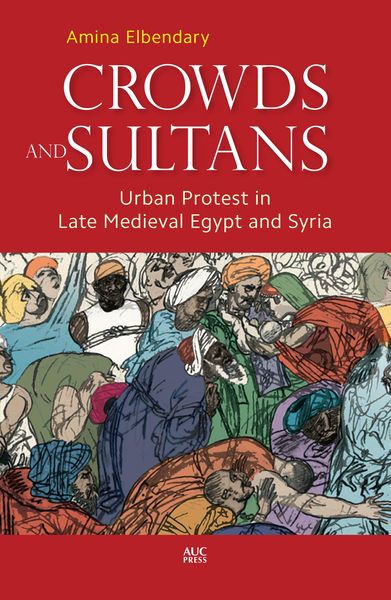
Crowds and Sultans Urban Protest in Late Medieval Egypt and Syria
Fr. 57.90
inkl. gesetzl. MwSt.,
Beschreibung
Produktdetails
Einband
Gebundene Ausgabe
Erscheinungsdatum
01.05.2016
Verlag
I.B. TaurisSeitenzahl
240
Maße (L/B/H)
23.8/15.6/2.7 cm
Gewicht
687 g
Sprache
Englisch
ISBN
978-977-416-717-1
During the fifteenth century, the Mamluk sultanate that had ruled Egypt and Syria since 1249-50 faced a series of sustained economic and political challenges to its rule, from the effects of recurrent plagues to changes in international trade routes. Both these challenges and the policies and behaviors of rulers and subjects in response to them left profound impressions on Mamluk state and society, precipitating a degree of social mobility and resulting in new forms of cultural expression. These transformations were also reflected in the frequent reports of protests during this period.
Noch keine Bewertungen vorhanden
Verfassen Sie die erste Bewertung zu diesem Artikel
Helfen Sie anderen Kundinnen und Kunden durch Ihre Meinung.