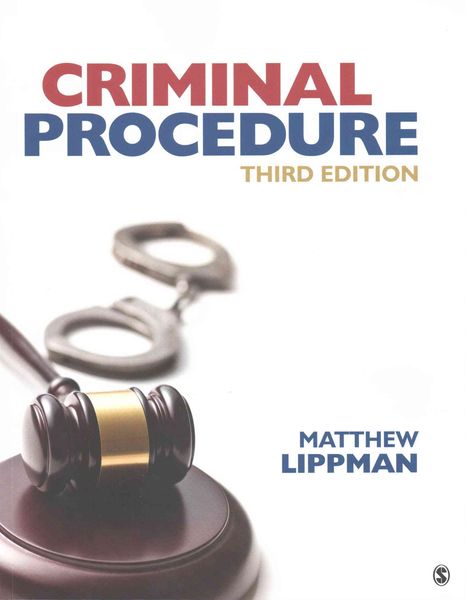
Produktbild: Lippman, M: Criminal Procedure

Lippman, M: Criminal Procedure

Fr. 173.00

inkl. gesetzl. MwSt., Versandkostenfrei


Beschreibung

Produktdetails

Einband

Taschenbuch

Erscheinungsdatum

16.03.2016

Verlag

Sage Publications

Seitenzahl

656

Maße (L/B/H)

27.9/21.7/2.5 cm

Gewicht

1344 g

Sprache

Englisch

ISBN

978-1-5063-0649-0

Beschreibung

Produktdetails

Einband

Taschenbuch

Erscheinungsdatum

16.03.2016

Verlag

Sage Publications

Seitenzahl

656

Maße (L/B/H)

27.9/21.7/2.5 cm

Gewicht

1344 g

Sprache

Englisch

ISBN

978-1-5063-0649-0

Noch keine Bewertungen vorhanden

Verfassen Sie die erste Bewertung zu diesem Artikel

Helfen Sie anderen Kundinnen und Kunden durch Ihre Meinung.

Kundinnen und Kunden meinen

Bewertungen (0)

  • Produktbild: Lippman, M: Criminal Procedure
  • CHAPTER 1: An Introduction to Criminal Procedure
    Criminal Law and Criminal Procedure
    Balancing Security and Rights
    The Objectives of Criminal Procedure
    The Criminal Justice Process
    Sources of the Law of Criminal Procedure
    The Structure of the Federal and State Court Systems
    Precedent
    Judicial Philosophy
    Law in Action and Law on the Books
    CHAPTER 2: The Sources of Criminal Procedure
    The Sources of Criminal Procedure
    The U.S. Constitution
    The U.S. Supreme Court
    State Constitutions and Court Decisions
    Federal and State Statutes
    Rules of Criminal Procedure
    A Model Code of Pretrial Procedure
    The Development of Due Process
    The Fourteenth Amendment
    Fundamental Fairness
    Total Incorporation
    Selective Incorporation
    Equal Protection
    The Impact of Supreme Court Decisions
    Two Models of Criminal Procedure
    Why Criminal Procedure Matters
    CHAPTER 3: Searches and Seizures
    The Historical Background of the Fourth Amendment
    Searches
    Informants and Electronic Eavesdropping
    Plain View
    Expectation of Privacy
    Open Fields
    Curtilage and Aerial Surveillance
    Technology and the Home
    Public Places and Private Businesses
    Abandoned Property
    Seizures of Persons
    CHAPTER 4: Stop and Frisk
    Reasonable Suspicion
    Informants and Hearsay
    Drug Courier Profiles
    Race and Reasonable Suspicion
    The Scope and Duration of a Terry Stop
    Frisks
    CHAPTER 5: Probable Cause and Arrests
    Arrests
    Probable Cause
    Reasonableness and Arrests
    Probable Cause, Warrants, and the Courts
    Arrests and Warrants
    Arrests in the Home
    Exigent Circumstances
    Deadly Force and Arrests
    Nondeadly Force
    Misdemeanor Arrests and Citations
    CHAPTER 6: Searches and Seizures of Property
    Search Warrants
    Knock and Announce
    Warrantless Searches
    Searches Incident to an Arrest
    Searches Incident to an Arrest and the Contemporaneous Requirement
    Searches of the Area of Immediate Control and Automobiles
    Misdemeanors and Searches Incident to an Arrest
    Pretext Arrests and Searches Incident to an Arrest
    Consent Searches
    The Scope of a Consent Search
    Withdrawal of Consent
    Third Party Consent
    Probable Cause Searches of Motor Vehicles
    Probable Cause Searches of Containers in Automobiles
    Other Warrantless Searches
    Inventories
    CHAPTER 7: Inspections and Regulatory Searches
    Administrative Inspections
    Special-Needs Searches
    International Borders
    Motor Vehicle Checkpoints
    Airport Screening
    Workplace Drug Testing
    Searches in High Schools
    Probation and Parole
    Correctional Institutions
    CHAPTER 8: Interrogations and Confessions
    Due Process
    The McNabb-Mallory Rule
    Escobedo v. Illinois
    The Right Against Self-Incrimination
    Miranda v. Arizona
    Custodial Interrogation
    The Public Safety Exception
    The Miranda Warnings
    Invoking the Miranda Rights
    Waiver
    Waiver: Question First and Warn Later
    Waiver Following Invocation of the Miranda Rights
    Interrogation
    Sixth Amendment Right to Counsel: Police Interrogations
    CHAPTER 9: Eyewitness and Scientific Identifications
    Wrongful Convictions and Eyewitness Identification
    The Sixth Amendment and Eyewitness Identifications
    The Sixth Amendment and Prearraignment Identifications
    The Sixth Amendment and Photographic Displays
    The Due Process Test
    Suggestiveness, Reliability, and the Totality of the Circumstances
    The Requirement of Police Involvement
    Scientific Identification
    DNA Evidence
    Polygraph Evidence
    CHAPTER 10: The Exclusionary Rule and Entrapment
    The Exclusionary Rule
    Debating the Exclusionary Rule
    Invoking the Exclusionary Rule
    Exceptions to the Exclusionary Rule
    Does the Exclusionary Rule Deter Unreasonable Searches and Seizures?
    Entrapment
    CHAPTER 11: Civil and Criminal Remedies for Constitutional Violations
    Civil Remedies
    Section 1983 Legal Actions Against Local and State Law Enforcement Officers
    Violation of Federal Constitutional and Statutory Rights
    Individual Liability Under Section 1983
    Absolute and Qualified Immunity
    The Affirmative Duty to Protect
    The Liability of Local Government Entities Under Section 1983
    Injunctions
    Pattern or Practice of the Deprivation of Constitutional Rights
    State Tort Remedies Against Law Enforcement Officers
    Remedies for Constitutional Violations by Federal Law Enforcement Officers
    Criminal Prosecutions
    Administrative Remedies
    Internal Affairs
    External Review
    CHAPTER 12: The Initiation of the Legal Process, Bail, and the Right to Counsel
    The Prosecutorial Discretion to Charge
    Pretrial Release
    Pretrial Detention
    Indigency and the Right to Counsel
    Right to Counsel and Critical Stages of Prosecution
    The Meaning of "All Criminal Prosecutions"
    Determining Indigency
    The Right to Select an Appointed Counsel
    The Right to Effective Legal Representation
    The Right to Self-Representation
    CHAPTER 13: The Courtroom: The Pretrial and Trial Process
    Preliminary Hearing
    Grand Jury
    Arraignment
    Pretrial Motions
    Constitutional Right to a Jury Trial
    The Twelve-Member Jury Requirement
    Jury Selection
    Peremptory Challenges
    Challenges to Judges
    Public Trial
    The Trial
    Opening Statement
    Presentation of Evidence
    Confrontation
    Cross-Examination
    Hearsay
    Compulsory Process
    Burden of Proof
    Reasonable Doubt
    Closing Arguments
    Jury Instructions
    Jury Deliberations
    Jury Unanimity
    Jury Nullification
    Guilty Pleas
    CHAPTER 14: Sentencing and Appeals
    A Brief History of Sentencing in the United States
    Criminal Punishment
    Purposes of Punishment
    Types of Punishment
    Approaches to Sentencing
    The Judicial Sentencing Process
    Sentencing Guidelines
    Determinate Sentences
    Cruel and Unusual Punishment
    Methods of Punishment
    Capital Punishment
    The Eighth Amendment and Sentences for a Term of Years
    The Eighth Amendment and Life Imprisonment for Juveniles
    Equal Protection
    Criminal Appeals
    Habeas Corpus
    CHAPTER 15: Counterterrorism
    Electronic Surveillance
    Sneak-and-Peek Searches
    Detention of Noncitizens
    Material Witness Warrants
    Monitoring of Attorney-Client Communications
    Watch List
    State Secrets Doctrine
    Interrogations
    Military Commissions and Combat Status Review Tribunals