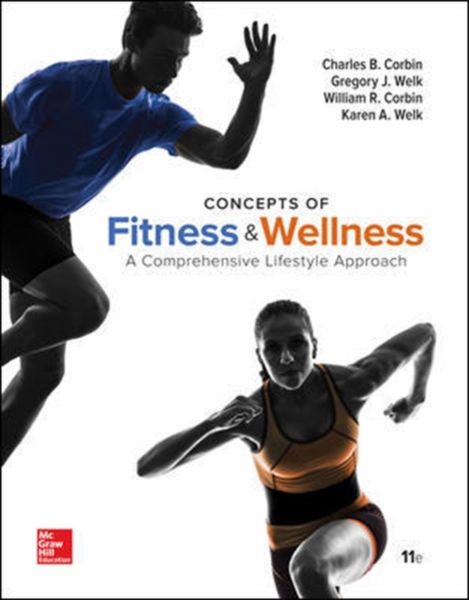
Concepts Of Fitness & Wellness A Comprehensive Lifestyle Approach
-
- Englisch ausgewählt
Fr. 188.00
inkl. gesetzl. MwSt.,
Beschreibung
Produktdetails
Einband
Leinen-Ordner
Altersempfehlung
ab 18 Jahr(e)
Erscheinungsdatum
28.10.2015
Verlag
McGraw-Hill Education LtdSeitenzahl
544
Maße (L/B/H)
27.4/21.1/1.8 cm
Gewicht
953 g
Auflage
11. Auflage
Sprache
Englisch
ISBN
978-0-07-352348-4
Concepts of Fitness & Wellness provides readers with the self-management skills necessary to adopt a healthy lifestyle. A pioneering text in the field, Concepts of Fitness & Wellness is designed to deliver a comprehensive text and digital program that continues to be at the cutting edge of physical activity and health promotion, empowering students to make positive steps towards developing a lifelong commitment to being active. The fully updated eleventh edition is supported by Connect, the only integrated digital learning environment that empowers students by continuously adapting to deliver precisely what they need, when they need it, so that your class time is more engaging and effective.
Connect is the only integrated learning system that empowers students by continuously adapting to deliver precisely what they need, when they need it, and how they need it, so that your class time is more engaging and effective.
Connect is the only integrated learning system that empowers students by continuously adapting to deliver precisely what they need, when they need it, and how they need it, so that your class time is more engaging and effective.
Noch keine Bewertungen vorhanden
Verfassen Sie die erste Bewertung zu diesem Artikel
Helfen Sie anderen Kundinnen und Kunden durch Ihre Meinung.