KI-Beratung Beta

Produktbild: Curry, S: Introduction to Drug Disposition and Pharmacokinet

Curry, S: Introduction to Drug Disposition and Pharmacokinet

Fr. 103.00

inkl. gesetzl. MwSt., Versandkostenfrei


Beschreibung

The application of knowledge of drug disposition, and skills in pharmacokinetics, are crucial to the development of new drugs and to a better understanding of how to achieve maximum benefit from existing ones. The book takes the reader from basic concepts to a point where those who wish to will be able...

Beschreibung

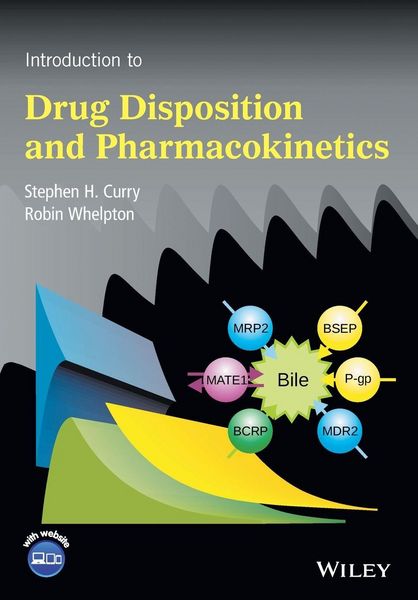
The application of knowledge of drug disposition, and skills in pharmacokinetics, are crucial to the development of new drugs and to a better understanding of how to achieve maximum benefit from existing ones. The book takes the reader from basic concepts to a point where those who wish to will be able to perform pharmacokinetic calculations and be ready to read more advanced texts and research papers. The book will be of benefit to students of medicine, pharmacy, pharmacology, biomedical sciences and veterinary science, including those who have elected to study the topic in more detail, such as via electives and special study modules. It will be of benefit to those involved in drug discovery and development, pharmaceutical and medicinal chemists, as well as budding toxicologists and forensic scientists who require the appropriate knowledge to interpret their findings and as an introductory text for clinical pharmacologists. Early chapters describe the basic principles of the topic while the later ones illustrate the application of those principles to modern approaches to drug development and clinical use. Full colour illustrations facilitate the learning experience and supporting material for course leaders and students can be found on the Companion Web Site

Rezension

"Another book on PK? Yes and there should be and it should be DD & PK. It is good, unique, and does fill a currently unmet need for those working in the xenobiotic arena. DD & PK is just like the perfect mystery novel-the one "you just can't put down." However, unlike a mystery novel which requires only one reading to find the answer, the reader of DD & PK will learn more than an answer to a single question. The reader will find many solutions to a wide variety of mysterious problems associated with the time course and actions of xenobiotics." International Journal of Toxicology, September 2018, Reviewed by John A. Budny, PhD, President, PharmaCal, Ltd
"This book has many innovations that make a welcome addition to the bookshelves of a wide range of pharmaceutical scientists. The effective use of figures and tables to summarize and clarify a wide range of issues is to be commended, as are the learning objectives at the start of the chapter coupled with the summary at the end providing a succinct way in understanding the objectives of the chapter and together with links to a website provides accessibility for all from the neophyte pharmacokineticist to the consultant physician. A book all in the Pharma industry should be aware of." Int. J. of Pharmacokinetics
"Overall, the book is written in a professional manner, the explanations are clear and simple, and the authors use drug-specific PK data to reinforce the critical concepts of each chapter..." One particular strength of this book is its excellent use of full color figures/pictures, as well as clinically relevant drug examples, both of which reinforce the concepts described throughout"...."

In conclusion, the principles reviewed in this book and companion website provide a strong introductory knowledge base in PK, which should prepare readers to perform PK calculations, interpret PK literature, and consider PK properties when studying the clinical use of drugs." CPT, Aug 17

"In summary, this is an excellent textbook for students new to the field of pharmaceutics and medical, pharmacy, and veterinary students, particularly those who envision a career in drug development research in either academia or industry." Veterinary Pathology Review, 2018

Produktdetails

Einband

Taschenbuch

Erscheinungsdatum

13.01.2017

Verlag John Wiley & Sons
Seitenzahl

336

Produktdetails

Einband

Taschenbuch

Erscheinungsdatum

13.01.2017

Verlag John Wiley & Sons
Seitenzahl

336

Maße (L/B/H)

24.4/17.1/1.7 cm

Gewicht

637 g

Auflage

1. Auflage

Sprache

Englisch

ISBN

978-1-119-26104-9

Herstelleradresse

Wiley-VCH GmbH
Boschstrasse 12
69469 Weinheim
DE
product_safety@wiley.com

Noch keine Bewertungen vorhanden

Verfassen Sie die erste Bewertung zu diesem Artikel

Helfen Sie anderen Kundinnen und Kunden durch Ihre Meinung.

Kundinnen und Kunden meinen

Bewertungen (0)

Die Leseprobe wird geladen.
  • Produktbild: Curry, S: Introduction to Drug Disposition and Pharmacokinet
  • Preface ix

    Companion Website Directions xii

    1. Introduction: Basic Concepts 1

    1.1 Introduction 1

    1.2 Drugs and drug nomenclature 3

    1.3 Law of mass action 4

    1.4 Ionization 9

    1.5 Partition coefficients 12

    1.6 Further reading 14

    2. Drug Administration and Distribution 15

    2.1 Introduction 15

    2.2 Drug transfer across biological membranes 16

    2.3 Drug administration 22

    2.4 Drug distribution 31

    2.5 Plasma protein binding 38

    2.6 Further reading 43

    2.7 References 43

    3. Drug Metabolism and Excretion 45

    3.1 Introduction 45

    3.2 Metabolism 46

    3.3 Excretion 58

    3.4 Further reading 69

    3.5 References 69

    4. Single¿compartment Pharmacokinetic Models 71

    4.1 Introduction 72

    4.2 Systemic clearance 74

    4.3 Intravenous administration 76

    4.4 Absorption 79

    4.5 Infusions 87

    4.6 Multiple doses 90

    4.7 Non¿linear kinetics 94

    4.8 Relationship between dose, and onset and duration of effect 98

    4.9 Limitations of single¿compartment models 99

    4.10 Further reading 100

    4.11 References 100

    5. Multiple¿compartment and Non¿compartment Pharmacokinetic Models 102

    5.1 Multiple¿compartment models 102

    5.2 Non¿compartmental models 117

    5.3 Population pharmacokinetics 121

    5.4 Curve fitting and the choice of most appropriate model 122

    5.5 Further reading 124

    5.6 References 124

    6. Kinetics of Metabolism and Excretion 126

    6.1 Introduction 126

    6.2 Metabolite kinetics 127

    6.3 Renal excretion 137

    6.4 Excretion in faeces 142

    6.5 Further reading 143

    6.6 References 144

    7. Clearance, Protein Binding and Physiological Modelling 145

    7.1 Introduction 145

    7.2 Clearance 146

    7.3 Physiological modelling 158

    7.4 Further reading 161

    7.5 References 161

    8. Quantitative Pharmacological Relationships 162

    8.1 Pharmacokinetics and pharmacodynamics 162

    8.2 Concentration-effect relationships (dose-response curves) 163

    8.3 Time¿dependent models 169

    8.4 PK¿PD modelling 173

    8.5 Further reading 177

    8.6 References 177

    9. Pharmacokinetics of Large Molecules 178

    9.1 Introduction 178

    9.2 Pharmacokinetics 179

    9.3 Plasma kinetics and pharmacodynamics 184

    9.4 Examples of particular interest 185

    9.5 Further reading 191

    9.6 References 191

    10. Pharmacogenetics and Pharmacogenomics 192

    10.1 Introduction 192

    10.2 Methods for the study of pharmacogenetics 193

    10.3 N¿Acetyltransferase 194

    10.4 Plasma cholinesterase 197

    10.5 Cytochrome P450 polymorphisms 199

    10.6 Alcohol dehydrogenase and acetaldehyde dehydrogenase 202

    10.7 Thiopurine methyltransferase 202

    10.8 Phase 2 enzymes 202

    10.9 Transporters 204

    10.10 Ethnicity 206

    10.11 Pharmacodynamic differences 206

    10.12 Personalized medicine 208

    10.13 Further reading 209

    10.14 References 209

    11. Additional Factors Affecting Plasma Concentrations 211

    11.1 Introduction 211

    11.2 Pharmaceutical factors 213

    11.3 Sex 214

    11.4 Pregnancy 218

    11.5 Weight and obesity 220

    11.6 Food, diet and nutrition 225

    11.7 Time of day 226

    11.8 Posture and exercise 228

    11.9 Further reading 231

    11.10 References 231

    12. Effects of Age and Disease on Drug Disposition 233

    12.1 Introduction 233

    12.2 Age and development 234

    12.3 Effects of disease on drug disposition 242

    12.4 Assessing pharmacokinetics in special populations 256

    12.5 Further reading 257

    12.6 References 258

    13. Drug Interactions and Toxicity 260

    13.1 Introduction 260

    13.2 Drug interactions 261

    13.3 Toxicity 273

    13.4 Further reading 282

    13.5 References 282

    14. Perspectives and Prospects: Reflections on the Past, Present and Future of Drug Disposition and Pharmacokinetics 284

    14.1 Drug disposition and fate 284

    14.2 Pharmacodynamics 286

    14.3 Quantification of drugs and pharmacokinetics 286

    14.4 The future 289

    14.5 Postscript 291

    14.6 Further reading 292

    14.7 References 292

    Appendices

    1 Mathematical Concepts and the Trapezoidal Method 293

    2 Dye Models to Teach Pharmacokinetics 300

    3 Curve Fitting 303

    4 Pharmacokinetic Simulations 307

    Index 312