KI-Beratung Beta

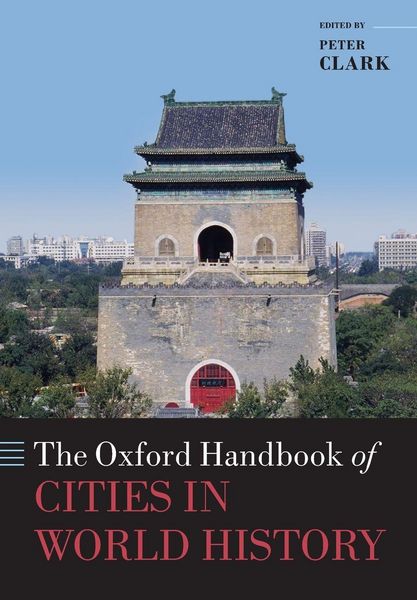
Produktbild: The Oxford Handbook of Cities in World History

The Oxford Handbook of Cities in World History

Aus der Reihe Oxford Handbooks

Fr. 79.90

inkl. gesetzl. MwSt., Versandkostenfrei


Beschreibung

In 2008 for the first time the majority of the planet's inhabitants lived in cities and towns. Becoming globally urban has been one of mankind's greatest collective achievements over time, and raises many questions. How did global city systems evolve and interact in the past? How have historic urban...

Beschreibung

In 2008 for the first time the majority of the planet's inhabitants lived in cities and towns. Becoming globally urban has been one of mankind's greatest collective achievements over time, and raises many questions. How did global city systems evolve and interact in the past? How have historic urban patterns impacted on those of the contemporary world? And what were the key drivers in the roller-coaster of urban change over the millennia - market forces such as trade and industry, rulers and governments, competition and collaboration between cities, or the urban environment and demographic forces? This pioneering comparative work by leading scholars drawn from a range of disciplines offers the first detailed comparative study of urban development from ancient times to the present day.
The Oxford Handbook of Cities in World History explores not only the main trends in the growth of cities and towns across the world - in Asia and the Middle East, Europe, Africa, and the Americas - and the different types of cities from great metropolitan centres to suburbs, colonial cities, and market towns, but also many of the essential themes in the making and remaking of the urban world: the role of power, economic development, migration, social inequality, environmental challenge and the urban response, religion and representation, cinema, and urban creativity. Split into three parts covering Ancient cities, the medieval and early-modern period, and the modern and contemporary era, it begins with an introduction by the editor identifying the importance and challenges of research on cities in world history, as well as the crucial outlines of urban development since the earliest cities in ancient Mesopotamia to the present.

Produktdetails

Einband

Taschenbuch

Erscheinungsdatum

12.05.2016

Herausgeber Peter Clark
Verlag Oxford University Press

Produktdetails

Einband

Taschenbuch

Erscheinungsdatum

12.05.2016

Herausgeber Peter Clark
Verlag Oxford University Press
Seitenzahl

914

Maße (L/B/H)

24.4/17/4.9 cm

Gewicht

1543 g

Sprache

Englisch

ISBN

978-0-19-877937-7

Herstelleradresse

Libri GmbH
Europaallee 1
36244 Bad Hersfeld
DE

Email: gpsr@libri.de

Noch keine Bewertungen vorhanden

Verfassen Sie die erste Bewertung zu diesem Artikel

Helfen Sie anderen Kundinnen und Kunden durch Ihre Meinung.

Kundinnen und Kunden meinen

Bewertungen (0)

Die Leseprobe wird geladen.
  • Produktbild: The Oxford Handbook of Cities in World History
    • 1: Peter Clark: Introduction
    • Part I: Early Cities
    • 2: Augusta McMahon: Mesopotamia
    • 3: Robin Osborne and Andrew Wallace-Hadrill: Cities of the Ancient Mediterranean
    • 4: David Mattingly and Kevin MacDonald: Africa
    • 5: Cameron A. Petrie: South Asia
    • 6: N. Steinhardt: China
    • 7: David L. Stone: Economy
    • 8: Luuk de Ligt: Population and Migration
    • 9: Mario Liverani: Power and Citizenship
    • 10: J.A. Baird: Religion and Ritual
    • 11: Ray Laurence: Planning and Environment
    • Part II: Pre-Modern Cities
    • 12: Marc Boone: Medieval Europe
    • 13: Bruno Blondé and Ilja Van Damme: Early Modern Europe: 1500-1800
    • 14: Dominique Valérian: Middle East: 7th-15th Centuries
    • 15: Ebru Boyar: The Ottoman City: 1500-1800
    • 16: Hilde de Weerdt: China: 600-1300
    • 17: William T. Rowe: China: 1300-1900
    • 18: James McClain: Japan's Pre-modern Urbanism
    • 19: Leonard Blussé: Port Cities of South East Asia: 1400-1800
    • 20: Felipe Fernández-Armesto: Latin America
    • 21: Bas van Bavel, Maarten Bosker, Eltjo Buringh, and Jan Luiten van Zanden: Economy
    • 22: Anne Winter: Population and Migration: European and Chinese Experiences Compared
    • 23: Wim Blockmans and Marjolein 't Hart: Power
    • 24: Peter Burke: Culture: Representations
    • Part III: Modern and Contemporary Cities
    • 25: Andrew Lees and Lynn Hollen Lees: Europe: 1800-2000
    • 26: Alan Gilbert: Latin America
    • 27: Carl Abbott: North America
    • 28: Kristin Stapleton: China: 1900 to the Present
    • 29: Paul Waley: Japan
    • 30: Prashant Kidambi: South Asia
    • 31: Howard Dick and Peter J. Rimmer: South East Asia and Australia
    • 32: Mercedes Volait and Mohammad Al-Asad: Middle East
    • 33: Bill Freund: Africa: 1000-2010
    • 34: Ho-fung Hung and Shaohua Zhan: Industrialization and the City: East and West
    • 35: Leo Lucassen: Population and Migration
    • 36: Alan Gilbert: Poverty, Inequality, and Social Segregation
    • 37: Martin V. Melosi: The Urban Environment
    • 38: Marjatta Hietala and Peter Clark: Creative Cities
    • 39: Hannu Salmi: Cinema and the City
    • 40: Thomas R. Metcalf: Colonial Cities
    • 41: Xiangming Chen and Henry Fitts: Contemporary Metropolitan Cities
    • 42: Jussi S. Jauhiainen: Suburbs
    • 43: Carola Hein: Port Cities
    • 44: Penelope J. Corfield: Conclusion: Cities in Time