KI-Beratung Beta

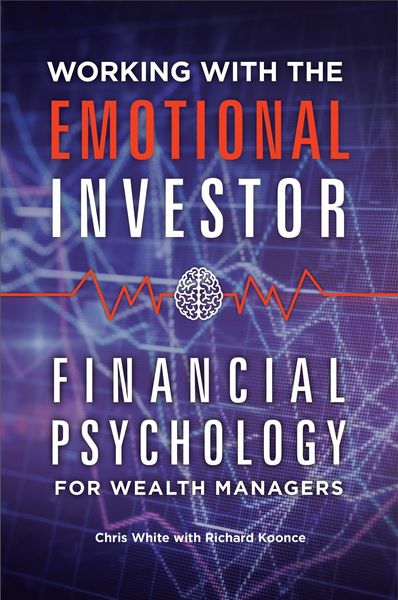
Produktbild: Working with the Emotional Investor

Working with the Emotional Investor Financial Psychology for Wealth Managers

Fr. 78.90

inkl. gesetzl. MwSt., Versandkostenfrei


Beschreibung

An invaluable resource for wealth managers advising individuals, couples, and families, this book explains why human emotions drive all investor behavior and makes a powerful case for why advisors need to be aware of such emotions in advising clients-especially in high-stakes situations. Despite the...

Beschreibung

An invaluable resource for wealth managers advising individuals, couples, and families, this book explains why human emotions drive all investor behavior and makes a powerful case for why advisors need to be aware of such emotions in advising clients-especially in high-stakes situations.
Despite the fact that wealth advisors may employ algorithms, fancy financial models, economic theory, and predictive reasoning to forecast future investment returns, according to seasoned wealth management advisor Chris White, people-in other words, clients-basically decide how much risk to take with their money based on emotional factors such as the love they received as children, early life experiences of loss and "imperfect love," psychic wounds, and family traumas. A must-read for anyone in the wealth management profession, including wealth advisors, financial consultants, certified financial analysts, and retirement advisors, this groundbreaking book offers a radically new and well-articulated framework for managing relationships with clients as well as the essential tools to advise, mentor, and guide clients in making financial management decisions.
Readers will understand how to recognize the emotional and psychological factors behind investor behavior and apply this insight to be a better wealth advisor. The author explains why early childhood experiences of love, joy, and loss and sometimes very subtle family dynamics play a key role in adult investor behavior; why being sensitive to an individual's unique psychological "systems" is key to being able to accurately assess his or her tolerance and acceptance of risk-taking as part of the wealth management process; what can cause a client's personality to change, especially in high-stress or high-stakes situations; and how to employ sophisticated client relationship management practices such as curiosity, appreciative inquiry, and powerful questioning to understand clients' needs at a deep psychological level.

Produktdetails

Einband

Gebundene Ausgabe

Erscheinungsdatum

08.08.2016

Verlag Bloomsbury Academic
Seitenzahl

240

Produktdetails

Einband

Gebundene Ausgabe

Erscheinungsdatum

08.08.2016

Verlag Bloomsbury Academic
Seitenzahl

240

Maße (L/B/H)

24/16.1/1.8 cm

Gewicht

478 g

Sprache

Englisch

ISBN

978-1-4408-4512-3

Herstelleradresse

Libri GmbH
Europaallee 1
36244 Bad Hersfeld
DE

Email: gpsr@libri.de

Noch keine Bewertungen vorhanden

Verfassen Sie die erste Bewertung zu diesem Artikel

Helfen Sie anderen Kundinnen und Kunden durch Ihre Meinung.

Kundinnen und Kunden meinen

Bewertungen (0)

Die Leseprobe wird geladen.
  • Produktbild: Working with the Emotional Investor
  • Foreword by Bill Griffeth
    Preface
    Acknowledgments
    Introduction
    Part I How Human Psychology and Client Emotions Drive Investor Behavior and Decision-Making
    Chapter One Understanding a Person's Emotional Template
    Chapter Two The Psychology of Money and the Emotions of Investing
    Chapter Three Introducing a Conversational Model You Can Use with Clients
    Part II Client Relationship Management
    Chapter Four Understanding Your Client's Engagement Style
    Chapter Five Heroes Rising: The Different Types of Clients That Emerge in High-Stakes Situations
    Chapter Six Advising Clients Who Are Fixers
    Chapter Seven Advising Clients Who Are Survivors
    Chapter Eight Advising Clients Who Are Protectors
    Part III Nurturing Client Relationships for the Long Term
    Chapter Nine Establishing Credibility and Building Trust with Clients of Any Type
    Chapter Ten On Stewardship and Servant Leadership
    Epilogue
    Appendix A: Thinking, Fast and Slow: The Differences in Two Philosophies of Trading
    Appendix B: Applying Principles of Behavioral Finance to Understanding the Ups and Downs of Stock Prices
    Notes
    Bibliography
    Index