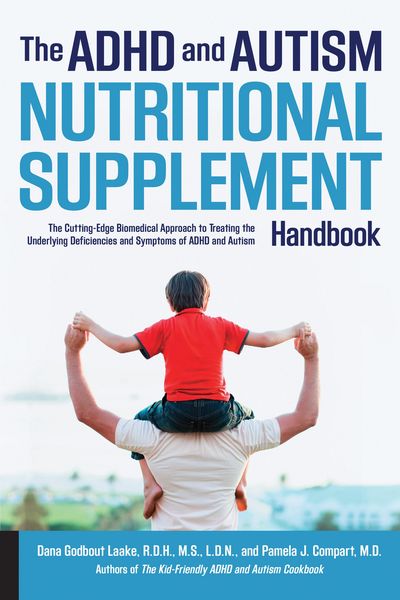
Produktbild: ADHD and Autism Nutritional Supplement Handbook

ADHD and Autism Nutritional Supplement Handbook The Cutting-Edge Biomedical Approach to Treating the Underlying Deficiencies and Symptoms of ADHD and

Fr. 39.90

inkl. gesetzl. MwSt., Versandkostenfrei


Beschreibung

Produktdetails

Einband

Taschenbuch

Erscheinungsdatum

01.01.2013

Verlag

Quarto Publishing Group USA, Inc.

Seitenzahl

256

Maße (L/B/H)

22.4/15.1/1.6 cm

Gewicht

356 g

Sprache

Englisch

ISBN

978-1-59233-756-9

Beschreibung

Produktdetails

Einband

Taschenbuch

Erscheinungsdatum

01.01.2013

Verlag

Quarto Publishing Group USA, Inc.

Seitenzahl

256

Maße (L/B/H)

22.4/15.1/1.6 cm

Gewicht

356 g

Sprache

Englisch

ISBN

978-1-59233-756-9

Herstelleradresse

Libri GmbH
Europaallee 1
36244 Bad Hersfeld
DE

Email: gpsr@libri.de

Noch keine Bewertungen vorhanden

Verfassen Sie die erste Bewertung zu diesem Artikel

Helfen Sie anderen Kundinnen und Kunden durch Ihre Meinung.

Kundinnen und Kunden meinen

Bewertungen (0)

Die Leseprobe wird geladen.
  • Produktbild: ADHD and Autism Nutritional Supplement Handbook
  • Foreword
    Introduction  
    Chapter 1: The Journey Begins: Getting Started and Supplementing Safely
    1.1 Nutrition 101: Terminology, Principles, Recommendations, and Supplementation
    A.Safety First: Do No Harm
    B. No Speeding: How to Supplement—Start Low and Go Slow
    C. Natural, Synthetic, and Artificial Nutrient Forms
    D.Elemental Nutrients versus Nutrient Compounds
    E. Nutrient Absorption Rates Vary to Maintain Homeostasis and Prevent Toxicity
    F.   DRI/RDA Recommendations versus Individualized Recommendations
    G.Supplement Description, Regulation, and Safety
    H.Tips on Getting Your Child to Take Supplements
    1.2 The Quick Start: Six Supplements with the Biggest Benefits and Fewest Side Effects
    A.Magnesium
    B. Vitamin D
    C. Zinc
    D.Essential Omega-3 Fatty Acids
    E. Probiotics
    F.   Multiple Vitamin Mineral
    1.3 Fuel Stop: The Quick Start Diet—A Healthy Organic Diet
     
    Chapter 2: Moving Forward: Supplementation Based on Specific Signs and Symptoms
    2.1 Allergies
    2.2 Anger, Aggression, and Self-Injurious Behavior
    2.3 Anxiety, Perseverations, Obsessive-Compulsive Symptoms, and Repetitive Behaviors
    2.4 Attention and Focus Problems
    2.5 Communication and Language Delays
    2.6 Constipation
    2.7 Diarrhea
    2.8 Eye Contact and Vision Problems
    2.9 Fatigue, Poor Endurance, and Low Muscle Tone
    2.10 Hyperactivity
    2.11 Mood Issues
    2.12 Pica
    2.13 Picky Eating
    2.14 Sensory Sensitivities
    2.15 Silly Behavior and Inappropriate Giggling/Laughing
    2.16 Skin Problems: Eczema, Dry Skin, and Rashes
    2.17 Sleep Difficulties
    2.18 Yeast Overgrowth
     
    Chapter 3: Getting to Know the Landscape
    3.1 Negotiating through the Territory: The Four Primary Systems
    A.    Gastrointestinal  
    B.     Energy Metabolism and Mitochondria
    C.     Immune
    D.    Neurologic 
    3.2 Barriers and Bottlenecks: The Four Primary Mechanisms
    A.    Methylation
    B.     Sulfation
    C.     Oxidation
    D.    Inflammation
    3.3 Stop Signs and Green Lights: How Environment Affects Genes
     
    Chapter 4: Tuning the Engine: Nutrients and Their Impact on Impaired Systems and Out-of-Sync Mechanisms
    Vitamins
    4.1 Vitamin A and Beta-carotene
    4.2 Vitamin D
    4.3 Vitamin E
    4.4 The Busy Bs: B1, B2, B3 
    4.5 The Worker Bs: Methylation Nutrients: Vitamin B6, Methyl B12, Folate, and DMG/TMG
    4.6 The Helper B: Biotin
    4.7 Vitamin C
    Minerals
    4.8 Magnesium and Calcium  
    4.9 Zinc 
    4.10 Selenium
    Amino Acids
    4.11 GABA and Theanine
    4.12 Taurine
    Other Nutrients and Cofactors
    4.13 Carnitine
    4.14 Coenzyme Q10
    4.15 Essential Omega-3 Fatty Acids
    4.16 Probiotics
    4.17 Digestive Enzymes
     
    Chapter 5: Avoiding Traffic Accidents and Traffic Jams: Toxic Metals and Nutrient/Medication/Herb Interactions
    5.1 Toxic Metals
    5.2 Medication/Nutrient/Herb Interactions   
     
    Chapter 6: The Right Fuel: An Overview of Special Diets
    6.1 Gluten-, Casein-, and Soy-Free (GFCFSF) Diet
    6.2 Low Phenol/Salicylate (Feingold) Diet
    6.3 Specific Carbohydrate Diet (SCD) and Gut and Psychology Syndrome (GAPS) Diet
    6.4 Anti-Yeast/Anti-Candida Diet and the Body Ecology Diet (BED)
    6.5 Low Oxalate Diet (LOD)
    6.6 FODMAP Diet
    6.7 Rotation Diet
     
    Chapter 7: Planning Ahead: The Preconception through Postnatal Action Plan
     
    References
    Acknowledgments
    About the Authors
    Index