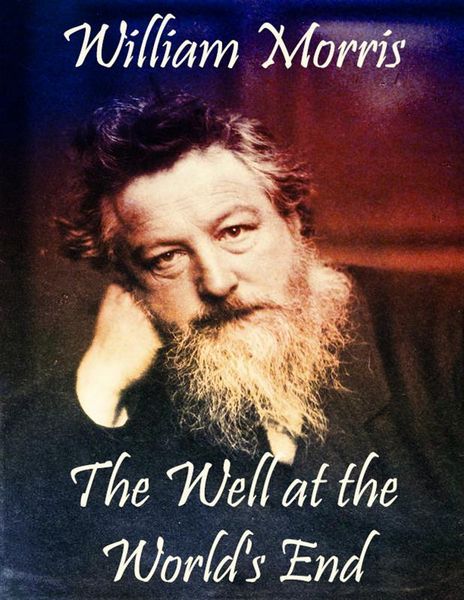
The Well at the World's End
-
- Hardcover
- Taschenbuch
- eBook ausgewählt
-
Form:Einzelkauf Download
-
Sprache:Englisch
-
eBook Format:ePUB
- PDF Fr. 3.90
- ePUB ausgewählt
-
Verlag:Publisher s13364
- Open Road Media Sci-Fi & Fantasy Fr. 7.90
- Booklassic Fr. 1.00
- Sheba Blake Publishing Fr. 4.00
- Left of Brain Books Fr. 5.90
- Publisher s13364 ausgewählt
- Max Bollinger Fr. 6.90
- Copycat Fr. 2.40
- True Sign Publishing House Fr. 1.90
- BoD - Books on Demand Fr. 3.40
- Mint Editions Fr. 13.90
- Good Press Fr. 2.00
- Read Books Ltd. Fr. 11.90
- E-artnow Fr. 1.00
- DigiCat Fr. 2.00
- Double 9 Books Fr. 1.90
Fr. 1.90
inkl. gesetzl. MwSt.Beschreibung
Produktdetails
Format
ePUB
Kopierschutz
Nein
Family Sharing
Ja
Text-to-Speech
Ja
Erscheinungsdatum
17.05.2016
Verlag
Publisher s13364Seitenzahl
(Printausgabe)
Dateigröße
605 KB
Sprache
Englisch
EAN
9786050440263
"In the land of the Upmeads, King Peter's sons thirst for adventure and the King agrees that all except Ralph, the youngest, may go forth. But Ralph secretly makes his way to Wulstead, and here learns about the Well at the World's End, beginning a journey which will eventually lead him there. Along the way, our hero encounters adventure, travails, and romance. A must-read for fans of classic quest stories."
The Well at the World's End is a fantasy novel by the British artist, poet, and author William Morris. It was first published in 1896 and has been reprinted a number of times since, most notably in two parts as the 20th and 21st volumes of the Ballantine Adult Fantasy series, in August and September 1970. It is also available in one volume along with a similar Morris tale, The Wood Beyond the World (1894), in On the Lines of Morris' Romances: Two Books that Inspired J. R. R. Tolkien.
Using language with elements of the medieval tales which were his models, Morris tells the story of Peter, King of Upmeads, and his four sons, Blaise, Hugh, Gregory, and Ralph. These four sons decide one day that they would like to explore the world, so their father gives them permission. From that point on, the plot centers on the youngest son, Ralph.
On its publication, The Well at the World's End was praised by H. G. Wells, who compared the book to Malory and admired its writing style: "all the workmanship of the book is stout oaken stuff, that must needs endure and preserve the memory of one of the stoutest, cleanest lives that has been lived in these latter days".
Although the novel is relatively obscure by today's standards, it has had a significant influence on many notable fantasy authors. C. S. Lewis and J. R. R. Tolkien both seem to have found inspiration in The Well at the World's End: ancient tables of stone, a "King Peter", and a quick, white horse named "Silverfax," an obvious inspiration for "Shadowfax," are only a few. Lewis was sufficiently enamored with Morris that he wrote an essay on that author, first read to an undergraduate society at Oxford University called the Martlets and later published in the collection of essays called Rehabilitations.
The Well at the World's End is a fantasy novel by the British artist, poet, and author William Morris. It was first published in 1896 and has been reprinted a number of times since, most notably in two parts as the 20th and 21st volumes of the Ballantine Adult Fantasy series, in August and September 1970. It is also available in one volume along with a similar Morris tale, The Wood Beyond the World (1894), in On the Lines of Morris' Romances: Two Books that Inspired J. R. R. Tolkien.
Using language with elements of the medieval tales which were his models, Morris tells the story of Peter, King of Upmeads, and his four sons, Blaise, Hugh, Gregory, and Ralph. These four sons decide one day that they would like to explore the world, so their father gives them permission. From that point on, the plot centers on the youngest son, Ralph.
On its publication, The Well at the World's End was praised by H. G. Wells, who compared the book to Malory and admired its writing style: "all the workmanship of the book is stout oaken stuff, that must needs endure and preserve the memory of one of the stoutest, cleanest lives that has been lived in these latter days".
Although the novel is relatively obscure by today's standards, it has had a significant influence on many notable fantasy authors. C. S. Lewis and J. R. R. Tolkien both seem to have found inspiration in The Well at the World's End: ancient tables of stone, a "King Peter", and a quick, white horse named "Silverfax," an obvious inspiration for "Shadowfax," are only a few. Lewis was sufficiently enamored with Morris that he wrote an essay on that author, first read to an undergraduate society at Oxford University called the Martlets and later published in the collection of essays called Rehabilitations.
Noch keine Bewertungen vorhanden
Verfassen Sie die erste Bewertung zu diesem Artikel
Helfen Sie anderen Kundinnen und Kunden durch Ihre Meinung.