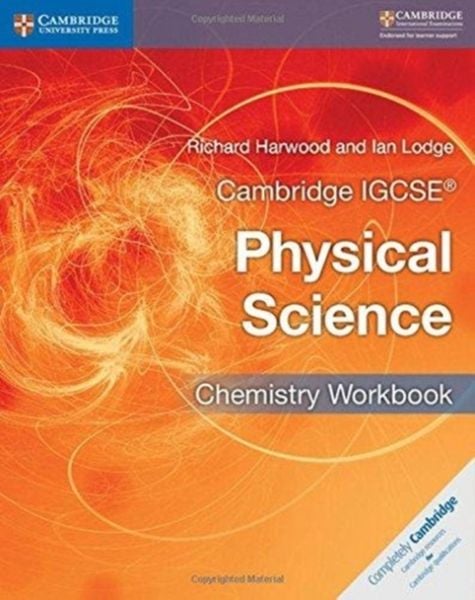
Produktbild: Cambridge IGCSE® Physical Science Chemistry Workbook

Cambridge IGCSE® Physical Science Chemistry Workbook

Fr. 24.90

inkl. gesetzl. MwSt., zzgl. Versandkosten


  • Kostenlose Lieferung ab Fr. 30 Einkaufswert

    Schweiz & Liechtenstein:

    Versandkostenfrei ab Fr. 30.00
    Versandkosten bis Fr. 30.00: Fr. 3.50

    Andere Lieferländer

    Fr. 18.00 unabhängig vom Warenwert

Beschreibung

Produktdetails

Einband

Taschenbuch

Erscheinungsdatum

16.02.2017

Verlag

Cambridge University Press

Seitenzahl

136

Maße (L/B/H)

27.7/22/0.7 cm

Gewicht

370 g

Sprache

Englisch

ISBN

978-1-316-63351-9

Beschreibung

Produktdetails

Einband

Taschenbuch

Erscheinungsdatum

16.02.2017

Verlag

Cambridge University Press

Seitenzahl

136

Maße (L/B/H)

27.7/22/0.7 cm

Gewicht

370 g

Sprache

Englisch

ISBN

978-1-316-63351-9

Herstelleradresse

Libri GmbH
Europaallee 1
36244 Bad Hersfeld
DE

Email: gpsr@libri.de

Noch keine Bewertungen vorhanden

Verfassen Sie die erste Bewertung zu diesem Artikel

Helfen Sie anderen Kundinnen und Kunden durch Ihre Meinung.

Kundinnen und Kunden meinen

Bewertungen (0)

Weitere Artikel finden Sie in

  • Produktbild: Cambridge IGCSE® Physical Science Chemistry Workbook
  • Introduction; How to use this book; C1. The particulate nature of matter; C1.1 Changing physical state; C1.2 Plotting a cooling curve; C2. Experimental techniques; C2.1 Diffusion, solubility and separation; C2.2 Chromatography at the races; C3. Atoms, elements and compounds; C3.1 Atomic structure; C3.2 The first four periods; C3.3 The chemical bonding in simple molecules; C3.4 The nature of ionic lattices; C4. Stoichiometry; C4.1 Formulae of ionic compounds; C4.2 Making magnesium oxide - a quantitative investigation; C4.3 The analysis of titration results; C4.4 Calculating formula masses; C4.5 A sense of proportion in chemistry; C4.6 Finding the mass of 5 cm of magnesium ribbon; C4.7 Reacting volumes of gases; C5. Electricity and chemistry; C5.1 The nature of electrolysis; C5.2 Making and 'breaking' copper chloride; C6. Energy changes in chemical reactions; C6.1 Energy diagrams; C6.2 The collision theory of reaction rates; C6.3 The influence of surface area on the rate of reaction; C6.4 Finding the rate of a reaction producing a gas; C7. Acids, bases and salts; C7.1 Acid and base reactions - neutralisation; C7.2 Types of salt; C7.3 Descaling a coffee machine; C7.4 Thermochemistry - investigating the neutralisation of an acid by an alkali; C8. The Periodic Table; C8.1 Trends in the halogens; C8.2 Displacement reactions of the halogens; C8.3 Group I: The alkali metals; C9. Metals; C9.1 The reactivity series of metals; C9.2 Energy from displacement reactions; C9.3 Metals and alloys; C10. Air and water; C10.1 Atmospheric pollution, industry and transport; C10.2 Clean water is crucial; C11. Organic chemistry; C11.1 Families of hydrocarbons; C11.2 Unsaturated hydrocarbons (the alkenes); C11.3 The alcohols as fuels; C11.4 Essential processes of the petrochemical industry; C11.5 Addition polymerisation; C12. Analysis; C12.1 Titration analysis; C12.2 Chemical analysis; C12.3 Planning a controlled experiment; C12.4 Chemical testing and evaluation; C12.5 Experimental design; Answers.