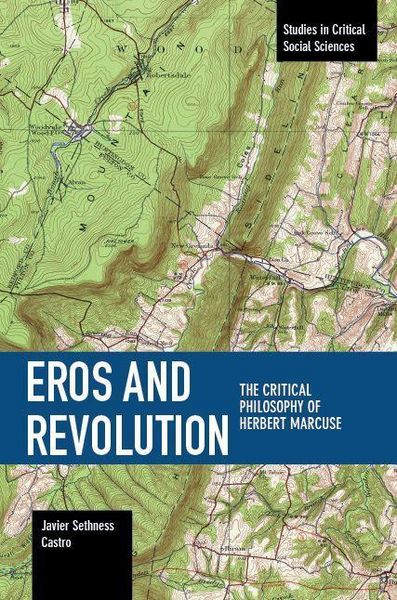
Produktbild: Eros and Revolution

Eros and Revolution The Critical Philosophy of Herbert Marcuse

Fr. 63.90

inkl. gesetzl. MwSt., Versandkostenfrei


Beschreibung

Produktdetails

Einband

Taschenbuch

Erscheinungsdatum

20.02.2018

Verlag

Ingram Publishers Services

Seitenzahl

422

Maße (L/B/H)

22.9/15.3/2.2 cm

Gewicht

566 g

Sprache

Englisch

ISBN

978-1-60846-806-5

Beschreibung

Produktdetails

Einband

Taschenbuch

Erscheinungsdatum

20.02.2018

Verlag

Ingram Publishers Services

Seitenzahl

422

Maße (L/B/H)

22.9/15.3/2.2 cm

Gewicht

566 g

Sprache

Englisch

ISBN

978-1-60846-806-5

Herstelleradresse

Libri GmbH
Europaallee 1
36244 Bad Hersfeld
DE

Email: GPSR Kontakt

Noch keine Bewertungen vorhanden

Verfassen Sie die erste Bewertung zu diesem Artikel

Helfen Sie anderen Kundinnen und Kunden durch Ihre Meinung.

Kundinnen und Kunden meinen

Bewertungen (0)

  • Produktbild: Eros and Revolution
  • Acknowledgements

    1. Introduction: Marcuse, the Utopian
    Idealism, Materialism, Romanticism, and Judaism
    Marcuse's Importance for Radical Politics Today

    PART I: MARCUSE'S LIFE, 1898-1979

    2. Early Years: Childhood and Youth, War and Revolution, Romanticism, Utopian Socialism, Hegel, Marx, and Heidegger

    Childhood and Youth, War and Revolution
    Post-War Investigations: Aesthetics, German Romanticism, and Hegel
    Friedrich Schiller and Charles Fourier: Utopian Socialism
    Marcuse's Torturous Relationship with Heidegger
    Heideggerian Marxism
    Hegel's Ontology and the Theory of Historicity (1932)
    Hitler's Accession and Flight of the Marcuse Family and the Frankfurt School

    3. Militant Theorizing in Resistance to Fascism, 1933-1945
    Negations (1934-1938)
    Studies on Authority and Family
    Marcuse's Direct Investigations of Nazism
    Early Theories of Social Change
    The Progression of Marcuse's Thought on Art's Functions Under Fascism
    Reason and Revolution (1941)

    4. State, Freud, and Orphic Marxism: 1945-1960
    Post-War Studies: “33 Theses,” Francis Bacon, Lukács, Goethe, Friedrich Hölderin, and Erasmus
    Continued Investigations of Historical Progress, Russian Studies, and the Trajectory of Communism and Reason during the Early Cold War
    Communism and Reason during the Early Cold War
    On Sartre's Existentialism
    Orphic Marxism and the Struggle of Eros against Thanatos
    Lectures on Freedom and Progress in Freud's Theory of the Instincts
    Marcuse's Debate with Fromm on Freud, Therapy, and Adjustment
    Soviet Marxism: A Critical Analysis (1958)
    The Ideology of Death

    5. Radical Struggle in the 1960s
    Marcuse on Cuba
    Continued Engagement with Critical Theorists and Lecture on Weber
    Humanism, Feminism, and Revolution
    Critical Reflections on Science and Technology
    One-Dimensional Humanity: Diagnosis, Reflections, and Recommendations
    Marcuse on Marx, Louis Napoleon, and Benjamin
    Justification of Revolutionary Praxis: “Repressive Tolerance,” “Ethics and Revolution,” Guerrilla Warfare, “The Question of Revolution,” and “Thoughts on the Defense of Gracchus Babeuf”
    Psychoanalytical Interventions
    Activism against the Vietnam War
    Summer 1967 Lectures before the German SDS and Congress of the Dialectics of Liberation: On Utopia, Radical Opposition, and Violence
    1968: A New Dawn for Humanity?
    An Essay on Liberation (1969)
    Other Interventions from 1969: On Student Protest, “The Relevance of Reality,” Qualitative Change, and Self-Determination
    The 1969 Debate with Adorno on Theory and Praxis
    Revisiting “Repressive Tolerance” and Civil Rights with the ACLU and Fred Schwarz of the Christian Anti-Communist Crusade
    “Marxism and the New Humanity: An Unfinished Revolution”
    “Freedom and the Historical Imperative”

    6. Marcuse's Final Decade: Continuities, Discontinuities, and Intensification (1970-1979)
    Marcuse's Assessment of the State of the Radical Opposition in the Early 1970s: “Cultural Revolution,” “The Movement in a New Age of Repression,” and “A Revolution in Values”
    Revolution or Reform? Marcuse's Debate with Popper
    Counterrevolution and Revolt (1972)
    Marcuse's Late Championing of Feminism
    International Relations: Vietnam and Israel/Palestine
    Continued Engagement with Aesthetics
    “It is Right to Revolt” and “Theory and Politics”: Late Discussions with Sartre and Habermas
    Marcuse's Final Interventions in Life: On Political Violence, the New Left, the U.S.Bicentennial, “The Reification of the Proletariat,” Rudolf Bahro, Technology, and Ecology
    The Aesthetic Dimension (1978)

    PART II: REFLECTIONS ON MARCUSE

    7. Nature and Revolution
    Nature, Evolution, and Morality
    “Repressive Tolerance” and Radical Struggle for Animal and Earth Liberation Today
    Conclusion

    8. Critique of Marcuse
    The Limits to Integration
    The Problem of Sources: Political Philosophy and Empirics
    Marcuse the Edelkommunist
    Marcuse the Zionist?
    Feminism, Gender, Eros
    Conflicts with Poststructuralism and Postmodernism
    Marcuse on Authority and the Transition: Between Jacobinism and Anarchism

    PART III: CONCLUSION

    9. Marcusean Politics in the Twenty-First Century
    Radical Ecological Politics
    Feminist Socialism and Anarcha-Feminism
    The “World Mind” in International Relations: Global Anti-Authoritarianism
    Means and Ends: The Question of Counter-Violence
    Close: Eros and Revolution

    References
    Index