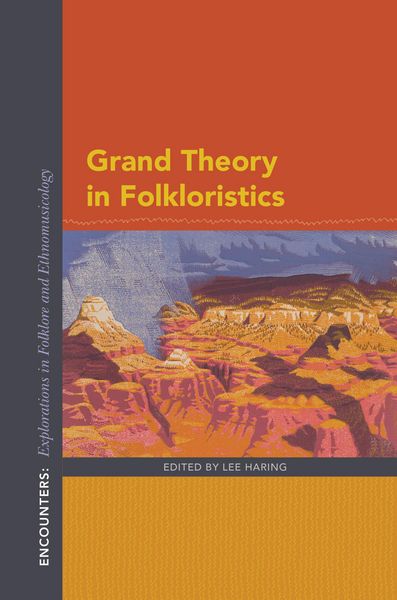
Grand Theory in Folkloristics
Aus der Reihe
Indiana University Press (IPS)
-
- Taschenbuch
- eBook ausgewählt
-
Form:Einzelkauf Download
-
Sprache:Englisch
Fr. 18.90
inkl. gesetzl. MwSt.Beschreibung
Produktdetails
Format
ePUB
Kopierschutz
Nein
Family Sharing
Nein
Text-to-Speech
Ja
Erscheinungsdatum
22.12.2021
Herausgeber
Lee HaringVerlag
Indiana University PressSeitenzahl
168 (Printausgabe)
Dateigröße
457 KB
Sprache
Englisch
EAN
9780253024428
Essays arguing diverse positions on the concept of a grand theory in American folklore.
Why is there no "Grand Theory" in the study of folklore? Talcott Parsons (1902-1979) advocated "grand theory," which put the analysis of social phenomena on a new track in the broadest possible terms. Not all sociologists or folklorists accept those broad terms; some still adhere to the empirical level. Through a forum sponsored by the American Folklore Society, the diverse answers to the question of such a theory arrived at substantial agreement: American folklorists have produced little "grand theory." One speaker even found all the theory folklorists need in the history of philosophy. The two women in the forum (Noyes and Mills) spoke in defense of theory that is local, "apt," suited to the audience, and "humble"; the men (Bauman and Fine) reached for something Parsons might have recognized. The essays in this collection, developed from the forum presentations, defend diverse positions, but they largely accept the longstanding concentration in American folkloristics on the quotidian and local.
Why is there no "Grand Theory" in the study of folklore? Talcott Parsons (1902-1979) advocated "grand theory," which put the analysis of social phenomena on a new track in the broadest possible terms. Not all sociologists or folklorists accept those broad terms; some still adhere to the empirical level. Through a forum sponsored by the American Folklore Society, the diverse answers to the question of such a theory arrived at substantial agreement: American folklorists have produced little "grand theory." One speaker even found all the theory folklorists need in the history of philosophy. The two women in the forum (Noyes and Mills) spoke in defense of theory that is local, "apt," suited to the audience, and "humble"; the men (Bauman and Fine) reached for something Parsons might have recognized. The essays in this collection, developed from the forum presentations, defend diverse positions, but they largely accept the longstanding concentration in American folkloristics on the quotidian and local.
Kundinnen und Kunden meinen
Verfassen Sie die erste Bewertung zu diesem Artikel
Helfen Sie anderen Kund*innen durch Ihre Meinung