Band 5
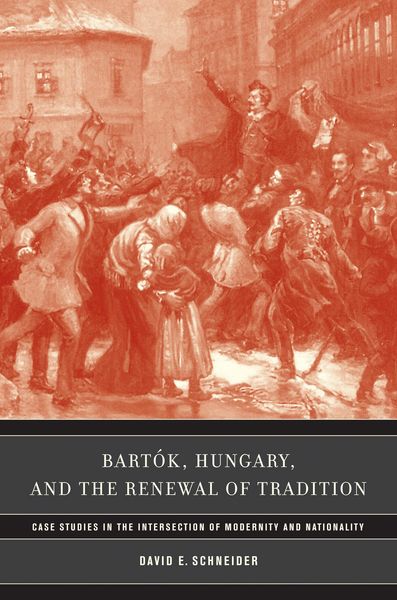
Bartok, Hungary, and the Renewal of Tradition Case Studies in the Intersection of Modernity and Nationality
Aus der Reihe
California Studies in 20th-Century Music
Fr. 92.90
inkl. gesetzl. MwSt.Beschreibung
Produktdetails
Format
Kopierschutz
Nein
Family Sharing
Nein
Text-to-Speech
Nein
Erscheinungsdatum
06.11.2006
Verlag
University Of California PressSeitenzahl
319 (Printausgabe)
Dateigröße
2086 KB
Auflage
1. Auflage
Sprache
Englisch
EAN
9780520932050
It is well known that Béla Bartók had an extraordinary ability to synthesize Western art music with the folk music of Eastern Europe. What this rich and beautifully written study makes clear is that, contrary to much prevailing thought about the great twentieth-century Hungarian composer, Bartók was also strongly influenced by the art-music traditions of his native country. Drawing from a wide array of material including contemporary reviews and little known Hungarian documents, David Schneider presents a new approach to Bartók that acknowledges the composer's debt to a variety of Hungarian music traditions as well as to influential contemporaries such as Igor Stravinsky. Putting representative works from each decade beginning with Bartók's graduation from the Music Academy in 1903 until his departure for the United States in 1940 under critical lens, Schneider reads the composer's artistic output as both a continuation and a profound transformation of the very national tradition he repeatedly rejected in public. By clarifying why Bartók felt compelled to obscure his ties to the past and by illuminating what that past actually was, Schneider dispels myths about Bartók's relationship to nineteenth-century traditions and at the same time provides a new perspective on the relationship between nationalism and modernism in early-twentieth century music.
Kundinnen und Kunden meinen
Verfassen Sie die erste Bewertung zu diesem Artikel
Helfen Sie anderen Kund*innen durch Ihre Meinung