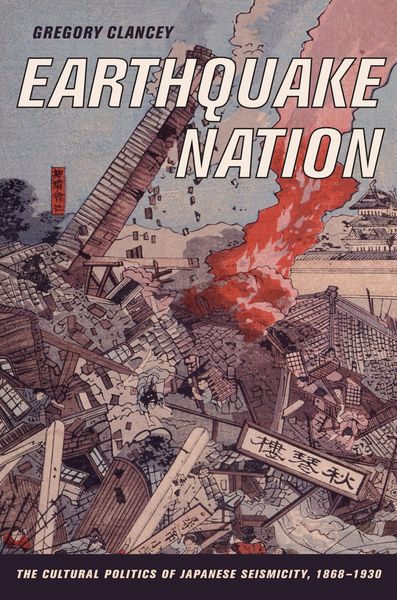
Earthquake Nation The Cultural Politics of Japanese Seismicity, 1868-1930
Fr. 92.90
inkl. gesetzl. MwSt.Beschreibung
Produktdetails
Format
Kopierschutz
Nein
Family Sharing
Nein
Text-to-Speech
Nein
Erscheinungsdatum
01.05.2006
Verlag
Naval Institute PressSeitenzahl
346 (Printausgabe)
Dateigröße
3111 KB
Auflage
1. Auflage
Sprache
Englisch
EAN
9780520932296
Accelerating seismic activity in late Meiji Japan climaxed in the legendary Great Nobi Earthquake of 1891, which rocked the main island from Tokyo to Osaka, killing thousands. Ironically, the earthquake brought down many "modern" structures built on the advice of foreign architects and engineers, while leaving certain traditional, wooden ones standing. This book, the first English-language history of modern Japanese earthquakes and earthquake science, considers the cultural and political ramifications of this and other catastrophic events on Japan's relationship with the West, with modern science, and with itself. Gregory Clancey argues that seismicity was both the Achilles' heel of Japan's nation-building project-revealing the state's western-style infrastructure to be surprisingly fragile-and a new focus for nativizing discourses which credited traditional Japanese architecture with unique abilities to ride out seismic waves. Tracing his subject from the Meiji Restoration to the Great Kant Earthquake of 1923 (which destroyed Tokyo), Clancey shows earthquakes to have been a continual though mercurial agent in Japan's self-fashioning; a catastrophic undercurrent to Japanese modernity. This innovative and absorbing study not only moves earthquakes nearer the center of modern Japan change-both materially and symbolically-but shows how fundamentally Japan shaped the global art, science, and culture of natural disaster.
Kundinnen und Kunden meinen
Verfassen Sie die erste Bewertung zu diesem Artikel
Helfen Sie anderen Kund*innen durch Ihre Meinung