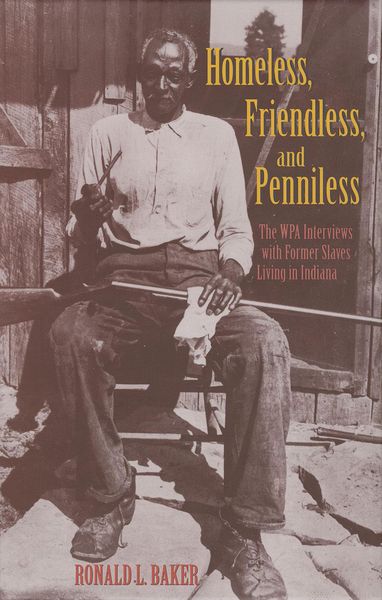
Homeless, Friendless, and Penniless The WPA Interviews with Former Slaves Living in Indiana
Fr. 18.90
inkl. gesetzl. MwSt.Beschreibung
Produktdetails
Format
ePUB 3
Kopierschutz
Nein
Family Sharing
Nein
Text-to-Speech
Ja
Erscheinungsdatum
22.12.2021
Verlag
Indiana University PressSeitenzahl
364 (Printausgabe)
Dateigröße
1552 KB
Sprache
Englisch
EAN
9780253028570
Homeless, Friendless, and Penniless The WPA Interviews with Former Slaves Living in Indiana Ronald L. Baker
Lives of former slaves in their own words, published for the first time.
Based on a collection of interviews conducted in the late 1930s, Homeless, Friendless, and Penniless is an invaluable record of the lives and thoughts of former slaves who moved to Indiana after the Civil War and made significant contributions to the evolving patchwork of Hoosier culture.
The Indiana slave narratives provide a glimpse of slavery as remembered by those who experienced it, preserving insiders' views of a tragic chapter in American history. Though they were living in Indiana at the time of the interviews, these African Americans been enslaved in 11 different states from the Carolinas to Louisiana. The interviews deal with life and work on the plantation; the treatment of slaves; escaping from slavery; education, religion, and slave folklore; and recollections of the Civil War. Just as important, the interviews reveal how former slaves fared in Indiana after the Civil War and during the Depression. Some became ministers, a few became educators, and one became a physician; but many lived in poverty and survived on Christian faith and small government pensions.
Ronald L. Baker, Chairperson and Professor of English at Indiana State University, is author of many books, including Hoosier Folk Legends and From Needmore to Prosperity: Hoosier Place Names in Folklore and History (both from Indiana University Press. He is co-author of Indiana Place Names with Marvin Carmony and editor of The Folklore Historian, the journal of the Folklore and History Section of the American Folklore Society.
Contents Part One: A Folk History of Slavery Background of the WPA Interviews Presentation of Material Living and Working on the Plantation The Treatment of Slaves Escaping from Slavery Education Religion Folklore Recollections of the Civil War Living and Working after the Civil War Value of the WPA Interviews Acknowledgments Part Two: The WPA Interviews with Former Slaves [134 entries] Appendices, including Thematic Index
Noch keine Bewertungen vorhanden
Verfassen Sie die erste Bewertung zu diesem Artikel
Helfen Sie anderen Kundinnen und Kunden durch Ihre Meinung.