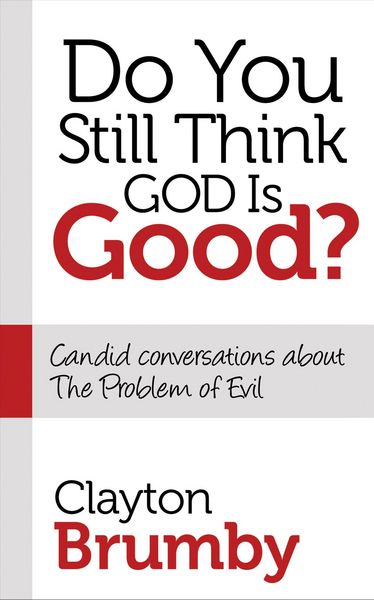
Do You Still Think God Is Good? Candid Conversations about the Problem of Evil
-
- Hardcover
- Taschenbuch
- eBook ausgewählt
-
Form:Einzelkauf Download
-
Sprache:Englisch
Fr. 16.90
inkl. gesetzl. MwSt.Beschreibung
Produktdetails
Format
ePUB
Kopierschutz
Nein
Family Sharing
Nein
Text-to-Speech
Ja
Erscheinungsdatum
31.12.2020
Verlag
Morgan James FaithSeitenzahl
150 (Printausgabe)
Dateigröße
519 KB
Sprache
Englisch
EAN
9781630470661
A grappling with the philosophical challenge of defending a God that some think is inept, impotent, or evil given the violent and unfair world we live in.
The Greek philosopher Epicurus is credited with saying:
Either God wants to abolish evil and cannot; or he can but does not want to; or he cannot and does not want to. If he wants to but cannot, he is impotent. If he can and does not want to, he is wicked. But if God both can and wants to abolish evil, then how come evil is in the world?
This is known as the Epicurean paradox. Obviously, mankind has been wrestling with the problem of evil for some time; Epicurus lived between 340-270 BC.
Fast-forward twenty-three hundred years. Eric Jennings is a freshman at the University of Florida. He and his older sister, Libby, have moved in from the mission field to enter the premed program to become medical missionaries. Eric's roommate, Todd Rehnquist, though a baseball teammate and a good friend, is an atheist. And he poses the "problem" to Eric using an interesting quote. This sets in motion a conversation between Eric, Todd, Libby, Ray Cohen, the Jennings' former science teacher, and Mike Murphy, a local youth minister and one of Eric's spiritual mentors. The conversation happens at an area breakfast haunt, the Gator Skillet. Follow them as they wrestle with this most profound of issues and connect the dots. You'll find that the answers are as simple as they are surprising.
The Greek philosopher Epicurus is credited with saying:
Either God wants to abolish evil and cannot; or he can but does not want to; or he cannot and does not want to. If he wants to but cannot, he is impotent. If he can and does not want to, he is wicked. But if God both can and wants to abolish evil, then how come evil is in the world?
This is known as the Epicurean paradox. Obviously, mankind has been wrestling with the problem of evil for some time; Epicurus lived between 340-270 BC.
Fast-forward twenty-three hundred years. Eric Jennings is a freshman at the University of Florida. He and his older sister, Libby, have moved in from the mission field to enter the premed program to become medical missionaries. Eric's roommate, Todd Rehnquist, though a baseball teammate and a good friend, is an atheist. And he poses the "problem" to Eric using an interesting quote. This sets in motion a conversation between Eric, Todd, Libby, Ray Cohen, the Jennings' former science teacher, and Mike Murphy, a local youth minister and one of Eric's spiritual mentors. The conversation happens at an area breakfast haunt, the Gator Skillet. Follow them as they wrestle with this most profound of issues and connect the dots. You'll find that the answers are as simple as they are surprising.
Kundinnen und Kunden meinen
Verfassen Sie die erste Bewertung zu diesem Artikel
Helfen Sie anderen Kund*innen durch Ihre Meinung