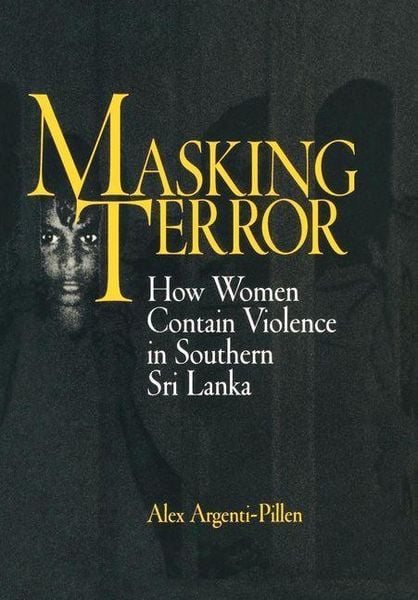
Masking Terror How Women Contain Violence in Southern Sri Lanka
Fr. 87.90
inkl. gesetzl. MwSt.Beschreibung
Produktdetails
Format
ePUB
Kopierschutz
Ja
Family Sharing
Nein
Text-to-Speech
Ja
Erscheinungsdatum
17.07.2013
Verlag
The American University in Cairo PressSeitenzahl
256 (Printausgabe)
Dateigröße
3195 KB
Sprache
Englisch
EAN
9780812201154
In Sri Lanka, staggering numbers of young men were killed fighting in the armed forces against Tamil separatists. The war became one of attrition-year after year waves of young foot soldiers were sent to almost certain death in a war so bloody that the very names of the most famous battle scenes still fill people with horror. Alex Argenti-Pillen describes the social fabric of a rural community that has become a breeding ground and reservoir of soldiers for the Sri Lankan nation-state, arguing that this reservoir has been created on the basis of a culture of poverty and terror. Focusing on the involvement of the pseudonymous village of Udahenagama in the atrocities of the civil war of the late 1980s and the interethnic war against the Tamil guerrillas, Masking Terror describes the response of women in the rural slums of southern Sri Lanka to the further spread of violence. To reconstruct the violent backgrounds of these soldiers, she presents the stories of their mothers, sisters, wives, and grandmothers, providing a perspective on the conflict between Sinhalese and Tamil populations not found elsewhere. In addition to interpreting the impact of high levels of violence on a small community, Argenti-Pillen questions the effects of trauma counseling services brought by the international humanitarian community into war-torn non-Western cultural contexts. Her study shows how Euro-American methods for dealing with traumatized survivors poses a threat to the culture-specific methods local women use to contain violence. Masking Terror provides a sobering introduction to the difficulties and methodological problems field researchers, social scientists, human rights activists, and mental health workers face in working with victims and perpetrators of ethnic and political violence and large-scale civil war. The narratives of the women from Udahenagama provide necessary insight into how survivors of wartime atrocities reconstruct their communicative worlds and disrupt the cycle of violence in ways that may be foreign to Euro-American professionals.
Kundinnen und Kunden meinen
Verfassen Sie die erste Bewertung zu diesem Artikel
Helfen Sie anderen Kund*innen durch Ihre Meinung