Gutscheinbedingungen

*Gültig bis 05.07.2026 auf (fast) alles. Ausgeschlossen sind Smartboxen, Zeitschriften, Tickets, Lebensmittel, Gaming-Elektroartikel, Tinte/Toner, Gutscheine, Geschenkkarten, Blumen und Abos | Einlösbar in allen Buchhandlungen von Orell Füssli, Barth Bücher, Buchladen Rapunzel, Papeterie Köhler, Schuler Orell Füssli, Stauffacher und ZAP unter Vorweisung des Gutscheins, auf www.orellfüssli.ch durch Eingabe des Gutscheincodes. Beim Service „eBooks verschenken“ und bei eBook-Käufen via eReader nicht einlösbar | Mindesteinkaufswert: Fr. 30.- | Nicht mit anderen Rabatten kumulierbar.

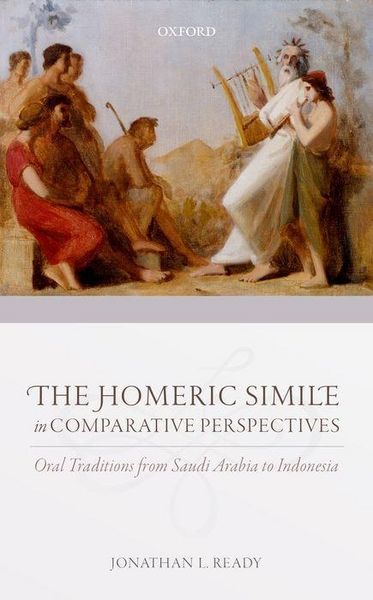
Produktbild: Ready, J: Homeric Simile in Comparative Perspectives

Ready, J: Homeric Simile in Comparative Perspectives Oral Traditions from Saudi Arabia to Indonesia

Fr. 199.00

inkl. gesetzl. MwSt., Versandkostenfrei


Beschreibung

Produktdetails

Einband

Gebundene Ausgabe

Erscheinungsdatum

14.02.2018

Verlag

Oxford University Press

Seitenzahl

332

Maße (L/B/H)

21.8/14.3/2.4 cm

Gewicht

532 g

Sprache

Englisch

ISBN

978-0-19-880255-6

Beschreibung

Produktdetails

Einband

Gebundene Ausgabe

Erscheinungsdatum

14.02.2018

Verlag

Oxford University Press

Seitenzahl

332

Maße (L/B/H)

21.8/14.3/2.4 cm

Gewicht

532 g

Sprache

Englisch

ISBN

978-0-19-880255-6

Noch keine Bewertungen vorhanden

Verfassen Sie die erste Bewertung zu diesem Artikel

Helfen Sie anderen Kundinnen und Kunden durch Ihre Meinung.

Kundinnen und Kunden meinen

Bewertungen (0)

Die Leseprobe wird geladen.
  • Produktbild: Ready, J: Homeric Simile in Comparative Perspectives
    • Frontmatter

    • List of Charts and Tables

    • 0: Introduction

    • 0.1. Precedents and Goals

    • 0.2. Homer

    • 0.3. Methods of Comparison

    • 0.4. Sources of Modern-Day Material

    • 0.4.1. Central Asia (Modern-Day Kyrgyzstan)

    • 0.4.2. Rajasthan, India

    • 0.4.3. South Sumatra, Indonesia

    • 0.4.4. Former Yugoslavia

    • 0.4.5. Najd Desert, Saudi Arabia

    • 0.5. A Definition of a Simile

    • 0.6. Summary of Chapters

    • Part I: The Modern-Day Material

    • 1: Formal Points of Contact with Homeric Similes

    • 1.1. Length

    • 1.2. Duration

    • 1.3. Arrangement

    • 1.3.1. Bosniac Epic

    • 1.3.2. Kyrgyz Epic

    • 1.3.3. South Sumatran Epic: Cik Ait's The Guritan of Radin Suane

    • 1.3.4. Najdi Poetry

    • 1.3.5. The Homeric Epics

    • 1.4. Position

    • Conclusion

    • 2: The Spectrum of Distribution

    • 2.1. Competence in Performance

    • 2.2. Problems with the Terms Tradition and Innovation

    • 2.3. The Spectrum of Distribution Defined

    • 2.4. Ranging Across the Spectrum of Distribution

    • 2.5. The Importance of Shared Elements

    • 2.6. Similes and Competence

    • Conclusion

    • 3: Similes in Five Modern-Day Oral Poetries

    • 3.1. The Epic of Pab?j? and The Guritan of Radin Suane

    • 3.2. The Figurative Spectrum of Distribution

    • 3.2.1. Kyrgyz Epic

    • 3.2.2. Bosniac Epic

    • 3.2.3. Najdi Poetry

    • 3.3. Shared Vehicles and Their Tenors

    • 3.3.1. Shared Vehicle, Customary Tenor (Shared Similes)

    • 3.3.1.1. Bosniac Epic

    • 3.3.1.2. Najdi Poetry

    • 3.3.2. Shared Vehicle, Uncustomary Tenor

    • 3.4. Idiolectal Similes and Their Tenors

    • Conclusion

    • Part II: Application to the Homeric Epics

    • 4: Two Preliminary Points

    • 4.1. The Vision of Poetic Competence in Archaic Greek Hexameter Poems

    • 4.2. The Spectrum of Distribution and Previous Scholarship in Homeric Studies

    • Conclusion

    • 5: Shared Similes in the Homeric Epics

    • 5.1. Verbatim Repetitions and Similar Long Vehicle Portions

    • 5.2. The Scenario

    • 5.2.1. Birds

    • 5.2.2. Wild Fire

    • 5.2.3. Celestial Phenomena (Stars, Lightning, and Rainbows)

    • 5.2.4. Insects

    • 5.2.5. Rivers

    • 5.2.6. Trees

    • 5.2.7. Wind

    • 5.2.8. Waves

    • 5.2.9. Lions

    • 5.3. The Scenario and Frame Semantics

    • 5.4. Shared Vehicle Portions and Their Tenors

    • 5.4.1. Shared Vehicle Portion, Customary Tenor (Shared Similes)

    • 5.4.2. Shared Vehicle Portion, Uncustomary Tenor

    • Conclusion

    • 6: Idiolectal Similes in the Homeric Epics

    • 6.1. Unparalleled Vehicle, Unparalleled Tenor

    • 6.2. Unparalleled Vehicle, Paralleled Tenor

    • 6.2.1. The Iliad and the Odyssey Offer Parallels

    • 6.2.2. The Iliad Only or the Odyssey Only Offer Parallels

    • Conclusion

    • 7: Conclusion

    • Endmatter

    • Works Cited

    • Index