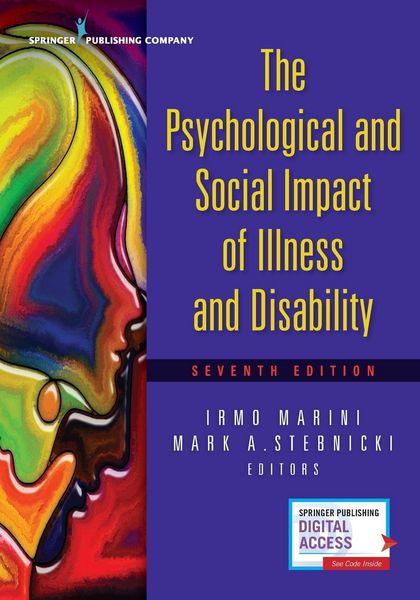
Marini, I: Psychological and Social Impact of Illness and Di
-
- Englisch ausgewählt
Fr. 158.00
inkl. gesetzl. MwSt.,
Beschreibung
Produktdetails
Einband
Taschenbuch
Erscheinungsdatum
20.12.2017
Herausgeber
Irmo Marini + weitereVerlag
Springer Publishing CoSeitenzahl
590
Maße (L/B/H)
25.4/17.8/3.2 cm
Gewicht
1060 g
Auflage
7. Auflage
Sprache
Englisch
ISBN
978-0-8261-6161-1
Praise for the Sixth Edition: "Adds an important international perspective on illness and disability. The personal narratives help bring the real world of people who are [survivors] to the forefront of the scientific discourse." -Doody's Medical Reviews Now in its seventh edition, this bestselling classic continues to be the most comprehensive and diverse text available on the psychosocial aspects of illness and disability. It is substantially revised to reflect the growing disparity between the haves and the have-nots and incorporates social justice issues throughout the text. In addition to new and updated information integrated throughout the book, the seventh edition features two new chapters addressing social justice in regards to depression and disability, and the psychosocial aspects of grief, death, and dying. Additionally, the text now includes an Instructor's Manual and PowerPoint slides. Combining a mix of seminal work from rehabilitation counseling legends with current theoretical and treatment approaches, the book provides a practical, real-life perspective and offers broad and inclusive coverage of the day-to-day challenges of working with a diverse and marginalized population. Additionally, the text analyzes barriers to enabling patients with disabilities and improving their quality of life. Chapter objectives, review questions, and personal narratives in each chapter facilitate in-depth learning. New to the Seventh Edition:Completely updated to incorporate social justice issues, from the medical and psychosocial aspects of combat trauma to the impact of mental and physical disabilities on immigrants, refugees and asylum-seekers, throughout Includes two new chapters addressing Social Justice/Depression and Disability and the Psychosocial Aspects of Grief, Death, and Dying Includes an Instructor's Manual and PowerPoint slides Enhanced coverage of topics concerning diverse and marginalized populations, including Women with Disabilities, Sexuality and Disabilities, LBGTQ Issues, Aging with Disabilities, Trauma, and more Key Features:Presents the most comprehensive and diverse coverage of psychosocial aspects of disability of any text Emphasizes the negative impact of societal attitudes and treatment of disabled individuals on their psychological adjustment to disability Examines both seminal and current thinking and treatment approaches Provides a bridge between theory and practice with abundant narratives Includes objectives and reviews questions in each chapter
Kundinnen und Kunden meinen
Verfassen Sie die erste Bewertung zu diesem Artikel
Helfen Sie anderen Kund*innen durch Ihre Meinung