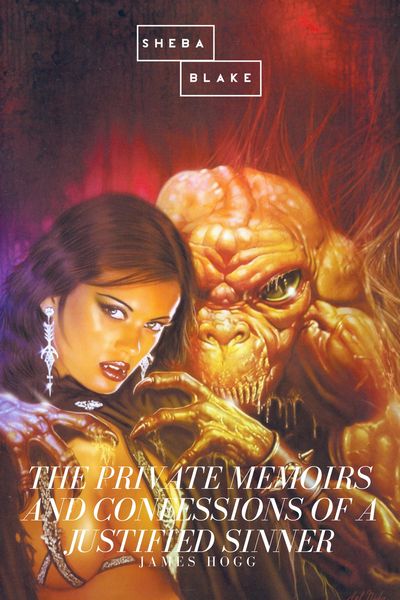
The Private Memoirs and Confessions of a Justified Sinner
-
- Hardcover
- Taschenbuch
- eBook ausgewählt
-
Form:Einzelkauf Download
-
Sprache:Englisch
-
eBook Format:ePUB
- ePUB 3 Fr. 0.50
- ePUB ausgewählt
-
Verlag:Sheba Blake Publishing
- Lebooks Editora Fr. 1.50
- Sheba Blake Publishing ausgewählt
- Waking Lion Press Fr. 3.40
- True Sign Publishing House Fr. 1.90
- Start Publishing LLC Fr. 1.95
- Wilder Publications, Inc. Fr. 1.90
- Booklassic Fr. 1.00
- Copycat Fr. 2.40
- Passerino Fr. 1.90
- Good Press Fr. 2.00
- GAEditori Fr. 5.40
- Musaicum Books Fr. 2.00
- E-artnow Fr. 1.00
- E-Bookarama Fr. 1.90
- Penguin Books Ltd Fr. 6.00
- Double 9 Books Fr. 1.90
Fr. 4.00
inkl. gesetzl. MwSt.Beschreibung
Produktdetails
Format
ePUB
Kopierschutz
Nein
Family Sharing
Ja
Text-to-Speech
Ja
Altersempfehlung
ab 13 Jahr(e)
Erscheinungsdatum
19.05.2017
Verlag
Sheba Blake PublishingSeitenzahl
131 (Printausgabe)
Dateigröße
334 KB
Sprache
Englisch
EAN
9783961898626
The Private Memoirs and Confessions of a Justified Sinner is a novel by the Scottish author James Hogg, published anonymously in 1824. Considered by turns part-gothic novel, part-psychological mystery, part-metafiction, part-satire, part-case study of totalitarian thought, it can also be thought of as an early example of modern crime fiction in which the story is told, for the most part, from the point of view of its criminal anti-hero. The action of the novel is located in a historically definable Scotland with accurately observed settings, and simultaneously implies a pseudo-Christian world of angels, devils, and demonic possession. The first edition sold very poorly and the novel suffered from a period of critical neglect, especially in the nineteenth century. However, since the latter part of the twentieth century it has won greater critical interest and attention. It was praised by André Gide in an introduction to the 1947 reissue and described by the critic Walter Allen as 'the most convincing representation of the power of evil in our literature'. It has also been seen as a study of religious fanaticism through its deeply critical portrait of the Calvinist concept of predestination. It is written in English, with some sections of Scots that appear in dialogue.
Noch keine Bewertungen vorhanden
Verfassen Sie die erste Bewertung zu diesem Artikel
Helfen Sie anderen Kundinnen und Kunden durch Ihre Meinung.