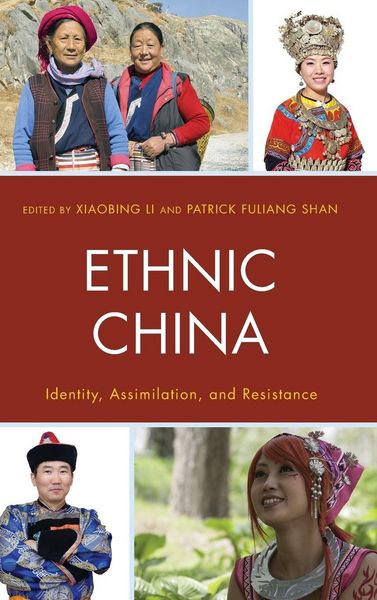
Ethnic China Identity, Assimilation, and Resistance
Fr. 82.90
inkl. gesetzl. MwSt.,
Beschreibung
Produktdetails
Einband
Gebundene Ausgabe
Erscheinungsdatum
20.07.2017
Abbildungen
3 BW Illustrations, 12 Tables
Herausgeber
Li Xiaobing + weitereVerlag
Ingram Publishers ServicesSeitenzahl
318
Maße (L/B/H)
23.5/15.7/2.1 cm
Gewicht
481 g
Sprache
Englisch
ISBN
978-1-4985-0730-1
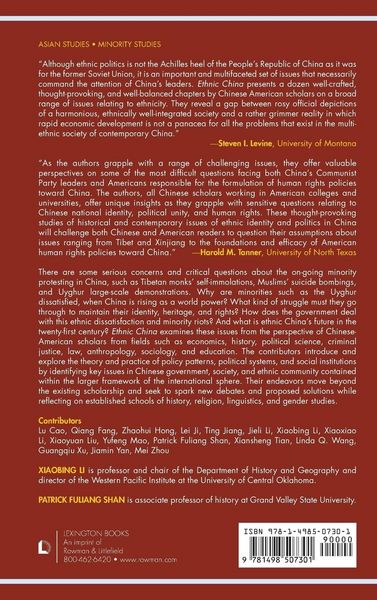
This study examines the ongoing minority protests in China from the perspective of Chinese-American scholars. The contributors analyze policy patterns, political systems, and social institutions by identifying key issues in Chinese government, society, and ethnic community contained within the larger framework of the international sphere.
Noch keine Bewertungen vorhanden
Verfassen Sie die erste Bewertung zu diesem Artikel
Helfen Sie anderen Kundinnen und Kunden durch Ihre Meinung.