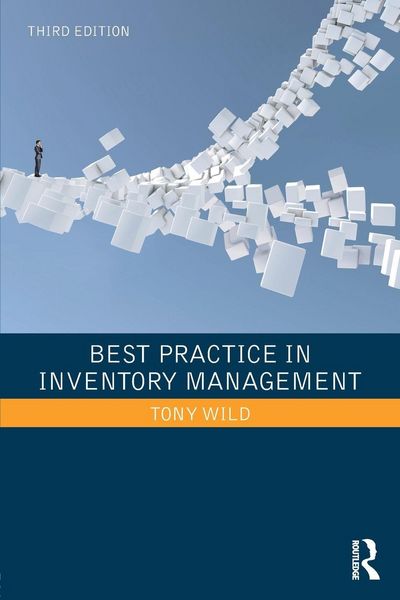
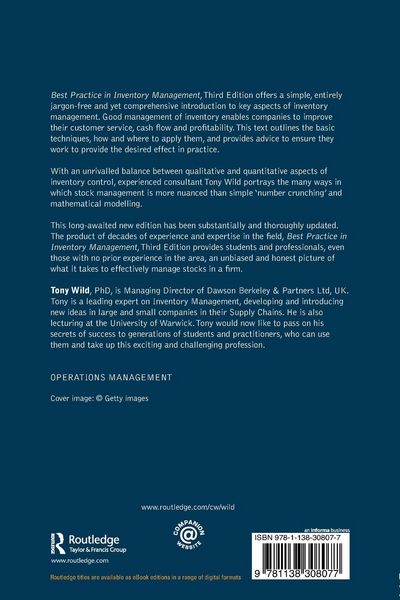
• Produktbild: Best Practice in Inventory Management
  • Produktbild: Best Practice in Inventory Management

Best Practice in Inventory Management

Fr. 73.90

inkl. gesetzl. MwSt., Versandkostenfrei


Beschreibung

Produktdetails

Einband

Taschenbuch

Erscheinungsdatum

30.10.2017

Abbildungen

54 SW-Abb., 54 SW-Zeichn., 99 Tabellen

Verlag

Taylor & Francis

Seitenzahl

296

Maße (L/B/H)

23.4/15.6/1.6 cm

Gewicht

453 g

Auflage

3. Auflage

Sprache

Englisch

ISBN

978-1-138-30807-7

Beschreibung

Produktdetails

Einband

Taschenbuch

Erscheinungsdatum

30.10.2017

Abbildungen

54 SW-Abb., 54 SW-Zeichn., 99 Tabellen

Verlag

Taylor & Francis

Seitenzahl

296

Maße (L/B/H)

23.4/15.6/1.6 cm

Gewicht

453 g

Auflage

3. Auflage

Sprache

Englisch

ISBN

978-1-138-30807-7

Noch keine Bewertungen vorhanden

Verfassen Sie die erste Bewertung zu diesem Artikel

Helfen Sie anderen Kundinnen und Kunden durch Ihre Meinung.

Kundinnen und Kunden meinen

Bewertungen (0)

Die Leseprobe wird geladen.
  • Produktbild: Best Practice in Inventory Management
  • Produktbild: Best Practice in Inventory Management
  • Table of Contents

    PREFACE

    INTRODUCTION

    1 THE BASIS OF INVENTORY CONTROL

    1.A The role of inventory management

    1.B Objectives for inventory control

    1.C Profit through inventory management

    1.D Reasons for the current stock

    2 CUSTOMER SERVICE

    2.A Customer Relations

    2.B Measuring availability

    2.C Demand management

    2.D Consuming forecast demand and supply lead time

    3 SHAPING INVENTORY

    3.A Using Pareto Analysis for control

    3.B ABC Analysis

    3.C Stock cover

    3.D Pareto stock balance

    4 PRACTICAL METHODS FOR REDUCING STOCKHOLDING

    4.A Approach to Inventory Reduction

    4.B The Reduction Project

    4 C Obsolete and Excess Stock

    5 MANAGEMENT AND CONTROL

    5.A Where stock control fits into the organisation

    5.B Responsibilities and targets

    5.C Skills and Systems

    5.D Inventory valuation

    6 LEAN SUPPLY

    6.A Lean Supply Philosophy

    6.B Lean Principles

    6.C Implementing lean

    6.D Operational benefits of Lean Supply

    6.E Developing Lean Operations

    7 SAFETY STOCKS

    7.A Learning from History

    7.B Normal demand patterns

    7.C Evaluating safety stocks

    8 SETTING THE RIGHT STOCK LEVELS

    8.A Simple Assessment of Review Levels

    8.B Managing Lead Times

    8.C Supplier Delivery frequency effects

    8.D Target stock levels

    9 PROCUREMENT

    9.A The Role of Supply Chain Procurement

    9.B Supply partnerships

    9.C Single Sourcing

    9.D Supply Partnerships

    9.E Vendor Appraisal

    9.F Pricing Methods

    10 DELIVERY QUANTITIES

    10.A Supply and Suppliers

    10.B Organising Repetitive Supply

    10.C Order types

    10.D Order quantities

    10.E Delivery Quantities

    10.F Scheduling supply

    10.G Supply Co-ordination

    10.H Purchasing Processes

    11 FORECASTING DEMAND

    11.A Options for assessing demand

    11.B Causes of forecasting inaccuracy

    11.C Methods of improving forecasting

    12 HISTORICAL FORECASTING TECHNIQUES

    12.A Basic Forecasting Techniques

    12.B Moving Average

    12.C Exponentially Weighted Averages

    12.D Improved Values for Mean Absolute Deviation

    12.E Choosing the Best Forecast - Focus Forecasting

    13 IMPROVED FORECASTING METHODS

    13.A More Forecasting Tools

    13.B Forecasting for seasonal sales

    14 DEPENDENT DEMAND

    14.A Avoiding uncertainty

    14.B Material requirements planning

    14.C Master planning

    15 SUPPLY CHAIN INVENTORY MANAGEMENT

    15.A The basis of the lean supply chain

    15.B Coordination

    15.C Supply Chain Operations

    15.D Replenishment Techniques

    16 MEETING THE CHALLENGES

    16.A Review

    16.B Recipe for success

    QUESTIONS & ANSWERS