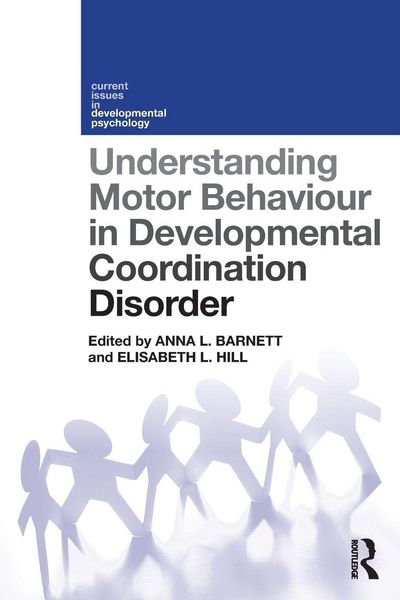
Understanding Motor Behaviour in Developmental Coordination Disorder
-
- Hardcover
- Taschenbuch ausgewählt
- eBook
-
Sprache:Englisch
Fr. 84.90
inkl. gesetzl. MwSt.,
Beschreibung
Produktdetails
Einband
Taschenbuch
Erscheinungsdatum
01.04.2019
Abbildungen
8 SW-Abb., 4 SW-Zeichn., 13 Tabellen
Herausgeber
Anna Barnett + weitereVerlag
Taylor & FrancisSeitenzahl
208
Maße (L/B/H)
23.4/15.6/1.1 cm
Gewicht
324 g
Sprache
Englisch
ISBN
978-1-138-28757-0
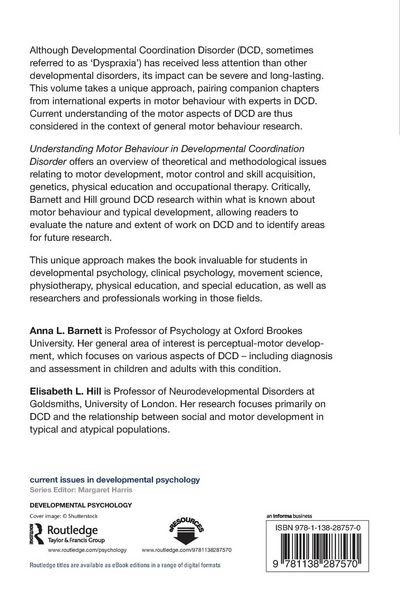
Although Developmental Coordination Disorder (DCD, sometimes referred to as 'Dyspraxia') has received less attention than other developmental disorders, its impact can be severe and long-lasting. This volume takes a unique approach, pairing companion chapters from international experts in motor behaviour with experts in DCD. Current understanding of the motor aspects of DCD are thus considered in the context of general motor behaviour research.
Understanding Motor Behaviour in Developmental Coordination Disorder offers an overview of theoretical and methodological issues relating to motor development, motor control and skill acquisition, genetics, physical education and occupational therapy. Critically, Barnett and Hill ground DCD research within what is known about motor behaviour and typical development, allowing readers to evaluate the nature and extent of work on DCD and to identify areas for future research.
This unique approach makes the book invaluable for students in developmental psychology, clinical psychology, movement science, physiotherapy, physical education, and special education, as well as researchers and professionals working in those fields.
Noch keine Bewertungen vorhanden
Verfassen Sie die erste Bewertung zu diesem Artikel
Helfen Sie anderen Kundinnen und Kunden durch Ihre Meinung.