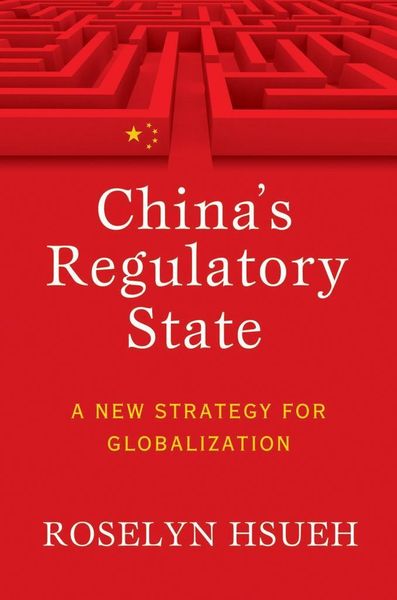
China's Regulatory State A New Strategy for Globalization
-
- Hardcover
- Taschenbuch
- eBook ausgewählt
-
Form:Einzelkauf Download
-
Sprache:Englisch
-
eBook Format:ePUB
- PDF Fr. 104.90
- ePUB Fr. 29.90 ausgewählt
Fr. 29.90
inkl. gesetzl. MwSt.Beschreibung
Produktdetails
Format
ePUB
Kopierschutz
Nein
Family Sharing
Nein
Text-to-Speech
Ja
Erscheinungsdatum
15.10.2011
Verlag
Cornell University PressSeitenzahl
320 (Printausgabe)
Sprache
Englisch
EAN
9780801462863
Today's China is governed by a new economic model that marks a radical break from the Mao and Deng eras; it departs fundamentally from both the East Asian developmental state and its own Communist past. It has not, however, adopted a liberal economic model. China has retained elements of statist control even though it has liberalized foreign direct investment more than any other developing country in recent years. This mode of global economic integration reveals much about China's state capacity and development strategy, which is based on retaining government control over critical sectors while meeting commitments made to the World Trade Organization.
In China's Regulatory State, Roselyn Hsueh demonstrates that China only appears to be a more liberal state; even as it introduces competition and devolves economic decisionmaking, the state has selectively imposed new regulations at the sectoral level, asserting and even tightening control over industry and market development, to achieve state goals. By investigating in depth how China implemented its economic policies between 1978 and 2010, Hsueh gives the most complete picture yet of China's regulatory state, particularly as it has shaped the telecommunications and textiles industries.
Hsueh contends that a logic of strategic value explains how the state, with its different levels of authority and maze of bureaucracies, interacts with new economic stakeholders to enhance its control in certain economic sectors while relinquishing control in others. Sectoral characteristics determine policy specifics although the organization of institutions and boom-bust cycles influence how the state reformulates old rules and creates new ones to maximize benefits and minimize costs after an initial phase of liberalization. This pathbreaking analysis of state goals, government-business relations, and methods of governance across industries in China also considers Japan's, South Korea's, and Taiwan's manifestly different approaches to globalization.
Kundinnen und Kunden meinen
Verfassen Sie die erste Bewertung zu diesem Artikel
Helfen Sie anderen Kund*innen durch Ihre Meinung