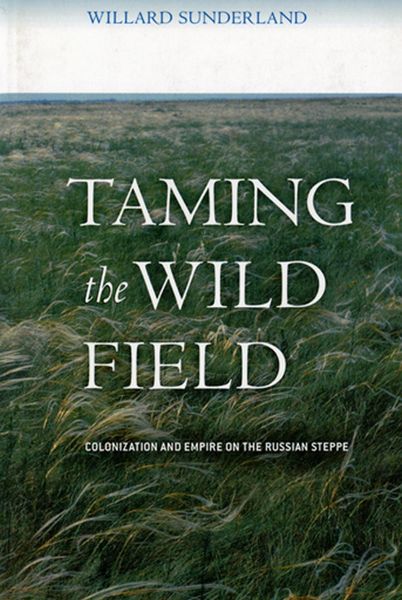
Taming the Wild Field Colonization and Empire on the Russian Steppe
-
- Hardcover
- Taschenbuch
- eBook ausgewählt
-
Form:Einzelkauf Download
-
Sprache:Englisch
-
eBook Format:ePUB
- PDF Fr. 104.90
- ePUB Fr. 11.90 ausgewählt
Fr. 11.90
inkl. gesetzl. MwSt.Beschreibung
Produktdetails
Format
ePUB
Kopierschutz
Nein
Family Sharing
Nein
Text-to-Speech
Ja
Erscheinungsdatum
10.03.2016
Verlag
Cornell University PressSeitenzahl
264 (Printausgabe)
Dateigröße
4559 KB
Sprache
Englisch
EAN
9781501703249
Stretching from the tributaries of the Danube to the Urals and from the Russian forests to the Black and Caspian seas, the vast European steppe has for centuries played very different roles in the Russian imagination. To the Grand Princes of Kiev and Muscovy, it was the "wild field," a region inhabited by nomadic Turko-Mongolic peoples who repeatedly threatened the fragile Slavic settlements to the north. For the emperors and empresses of imperial Russia, it was a land of boundless economic promise and a marker of national cultural prowess. By the mid-nineteenth century the steppe, once so alien and threatening, had emerged as an essential, if complicated, symbol of Russia itself.Traversing a thousand years of the region's history, Willard Sunderland recounts the complex process of Russian expansion and colonization, stressing the way outsider settlement at once created the steppe as a region of empire and was itself constantly changing. The story is populated by a colorful array of administrators, Cossack adventurers, Orthodox missionaries, geographers, foreign entrepreneurs, peasants, and (by the late nineteenth century) tourists and conservationists. Sunderland's approach to history is comparative throughout, and his comparisons of the steppe with the North American case are especially telling.Taming the Wild Field eloquently expresses concern with the fate of the world's great grasslands, and the book ends at the beginning of the twentieth century with the initiation of a conservation movement in Russia by those appalled at the high environmental cost of expansion.
Kundinnen und Kunden meinen
Verfassen Sie die erste Bewertung zu diesem Artikel
Helfen Sie anderen Kund*innen durch Ihre Meinung