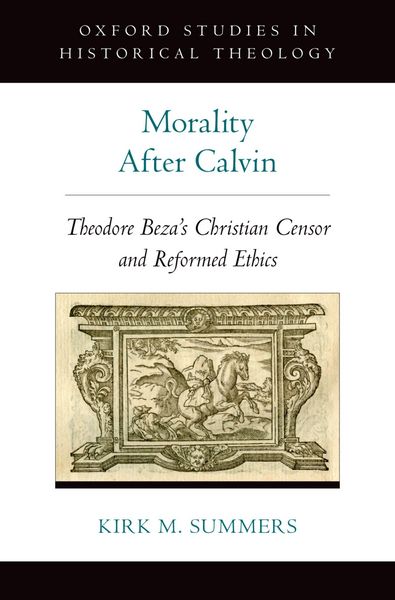
Morality After Calvin Theodore Beza's Christian Censor and Reformed Ethics
-
Form:Einzelkauf Download
-
Sprache:Englisch
-
eBook Format:PDF
- PDF Fr. 80.90 ausgewählt
- ePUB Fr. 63.90
Fr. 80.90
inkl. gesetzl. MwSt.Beschreibung
Produktdetails
Format
Kopierschutz
Ja
Family Sharing
Nein
Text-to-Speech
Nein
Erscheinungsdatum
28.09.2016
Verlag
OUP eBookSeitenzahl
400 (Printausgabe)
Dateigröße
41645 KB
Sprache
Englisch
EAN
9780190280086
In Morality After Calvin, Kirk M. Summers examines the development of ethical thought in the Reformed Orthodox tradition immediately following the death of Calvin. Framed around a previously unstudied poetic work of French theologian Theodore Beza, the Cato Censorius Christianus (1591), and read in conjunction with the works and correspondence of Beza and his colleagues, the book reveals the theoretical underpinnings of the disciplinary activity during the period. The poems of the Cato show that the moral fervor of the latter half of the sixteenth century had its genesis in a well-formulated theology that viewed a Christian's sanctification as a process of restoration to an original order created by God. For Beza the Christian life does not end with grace and salvation, but begins there. The principles of morality, in this theoretical framework, look back to the very moment of creation, when God structured human relationships, established a certain order in nature, and issued commands. The Mosaic Law and Christ himself embody these principles, which include an ethos of listening, sincerity of life, engagement with one's calling, love of neighbor, respect for divine order, and a desire for the purity of the flock. With insight and dexterity, as well as the use of previously unavailable sources, Summers contributes this significant volume to the study of Beza and his place in the history of the Reformed Orthodoxy.
Kundinnen und Kunden meinen
Verfassen Sie die erste Bewertung zu diesem Artikel
Helfen Sie anderen Kund*innen durch Ihre Meinung