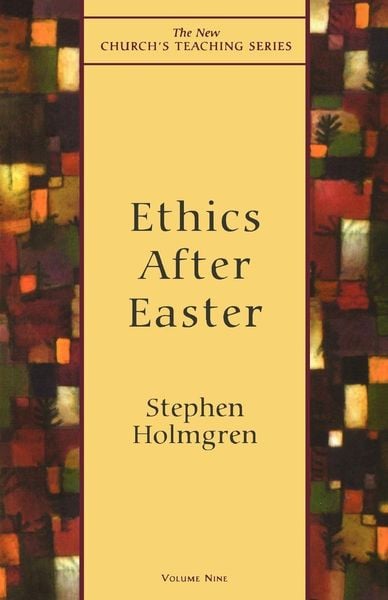
Band 9
Ethics After Easter
Aus der Reihe
New Church's Teaching Series
-
- Taschenbuch
- eBook ausgewählt
-
Form:Einzelkauf Download
-
Sprache:Englisch
-
eBook Format:ePUB
- PDF Fr. 15.90
- ePUB Fr. 15.90 ausgewählt
Fr. 15.90
inkl. gesetzl. MwSt.Beschreibung
Produktdetails
Format
ePUB
Kopierschutz
Ja
Family Sharing
Nein
Text-to-Speech
Ja
Erscheinungsdatum
25.01.2000
Verlag
Bloomsbury eBooks USSeitenzahl
193 (Printausgabe)
Dateigröße
988 KB
Auflage
1. Auflage
Sprache
Englisch
EAN
9781461660576
In this volume of The New Church's Teaching Series, Stephen Holmgren introduces us to the world of Anglican ethics and moral theology. He focuses on questions all people of faith must ask: How will I keep my baptismal promises? How am I meant to live "after Easter?"
In developing a distinctively Anglican approach to ethics, with its emphasis on holiness, sanctification, and the need for spiritual disciplines, Holmgren identifies clear axioms for Anglican moral theology and the ethos required for moral decision-making on the part of individuals and church bodies. He explains why ethical reflection is not the same as church governance, and why the institution cannot "make" its moral theology.
Holmgren also discusses the role of conscience and reason, the work of moral discernment, the difference between moral knowledge and saving knowledge, the meaning of natural law, and the high value Anglicans place on consensus. The final chapter provides a methodology for building a moral case in Christian ethics, specifically on Christian involvement with war and violence.
As with each book in The New Church's Teaching Series, recommended resources for further reading and questions for discussion are included.
In developing a distinctively Anglican approach to ethics, with its emphasis on holiness, sanctification, and the need for spiritual disciplines, Holmgren identifies clear axioms for Anglican moral theology and the ethos required for moral decision-making on the part of individuals and church bodies. He explains why ethical reflection is not the same as church governance, and why the institution cannot "make" its moral theology.
Holmgren also discusses the role of conscience and reason, the work of moral discernment, the difference between moral knowledge and saving knowledge, the meaning of natural law, and the high value Anglicans place on consensus. The final chapter provides a methodology for building a moral case in Christian ethics, specifically on Christian involvement with war and violence.
As with each book in The New Church's Teaching Series, recommended resources for further reading and questions for discussion are included.
Kundinnen und Kunden meinen
Verfassen Sie die erste Bewertung zu diesem Artikel
Helfen Sie anderen Kund*innen durch Ihre Meinung