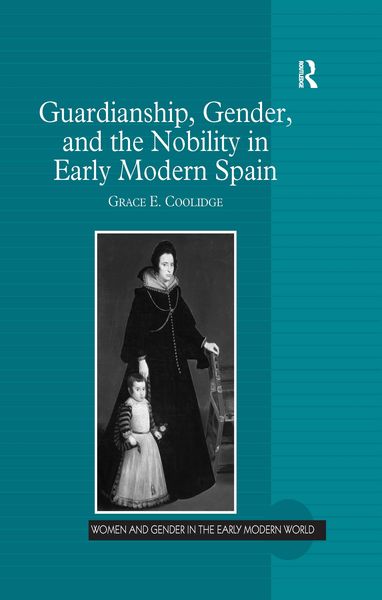
Guardianship, Gender, and the Nobility in Early Modern Spain
-
- Hardcover
- Taschenbuch
- eBook ausgewählt
-
Form:Einzelkauf Download
-
Sprache:Englisch
-
eBook Format:ePUB 3
- ePUB 3 Fr. 56.90 ausgewählt
- PDF Fr. 56.90
Fr. 56.90
inkl. gesetzl. MwSt.Beschreibung
Produktdetails
Format
ePUB 3
Kopierschutz
Ja
Family Sharing
Nein
Text-to-Speech
Ja
Erscheinungsdatum
05.12.2016
Verlag
Taylor & Francis eBooksSeitenzahl
184 (Printausgabe)
Dateigröße
836 KB
Sprache
Englisch
EAN
9781351931991
Contrary to early modern patriarchal assumptions, this study argues that rather trying to impose obedience or enclosure on women of their own rank and status, noblemen in early modern Spain depended on the active collaboration of noblewomen to maintain and expand their authority, wealth, and influence. While the image of virtuous, secluded, silent, and chaste women did bolster male authority in general and help to assure individual noblemen that their children were their own, the presence of active, vocal, and political women helped these same men move up the social ladder, guard their property and wealth, gain political influence, win legal battles, and protect their minor heirs. Drawing on a variety of documents-guardianships, wills, dowry and marriage contracts, lawsuits, genealogies, and a few letters-from the family archives of the nine noble families housed in the Osuna and FrÃas collections in Toledo, Guardianship, Gender and the Nobility in Early Modern Spain explores the lives and roles of female guardians. Grace Coolidge examines in detail the legal status of these women, their role within their families, and their responsibilities for the children and property in their care. To Spanish noblemen, Coolidge argues, the preservation of family, power, and lineage was more important than the prescriptive gender roles of their time, and faced with the emergency generated by the premature death of the male title holder, they consistently turned to the adult women in their families for help. Their need for support and for allies against their own mortality meant, in turn, that they expected and trained their female relatives to take an active part in the economic and political affairs of the family.
Kundinnen und Kunden meinen
Verfassen Sie die erste Bewertung zu diesem Artikel
Helfen Sie anderen Kund*innen durch Ihre Meinung