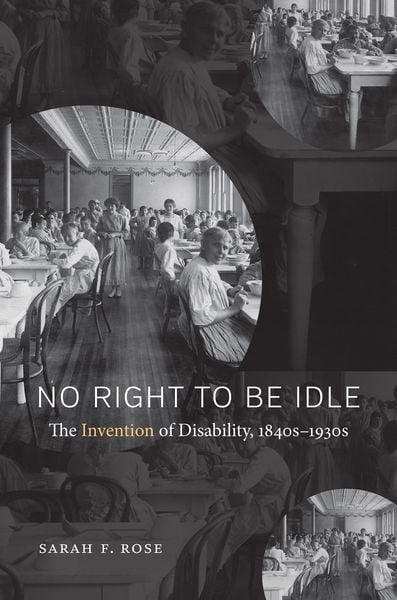
No Right to Be Idle The Invention of Disability, 1840s-1930s
-
- Hardcover
- Taschenbuch
- eBook ausgewählt
-
Form:Einzelkauf Download
-
Sprache:Englisch
Fr. 32.90
inkl. gesetzl. MwSt.Beschreibung
Produktdetails
Format
ePUB
Kopierschutz
Nein
Family Sharing
Nein
Text-to-Speech
Ja
Erscheinungsdatum
13.02.2017
Verlag
The University of North Carolina PressSeitenzahl
398 (Printausgabe)
Dateigröße
14404 KB
Sprache
Englisch
EAN
9781469624907
During the late nineteenth and early twentieth centuries, Americans with all sorts of disabilities came to be labeled as “unproductive citizens.” Before that, disabled people had contributed as they were able in homes, on farms, and in the wage labor market, reflecting the fact that Americans had long viewed productivity as a spectrum that varied by age, gender, and ability. But as Sarah F. Rose explains in No Right to Be Idle, a perfect storm of public policies, shifting family structures, and economic changes effectively barred workers with disabilities from mainstream workplaces and simultaneously cast disabled people as morally questionable dependents in need of permanent rehabilitation to achieve “self-care” and “self-support.”
By tracing the experiences of policymakers, employers, reformers, and disabled people caught up in this epochal transition, Rose masterfully integrates disability history and labor history. She shows how people with disabilities lost access to paid work and the status of “worker” — a shift that relegated them and their families to poverty and second-class economic and social citizenship. This has vast consequences for debates about disability, work, poverty, and welfare in the century to come.
By tracing the experiences of policymakers, employers, reformers, and disabled people caught up in this epochal transition, Rose masterfully integrates disability history and labor history. She shows how people with disabilities lost access to paid work and the status of “worker” — a shift that relegated them and their families to poverty and second-class economic and social citizenship. This has vast consequences for debates about disability, work, poverty, and welfare in the century to come.
Kundinnen und Kunden meinen
Verfassen Sie die erste Bewertung zu diesem Artikel
Helfen Sie anderen Kund*innen durch Ihre Meinung