Gutscheinbedingungen

*Gültig bis 18.08.2026 auf (fast) alles. Ausgeschlossen sind Smartboxen, Zeitschriften, Tickets, Lebensmittel, Gaming-Elektroartikel, Tinte/Toner, Gutscheine, Geschenkkarten, Blumen und Abos | Einlösbar in allen Buchhandlungen von Orell Füssli, Barth Bücher, Buchladen Rapunzel, Schuler Orell Füssli, Stauffacher und ZAP unter Vorweisung des Gutscheins, auf www.orellfüssli.ch durch Eingabe des Gutscheincodes. Beim Service „eBooks verschenken“ und bei eBook-Käufen via eReader nicht einlösbar | Mindesteinkaufswert: Fr. 100.- | Nicht mit anderen Rabatten kumulierbar.

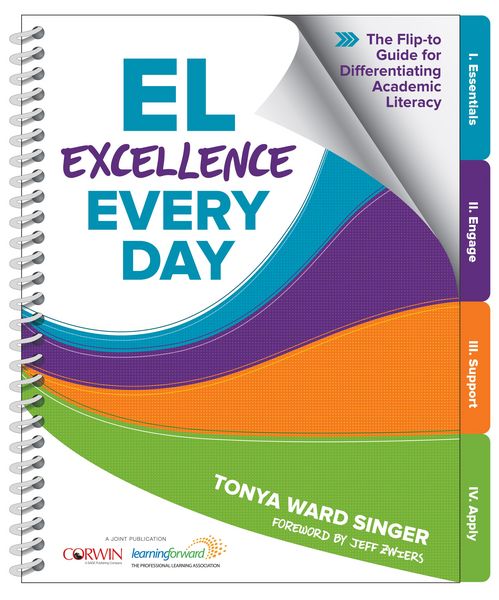
Produktbild: Singer, T: Excellence Every Day

Singer, T: Excellence Every Day The Flip-To Guide for Differentiating Academic Literacy

Fr. 52.90

inkl. gesetzl. MwSt., Versandkostenfrei


Beschreibung

Produktdetails

Einband

Taschenbuch

Erscheinungsdatum

19.02.2018

Verlag

Sage Publications

Seitenzahl

328

Maße (L/B/H)

28.3/25.3/3.2 cm

Gewicht

828 g

Sprache

Englisch

ISBN

978-1-5063-7787-2

Beschreibung

Produktdetails

Einband

Taschenbuch

Erscheinungsdatum

19.02.2018

Verlag

Sage Publications

Seitenzahl

328

Maße (L/B/H)

28.3/25.3/3.2 cm

Gewicht

828 g

Sprache

Englisch

ISBN

978-1-5063-7787-2

Noch keine Bewertungen vorhanden

Verfassen Sie die erste Bewertung zu diesem Artikel

Helfen Sie anderen Kundinnen und Kunden durch Ihre Meinung.

Kundinnen und Kunden meinen

Bewertungen (0)

Weitere Artikel finden Sie in

  • Produktbild: Singer, T: Excellence Every Day
  • Foreword
    Acknowledgments
    About the Author
    SECTION I: ESSENTIALS FOR EL EXCELLENCE
    1. INTRODUCTION
    Why This Book?
    Helping Every Teacher Excel Teaching ELs
    Core Pedagogy for EL Excellence
    How This Guide Helps You Every Day
    Ways to Use This Flip-To Guide
    2. ESSENTIAL MINDSETS
    Mindsets Matter
    Value English Learners' Assets
    Expect Excellence From Every English Learner
    Reflect in Inquiry About Your Impact
    SECTION II: ENGAGE
    3. ENGAGE EVERY EL
    What Is Student Engagement?
    Why Collaborative Conversations?
    3.1 Whole-Class Conversation Structures
    3.2 Partner Conversation Structures
    3.3 Small-Group Conversation Structures
    3.4 Up and Moving Conversation Structures
    3.5 Fishbowl Structure
    3.6 Listening to Conversations as Formative Data
    3.7 Tools to Differentiate Student Conversations
    3.8 Linguistic Frames for Conversations
    3.9 Strategies to Actively Engage Emerging ELs
    3.10 Total Physical Response Strategies
    3.11 Read and Annotate Strategies
    3.12 Collaborate to Write Strategies
    SECTION III: SUPPORT
    4. SUPPORT ELS STRATEGICALLY
    What Supports Do ELs Need?
    How Do I Personalize Supports?
    How Do I Differentiate With Ease?
    5. BUILD BACKGROUND
    What and Why?
    When Do I Build Background?
    Who Benefits From Building Background?
    Strategies to Build Background
    5.1 Connect to Students' Background Knowledge and Experiences
    5.2 Teach Concept Vocabulary With the Frayer Model
    5.3 A Collaborative Approach to the Frayer Model
    5.4 Direct Instruction Vocabulary Routine
    5.5 Teach Vocabulary With Cognates
    5.6 Model Through Teacher Action
    5.7 Model Expectations With an Exemplar
    5.8 Collaborate to Contrast Exemplars
    5.9 Collaborate to Evaluate an Exemplar With a Rubric
    Reflect on Chapter 5
    6. SCAFFOLD LANGUAGE DURING A TASK
    What and Why?
    Strategies to Scaffold Language During a Task
    Anticipating the Just-Right Level of Scaffolds
    Tips to Be Strategic
    6.1 Linguistic Frames
    6.2 Word Banks
    6.3 Word Bank Table
    6.4 Sentence Chart
    6.5 Graphic Organizers
    Reflect on Chapter 6
    7. TEACH LANGUAGE BEYOND A TASK
    What and Why?
    What Features of Language Do I Teach?
    Strategies to Teach Language in This Chapter
    7.1 Teach Language From Life Experience
    7.2 Teach Language From a Text
    7.3 Syntax (or Paragraph) Surgery
    7.4 Teach Word Relationships
    Reflect on Chapter 7
    SECTION IV: APPLY STRATEGIES TO DIFFERENTIATE ACADEMIC LITERACY
    8. MAKE EL EXCELLENCE ROUTINE
    Four Steps, Four Conversation Tasks
    Apply Essentials to Meet Specific Literacy Goals
    Where Do I Begin?
    What Will I Find in Each Chapter?
    Be in Continuous Inquiry About Your Impact
    9. ANTICIPATE
    What and Why?
    9.1 Make Predictions
    9.2 Ask Questions Before Reading
    10. READ TO UNDERSTAND
    What and Why?
    10.1 Identify Main Ideas
    10.2 Self-Monitor and Use Context Clues
    10.3 Use Affixes and Roots to Figure Out Unknown Words
    11. READ TO ANALYZE AND INFER
    What and Why?
    11.1 Make Claims About Texts
    11.2 Justify Claims With Text Evidence
    11.3 Make Inferences About Characters
    11.4 Make and Justify Claims About Theme and Author's Message
    11.5 Compare and Contrast
    APPENDIX: GRAPHIC ORGANIZERS
    Collaborative Brainstorm
    Frayer Model
    Direct Vocabulary Instruction
    Word Family Chart
    Organize Cause and Effect
    Claim and Justify With Text Evidence
    References
    Index