• Produktbild: Planning for Coexistence?
  • Produktbild: Planning for Coexistence?

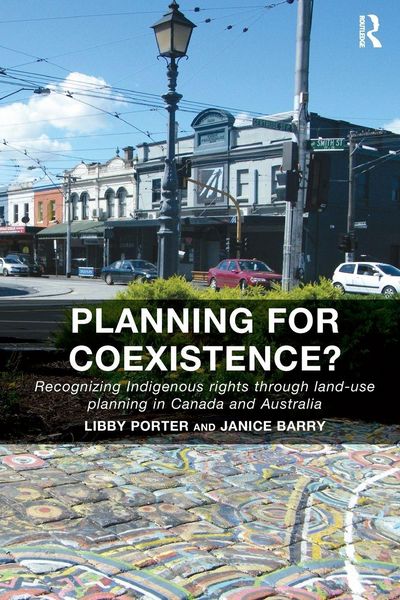
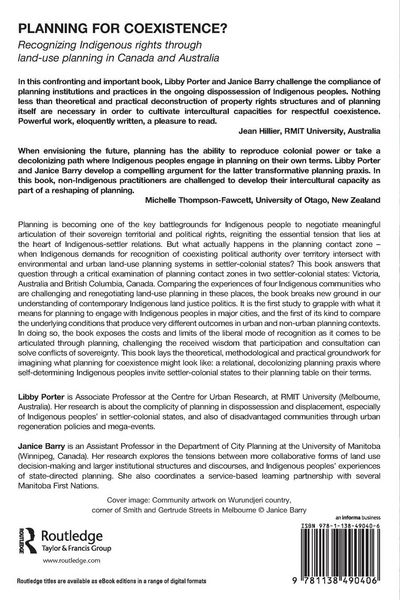
Planning for Coexistence? Recognizing Indigenous rights through land-use planning in Canada and Australia

Fr. 98.90

inkl. gesetzl. MwSt., Versandkostenfrei


Produktdetails

Einband

Taschenbuch

Erscheinungsdatum

12.02.2018

Verlag

Taylor & Francis

Seitenzahl

232

Maße (L/B/H)

23.4/15.6/1.3 cm

Gewicht

360 g

Sprache

Englisch

ISBN

978-1-138-49040-6

Produktdetails

Einband

Taschenbuch

Erscheinungsdatum

12.02.2018

Verlag

Taylor & Francis

Seitenzahl

232

Maße (L/B/H)

23.4/15.6/1.3 cm

Gewicht

360 g

Sprache

Englisch

ISBN

978-1-138-49040-6

Herstelleradresse

Libri GmbH
Europaallee 1
36244 Bad Hersfeld
DE

Email: gpsr@libri.de

Kundinnen und Kunden meinen

0 Bewertungen

Informationen zu Bewertungen

Zur Abgabe einer Bewertung ist eine Anmeldung im Konto notwendig. Die Authentizität der Bewertungen wird von uns nicht überprüft. Wir behalten uns vor, Bewertungstexte, die unseren Richtlinien widersprechen, entsprechend zu kürzen oder zu löschen.

Die Bewertungen sind nach Format, Anzahl Sterne und Datum sortiert.

Verfassen Sie die erste Bewertung zu diesem Artikel

Helfen Sie anderen Kund*innen durch Ihre Meinung

Kundinnen und Kunden meinen

0 Bewertungen filtern

Die Leseprobe wird geladen.
  • Produktbild: Planning for Coexistence?
  • Produktbild: Planning for Coexistence?
  • 1. Introduction: The Challenge of Indigenous Coexistence for Planning, Part I Concepts and Contexts, 2. ‘We Are All Here to Stay’: A ‘Meditation on Discomfort’, 3. Seeing the Contact Zone: A Methodology for Analyzing Links between Everyday and Textual Practice, 4. Constructing Contact Zones: Planning and Recognition Discourses in Victoria and British Columbia, Part II Stories of Planning in (Post) Colonial Victoria and British Columbia, 5. The Non-Recognition of Indigenous Rights in Metropolitan Melbourne, 6. Negotiating Bounded Recognition: Seeking Co-management on the River Red Gum Flood Plains, 7. Neighbour-to-Neighbour Planning Relations along Vancouver’s North Shore, 8. Planning for Wilp Sustainability in the Nass and Skeena River Watersheds, Part III Conceptualizing Coexistence in Planning Theory and Practice, 9. Negotiating, Contesting, Reframing: Indigenous Agency in the Contact Zone, 10. Bounded Recognition: How Planning Resettles Indigenous Claims, 11. Developing Intercultural Capacity: Lessons for Planning Practice, 12. Towards Coexistence: Rethinking Planning for Indigenous Justice